Chiefdoms represent a pivotal shift in human history, marking the transition from egalitarian tribal bands to politically organized, hierarchical societies. Ranging in population from 5,000 to 20,000 people, these systems consolidated power within hereditary lineages, paving the way for the world’s first states and civilizations.
1. What is a Chiefdom?
Unlike loose tribal alliances, a chiefdom is a formal, centralized political unit.
- Permanent Office: The chief holds a formal, institutionalized position of power.
- Rules of Succession: Unlike temporary tribal headmen, a chiefdom requires a clear hereditary successor.
- High Density: Strong leadership supports massive populations, sparking local craft specialization.
- Ceremonial Cult Centers: Permanent ritual hubs serve as capitals where the chief and their retainers live.
The Centralized Economy
Chiefdoms thrive on economic interdependence and a centralized redistribution system. Commoners pay food and craft surpluses to the chief as a tribute. The chief then manages these resources, using them to fuel long-distance trade, plan foreign wars, and reward loyal followers.
[ Rural Hinterlands ] ──► (Food & Craft Surpluses)
|
[ Centralized Chief ]
_________________________________________________________________
| | |
[Corvée Labor Mobilization] [Local Craft Specialization] [Long-Distance Trade Networks]
(Temples & Monuments) (Tools, Jewelry, Textiles) (Elite Status Goods)
2. Ranked Societies vs. Egalitarian Structures
Chiefdoms introduce permanent social ranking and institutionalized inequality.
- Resource Access: Unlike fully stratified states, ranked societies do not restrict access to basic resources. All individuals can meet their basic survival needs.
- Prestige Hierarchies: Every family group or lineage is ordered by power and prestige.
- Birth Order: Within families, siblings are strictly ranked by birth order. Villages can also be ranked hierarchically.
- Sumptuary Rules: Elites display status using distinctive clothing, jewelry, and decorations denied to lower ranks.
3. Simple vs. Complex Chiefdoms
As a governing lineage grows through internal expansion and strategic marriages, it forms an elite aristocracy standing over ordinary citizens. Political structures scale up accordingly:
| Feature | Simple Chiefdoms | Complex Chiefdoms |
| Social Classes | Two basic inherited classes: Elites and Commoners. | Multi-layered: Divine kings, priests, nobles, warriors, commoners, serfs, and slaves. |
| Political Tiers | Single family line rules from a single center. | Two to three tiers of political hierarchy controlling multiple territories. |
| Leadership | Central authority rests with a local chief. | A paramount chief rules over lesser individuals who control specific lands. |
| Economic Division | Kinship remains the primary organizing principle. | Nobles are distinct from commoners and do not engage in agriculture. |
| Resource Control | Lineage-managed resource pools. | Higher elite members own the vast majority of land and property. |
Corent Oppidum (France)
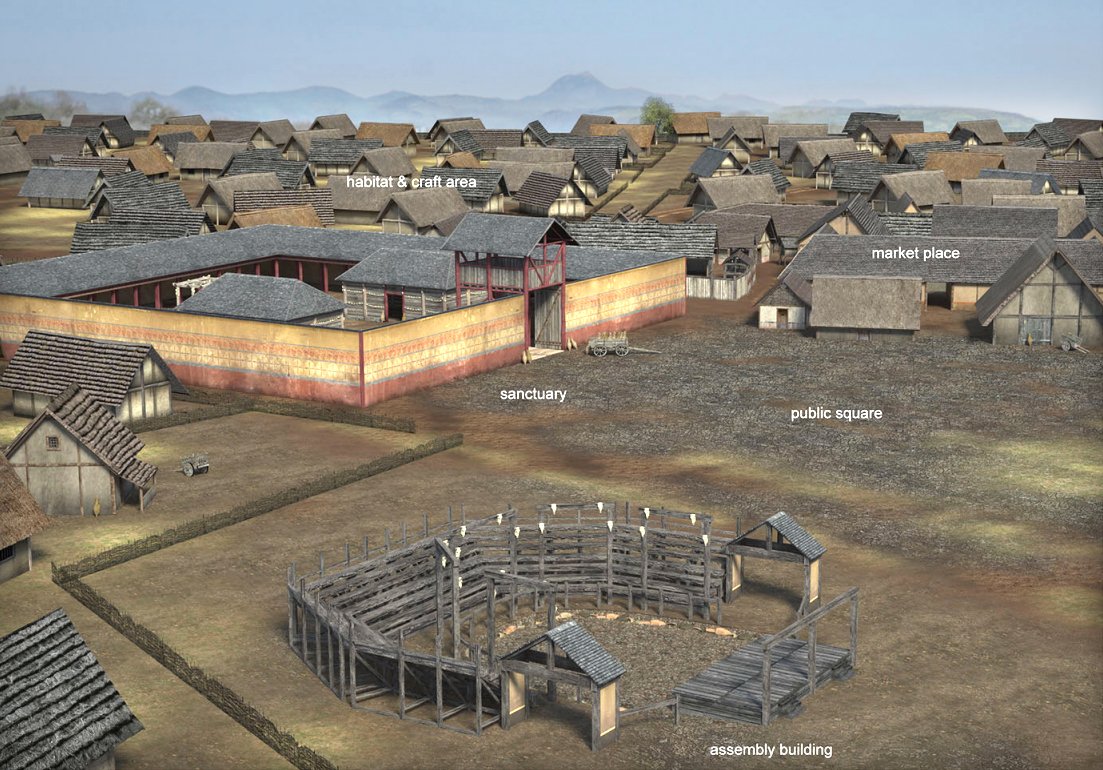
Academic Source / Author: M. Fernández-Götz (2018), from the paper Urbanization in Iron Age Europe: Trajectories, Patterns, and Social Dynamics
- The oppidum of Corent is a classic example of an Iron Age society, belonging specifically to the Late La Tène culture (c. 2nd to 1st century).
- However, Corent represents a very unique evolutionary step: it was a highly advanced, complex chiefdom that was actively transitioning into a proto-state.
- Archaeological excavations show that Corent was far more sophisticated than a basic tribal village, bridging the gap between chiefdoms and true urban states:
1. It was an Iron Age Urban Capital
Covering roughly 50 hectares, Corent served as the political, economic, and religious cult capital of the Arverni—one of the most powerful Celtic tribal groups in ancient France (Gaul). It was a densely populated town, not just a temporary fort.
2. State-Like Political and Cult Institutions
Instead of a single chief ruling out of a mud hut, Corent featured an incredibly advanced architectural layout that mimics true state administration:
- The Semicircular Assembly Hall: Archaeologists found a massive semicircular wooden structure that functioned as an assembly hall or senate chamber. This means the tribe was likely governed by a council of magistrates and elites, rather than a single absolute warlord.
- The Religious Cult Sanctuary: A massive central sanctuary cult temple stood next to a public market square, showing that religious cult and economic life were centralized and heavily regulated by the leadership.
3. Advanced Craft and Mediterranean Trade
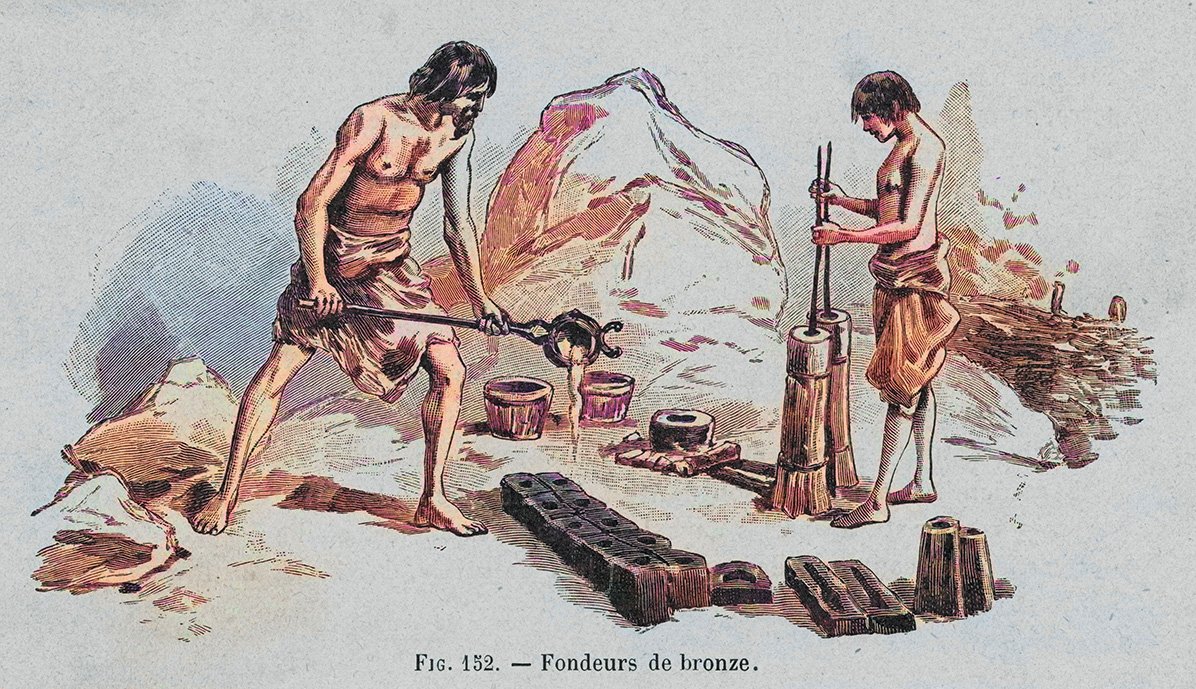
Corent acted as a major economic hub. Excavations have revealed specialized artisan quarters for metallurgy and pottery, alongside massive quantities of imported Roman wine amphorae and bronze vessels. The tribal leadership controlled this lucrative trade, using vast communal feasts to maintain their political influence.
Julius Caesar’s invasion
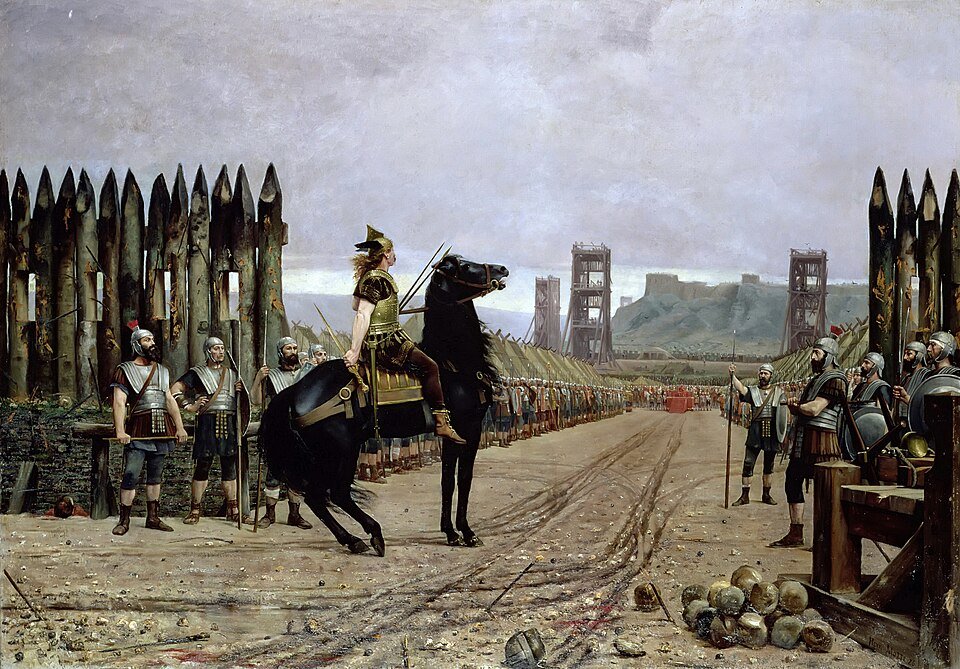
If you look at the entire timeline, Corent is the exact missing link between a simple chiefdom and a state. It represents the absolute peak of the Late Iron Age La Tène culture right before Julius Caesar’s Roman invasion permanently absorbed Gaul into the Roman state structure.

4. Theocracy, Law, and Engineering Consent
All chiefdoms function as theocracies. The bureaucracy operates as a priesthood, using deep religious cult conditioning to control ordinary people.
- Lese-Majesty Laws: The earliest laws protected rulers and their symbols from disrespect. Because the ruler was viewed as a god or high priest, punishments relied on supernatural threats rather than physical force.
- Mediation of Feuds: Rulers established early legal systems by intervening in violent quarrels between kin groups.
- The Power to Scare: Priests, witches, and sorcerers maintained social control by threatening political rebels with supernatural harm.
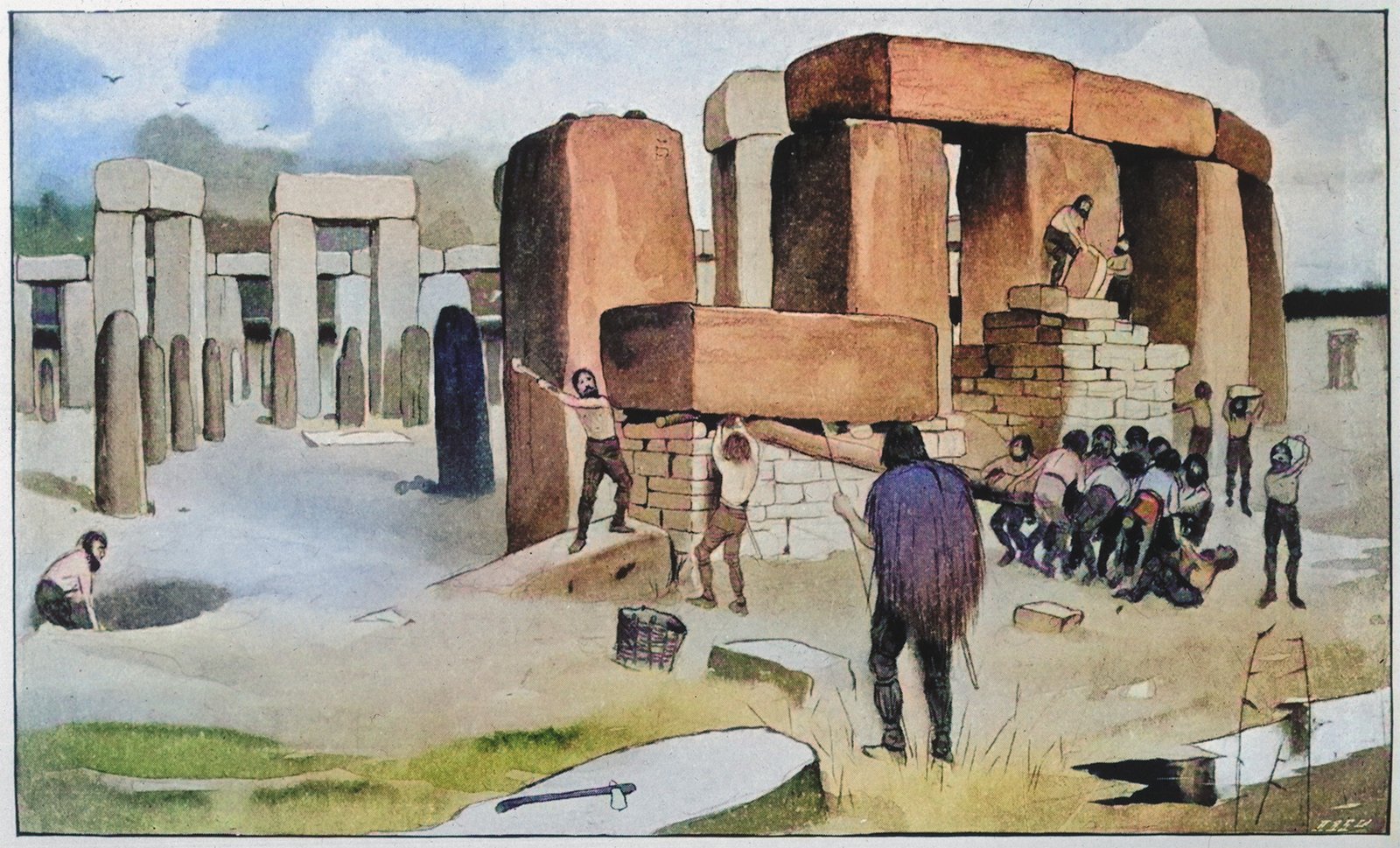
- Corvée Labor: Rulers used a society-wide religious cult overlay to compel citizens to build massive public monuments and cult temples. These holy sites hosted rituals that generated deep emotional conformity, allowing leaders to engineer the consent of the governed.
The chiefdom’s centralized authority provides several ways to protect itself. The most obvious is the lese-majesty type of rule, which prohibits actions that threaten the person or authority of the ruler. In chiefdoms, since the ruler is normally a god or the highest priest, punishment is by threat of supernatural action. Another lies in the efforts of a ruler (or his representative) to prevent feuds by mediating quarrels between kin groups. The above two kinds of actions are possible beginnings of law-stuff.
As with so many other characteristics of civilization, we note that law, at least in an incipient or inchoate form, made its appearance at the chiefdom level. This fact is clearly related to the existence of a central authority system: The authority system needs rules of social control to safeguard itself and to operate efficiently in running society, and the people themselves need help in solving the most pressing problems of their social life, namely the quarrels between kin-group segments.
It seems very likely that lese majesty public law was the first to be formalized by the central authority, with explicit negative sanctions that were likely to be supernatural rather than secular and physical. All of the chiefdoms and primitive states we studied had at least an inchoate set of laws that protect persons in authority or the symbols of authority, etiquette taboos, the cults of the royal drums and stools, and so forth.
Gods in a hierarchical pantheon
A chiefdom creates a religious overlay above the familistic and local segmental cult levels that is society-wide, encompassing all activities.
The public monuments and temples where the ceremonies take place belong to society as a whole and are built by society-wide corvée labor. The bureaucracy, in its priestly aspect, supposedly mediates with these deities. Great joys as well as great fears can be created in a society that is so pervasively religious. The positive and negative conditioning in the religious cult context is by far the most direct and pervasive cause of the consent of the governed. It is in this religious cult context, more than any other, that it is possible for the rulers to plan and scheme-for the consent to be engineered.
5. Deep Dive: Complex Chiefdoms in Action
To understand how complex chiefdoms functioned globally, we can contrast two of the most significant archaeological examples in human history: the Mesopotamian chiefdom of Uruk (the birthplace of Western urban civilization) and the Mississippian paramount chiefdom of Cahokia (the largest pre-Columbian city north of Mexico).
Case Study 1: The Mesopotamian Chiefdom of Uruk
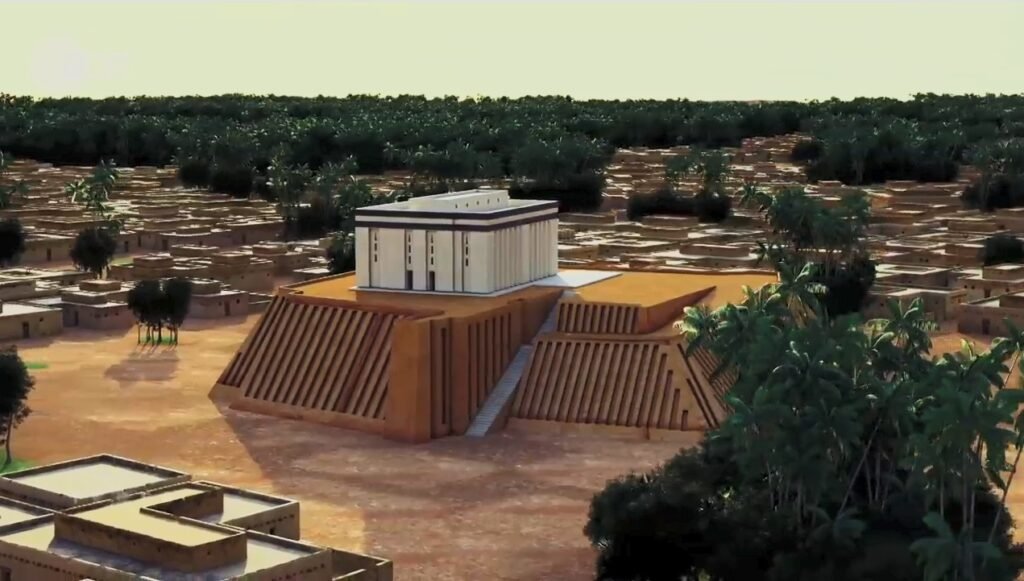
Flourishing during the Uruk period (c. -4000 to -3100) in modern-day Iraq, Uruk grew from the merger of two smaller, kin-based settlements into a massive 250-to-400 hectare regional powerhouse. Home to an estimated 25,000 to 50,000 residents, it weaponized agricultural surplus to dominate the ancient Near East.
- The Irrigation Economy: Uruk’s rise was fueled by the unpredictable river valleys of the Tigris and Euphrates. Managing survival required extensive canal systems, demanding a strong, centralized administration to direct public labor.
- Theocracy and Mass Production: The city was anchored by two religious hubs: the Anu District (sky god) and the Eanna District (fertility goddess Inanna). The theocratic bureaucracy engineered public consent through mandatory corvée labor to build artificial mudbrick mountain temples (ziggurats). They also pioneered industrial craft specialization, mass-producing utilitarian beveled-rim bowls to hand out standard food rations to its massive laborer pool.
- Administrative Technology: As the chiefdom expanded, memory failed. To track temple tributes, regional warehouses, and labor forces, Uruk’s theocrats invented cylinder seals and proto-Cuneiform—the world’s earliest form of writing, created entirely for bookkeeping and accounting.
- The Uruk Expansion: Lacking local stone, timber, and metals, Uruk’s leaders established a colonial network of trading outposts stretching into Turkey and Iran to secure the luxury status symbols needed to solidify elite power.
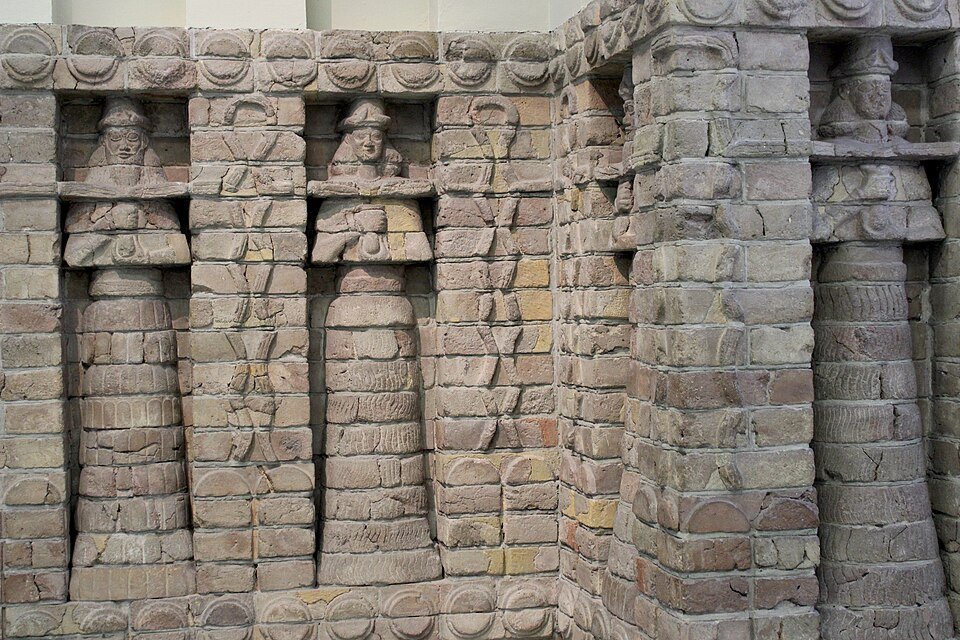
Part of the Façade of the Eanna Temple, Museum Berlin, Miguel Hermoso Cuesta via Wikimedia Commons.
Case Study 2: The Mississippian Paramount Chiefdom of Cahokia
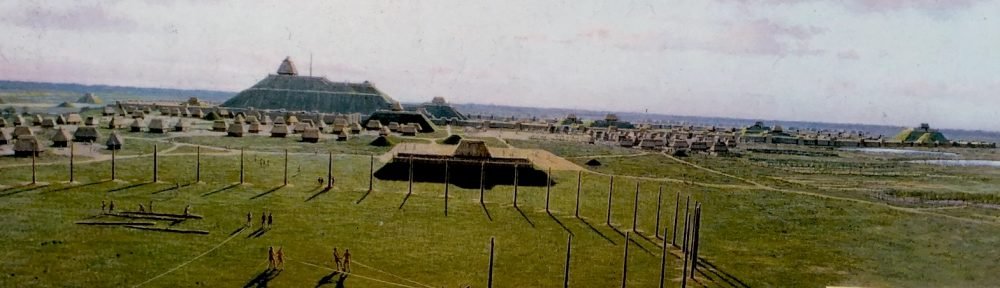
Flourishing in the fertile American Bottom (modern-day Illinois, near St. Louis) during the Mississippian period (c. 1050–1350 CE), Cahokia covered over six square miles. At its peak around 1100 CE, it supported a diverse, immigrant-heavy population of 15,000 to 20,000 residents, making it larger than London at the time.
- The Maize Economy: Cahokia’s explosive growth was driven by the introduction of intensive maize (corn) agriculture. Positioned strategically at the confluence of the Mississippi and Missouri rivers, the paramount chief controlled a gateway trading node that linked the entire continent.
- Earthen Monuments: Unlike Uruk’s stone and mudbrick, Cahokia’s architecture was built from human hands moving 55 million cubic feet of soil in woven baskets. The city featured 120 earthen pyramids. The largest, Monks Mound, stands 100 feet tall and covers 14 acres, serving as the elevated platform for the supreme chief’s palace and temple.
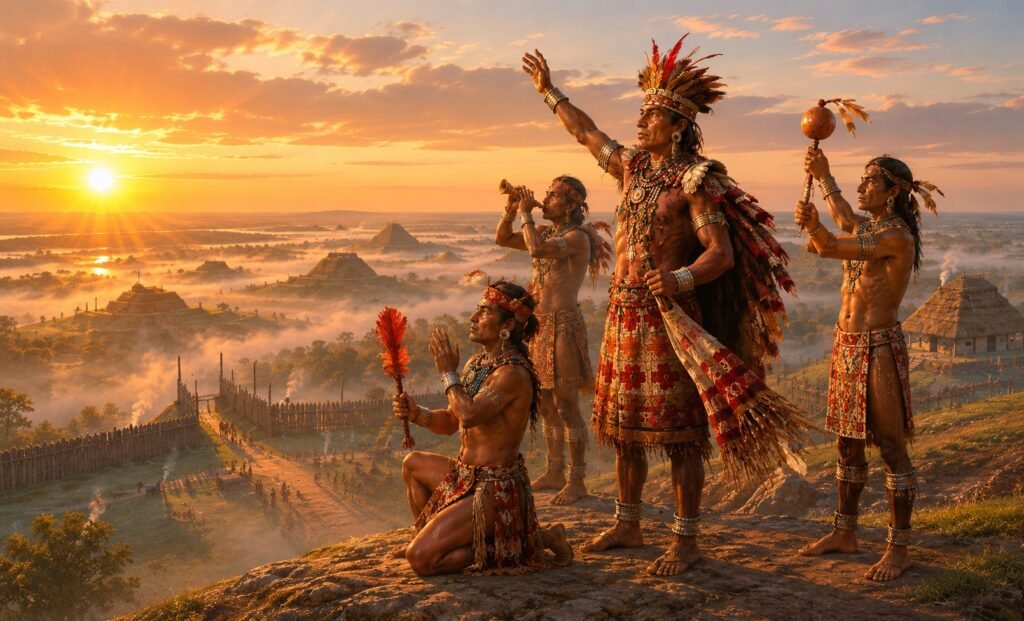
- The Cult of the “Great Sun”: As established by Dr. Thomas Emerson, Cahokian elites successfully manipulated a widespread, ancient fertility cult into a tightly managed “rural cult”. This ideological strategy convinced subjects that the elites ruled both the physical and spiritual worlds. Religious authority was reinforced by an astronomical timber calendar circle (Woodhenge) and institutionalized human sacrifice. Excavations at Mound 72 revealed elite burials flanked by dozens of young female sacrifices and executed retainers, highlighting the terrifying absolute power of the ruling class.
- Status Goods Network: The elite maintained their ranks using exquisite status symbols imported through continental trade networks. These included marine shells from the Gulf Coast, copper from the Great Lakes, mica from the Appalachians, and elite weaponry.
6. Comparison: Eastern vs. Western Chiefdom Strategies
While both societies represent the pinnacle of complex chiefdom administration, their regional strategies diverged fundamentally:
| Anthropological Feature | Mesopotamian Model (Uruk) | Mississippian Model (Cahokia) |
| Primary Infrastructure | Canal networks for water control; mudbrick cult temples and city walls. | Massive earthen platform mounds, wooden palisade walls, and solar woodhenges. |
| Administrative Power | Administrative writing (Proto-Cuneiform) and clay sealings for strict record keeping. | Cosmological alignment, religious cult festivals, and rural ideological control networks. |
| Social Coercion | Economic rationing, standard-sized bowl distributions, and legal taboos. | Extreme ritual retainer burials and mass institutional human sacrifice. |
| Economic Sphere | Colonial outposts and commercial exchange across distant resource zones. | Paramount tribute network where specialized nodal centers were politically tied to the capital. |
| Path of Evolution | Successfully evolved into the world’s first true bureaucratic urban city-states. | Collapsed by 1350 CE due to environmental stress, resource depletion, and civil warfare. |
7.🌾The Mechanics of Enslaved Labor in Intensive Surplus Agriculture
The Catalyst of Intensive Agriculture: Once a society graduates to intensive, surplus-driven agriculture, slavery becomes widespread. Whenever a tribe, chiefdom, or state transitioned to large-scale monoculture farming (like Mesopotamian grain, Roman vineyards, or Mississippian maize), the staggering demand for cheap, disposable, and organized manual labor invariably triggered systemic raiding, warfare, and the institutionalization of a slave class.
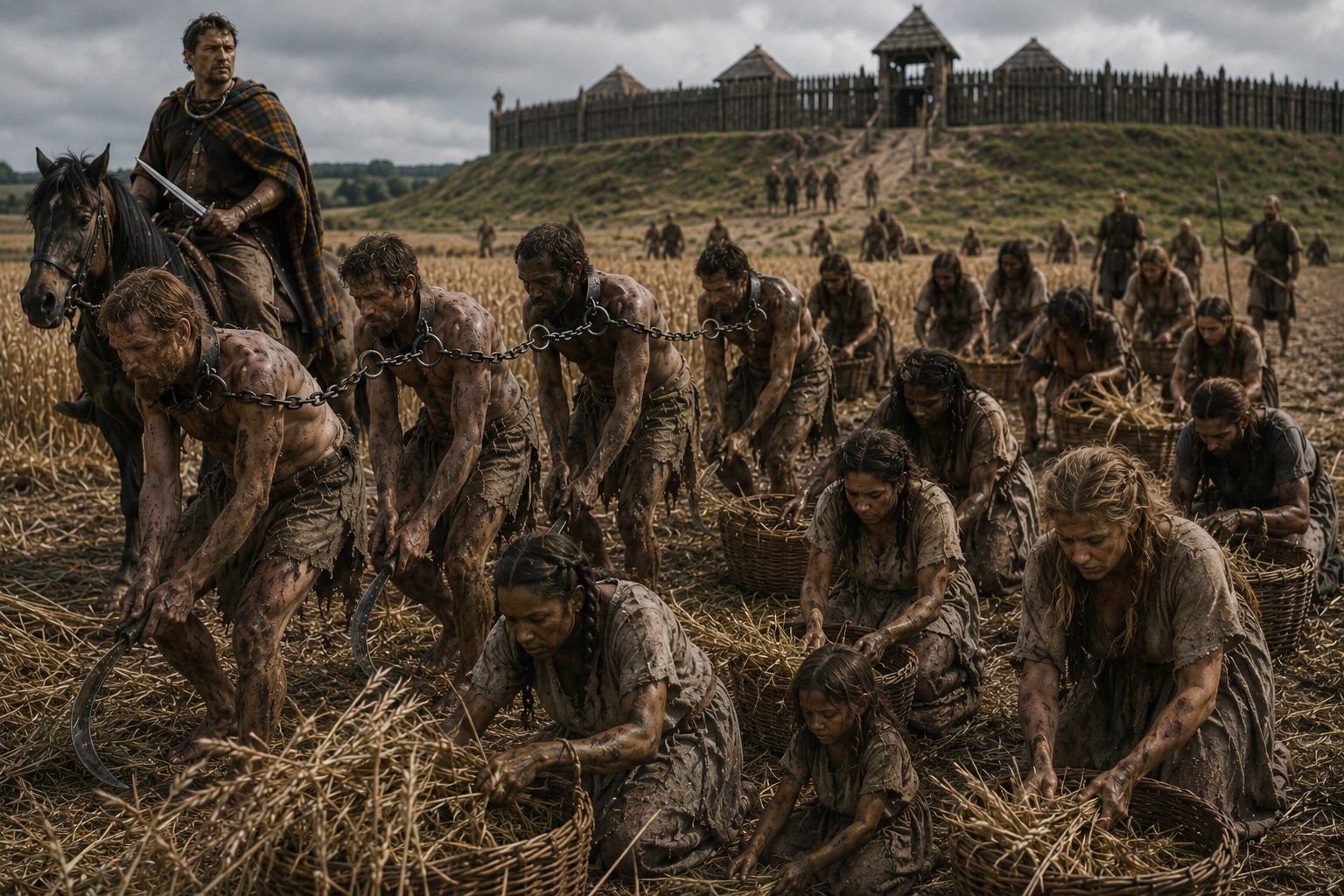
In complex chiefdoms like the Iron Age Celtic polities, enslaved labor was systematically integrated into the agricultural cycle to generate the massive grain surpluses required to feed urban cores, support specialized artisans, and fund elite-sponsored public feasts.
While commoners worked their own ancestral plots, enslaved laborers—predominantly prisoners of war, foreign captives, or individuals stripped of legal identity due to extreme unresolved debts—were deployed as an unfree, concentrated workforce under the supervision of elite overseers or regional lineage governors.
📑 The Daily Cycle of Forced Agricultural Labor
The physical reality of intensive agricultural bondage in a pre-industrial paramount chiefdom can be broken down into four continuous phases:
- Landscape Clearance and Field Preparation: Before planting could even begin, workers were forced to clear dense river floodplains (such as the American Bottom in Illinois) or heavy woodland fields (across France and Britain). This involved felling trees with stone or early iron axes, burning away underbrush under hazardous conditions, and manually turning acres of heavy, clay-rich soil using heavy stone, bone, or wood hoes.
- Monoculture Planting and Maintenance: Enslaved work gangs were deployed in structured lines across extensive corporate or temple fields controlled directly by the elites (such as the Great Sun or Celtic lineage chiefs). They walked miles of tilled soil to plant vast monocultures—specifically high-yield maize at Cahokia, or wheat, barley, and rye in Celtic Gaul and Britain. Because these crops require intense management, captives spent months performing exhausting, repetitive manual labor: weeding fields under direct sunlight, digging irrigation ditches, diverting water channels, and manually collecting pests.
- The Mass Harvest Push: The peak of exploitation occurred during the autumn harvest window. Laborers worked from dawn to dusk under immense physical pressure to harvest the entire regional yield before seasonal rains or frosts destroyed the crop. In the Celtic world, this meant using iron sickles to cut wheat at blistering speeds; in Cahokia, it required hand-stripping thousands of ears of maize and carrying them back to the urban centers in heavy, woven wicker backpacks weighing up to 60–80 pounds.
- Surplus Processing and Granary Construction: The labor did not end with the harvest. Captives were forced to construct the monumental infrastructure required to preserve the wealth of the chiefdom. They hauled heavy timber logs to build massive, elevated communal granaries designed to protect the grain from moisture and rodents. Women and young captives were then forced into hours of stationary, body-breaking labor: kneeling over rough stone slabs (metates) to manually grind dry maize into flour, or using wooden flails to thresh and winnow European grain.
Bibliographic Sources
- Paul McDowell: Perspectives: An Open Introduction to Cultural Anthropology, Chapter 7: Political Anthropology.
- Elman R. Service: Origins of the State and Civilization: The Process of Cultural Evolution, University of California, Santa Barbara, 1975, W. W. Norto.
- Charles Maisels: The Archaeology of Politics and Power: Where, When and Why the First States Formed.
- Thomas E. Emerson: Cahokia and the Archaeology of Power, University of Alabama Press, 1997.