The transition from localized, tribal communities to a centralized state is one of the most transformative shifts in human history. As populations expand, informal community norms no longer suffice to maintain peace and stability. To prevent fragmentation and collapse, a rising state relies on a highly structured framework capable of enforcing social order across vast distances and diverse populations.
1. The Predecessor: Beyond the Chiefdom
States did not appear overnight out of thin air. In his foundational text Primitive Social Organization, anthropologist Elman Service established the classic evolutionary taxonomy mapping how societies scale in political complexity: [1]
[Bands] ➔ [Tribes] ➔ [Chiefdom Societies] (Can fragment or bypass) ➔ [Centralized States]
In the vast majority of historical cases, the state emerged directly as an evolution of the chiefdom society. Chiefdoms introduced regional, centralized leadership under a single hereditary chief who often held perceived supernatural authority. However, as Service notes, chiefdoms lack the structural permanence of a state; they rely heavily on personal charisma, kinship ties, and redistribution networks. When the chief dies, the entire political structure often shatters.
The state fixes this instability by replacing a single person with permanent, bureaucratic institutions. However, as historian Charles Keith Maisels argues in Early Civilizations of the Old World, this trajectory is not an absolute law of human nature. Maisels explicitly challenges a rigid, mandatory progression, demonstrating that political evolution can stall, reverse, or bypass steps entirely:
- The Dead End: Many powerful chiefdoms collapsed or fractured back into decentralized tribes rather than consolidating into states.
- The Immediate State: “Secondary states” frequently skipped the gradual chiefdom phase entirely, rapidly organizing themselves from scratch to defend against or trade with an already existing neighboring empire.
2. The Mechanics of State Formation: Order, Narrative, and Control
– States are characterized by a central government that has a monopoly over legitimate uses of physical force, a sizeable bureaucracy, a system of formal laws, and a standing military force. At its core, the formation of an early state relies on three interconnected pillars:
- Administrative Infrastructure: A centralized government driven by a specialized bureaucracy, standardized writing, mathematics, and schooling systems to manage wealth, taxation, and trade.
- Institutionalized Coercion: A formal legal apparatus backed by physical power—namely weapons, a trained army, and law enforcement—to secure borders and suppress internal rebellion.
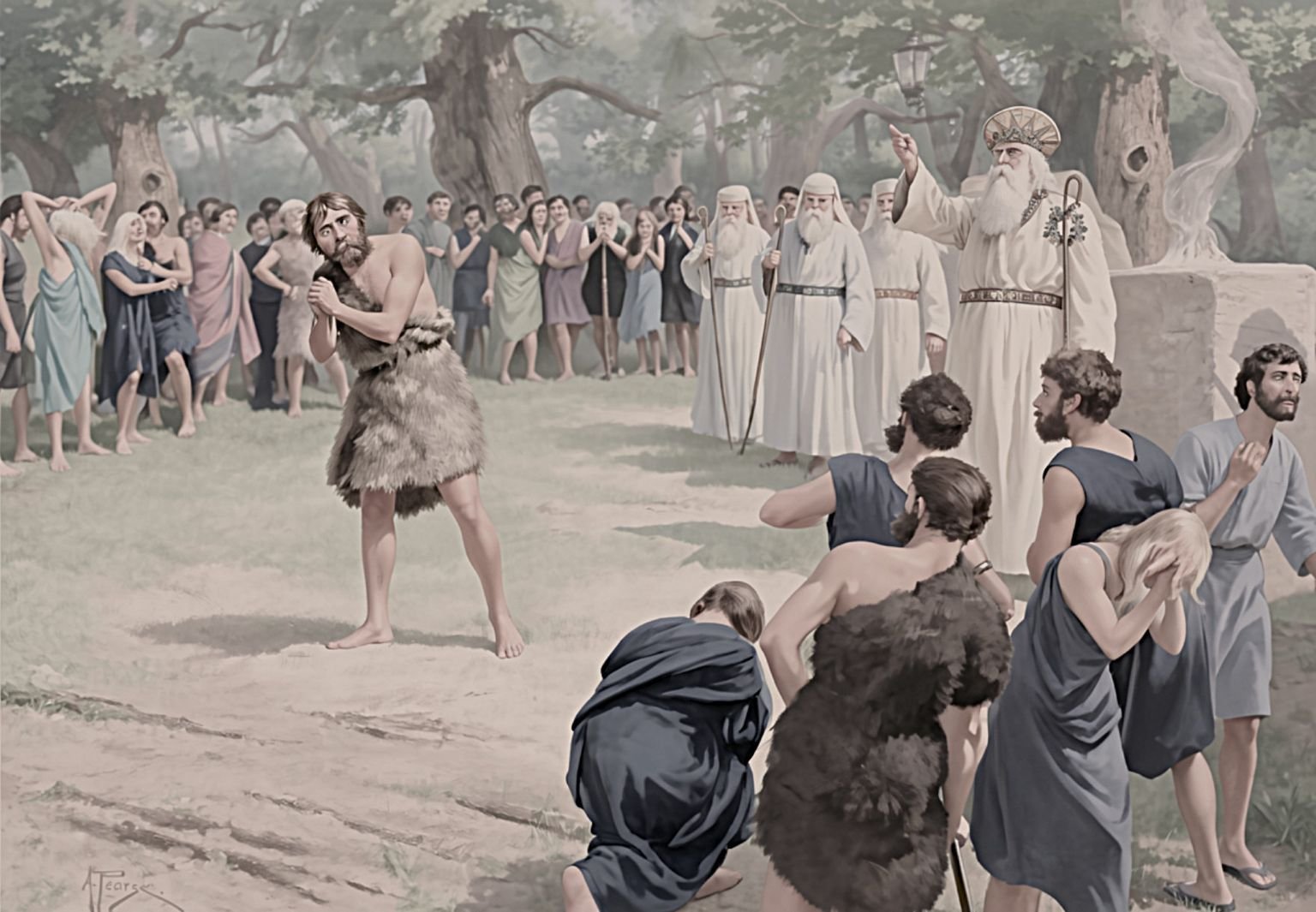
- The Intermediary Narrative: A state myth financed by the ruler and sustained by a subordinate priestly class. Rather than relying on abstract laws, the ruler claims direct divinity or poses as the vital intermediary between the people and the deities. The state finances scribes to weave these claims into emotional, awe-inspiring fantasy stories and build public monuments to visually project these state myths, his power, and demanding psychological compliance from the population.
– Warfare occurs in all human societies, but at no other level of political organization is it as widespread as in states. Indeed, warfare was integral to the formation of the agricultural state.
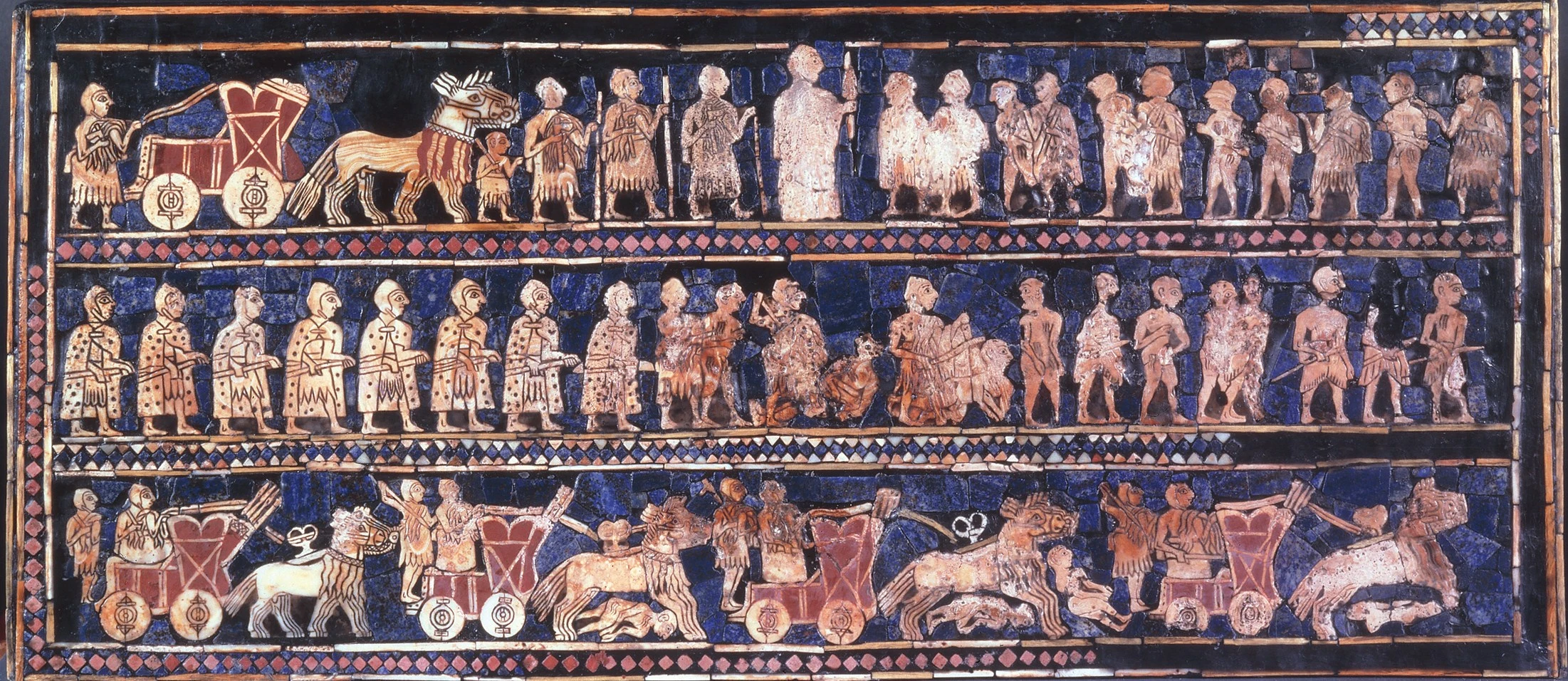
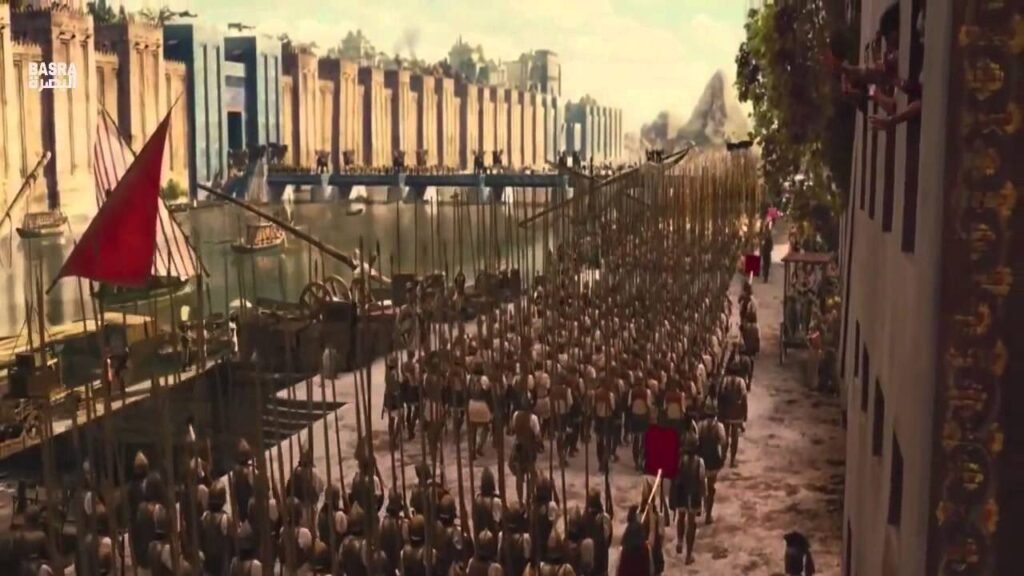
– State-organized societies (civilizations) operate on a large scale with centralized political and social organization, class stratification, and intensive agriculture. They have complex political structures and many permanent government institutions, and they are based on notions of social inequality including slavery.
– Such societies are ruled by a tiny group of elites, who hold monopolies over strategic resources and use coercion to enforce their authority. State-organized societies of the past were first ruled by priest bureaucrats, then gradually came under the rule of more secular kings, who sometimes became despotic monarchs, very often with alleged divine powers. This type of social organization was typical of the early literate civilizations and was the forerunner of the classical civilizations of Greece and Rome.
– Ultimately, statehood is an exercise in complex social control. By weaving physical force together with calculated political propaganda, early rulers transformed thousands of strangers into a single, cohesive civilization.
3. Public State Cults, State Myth, and Priestly Class
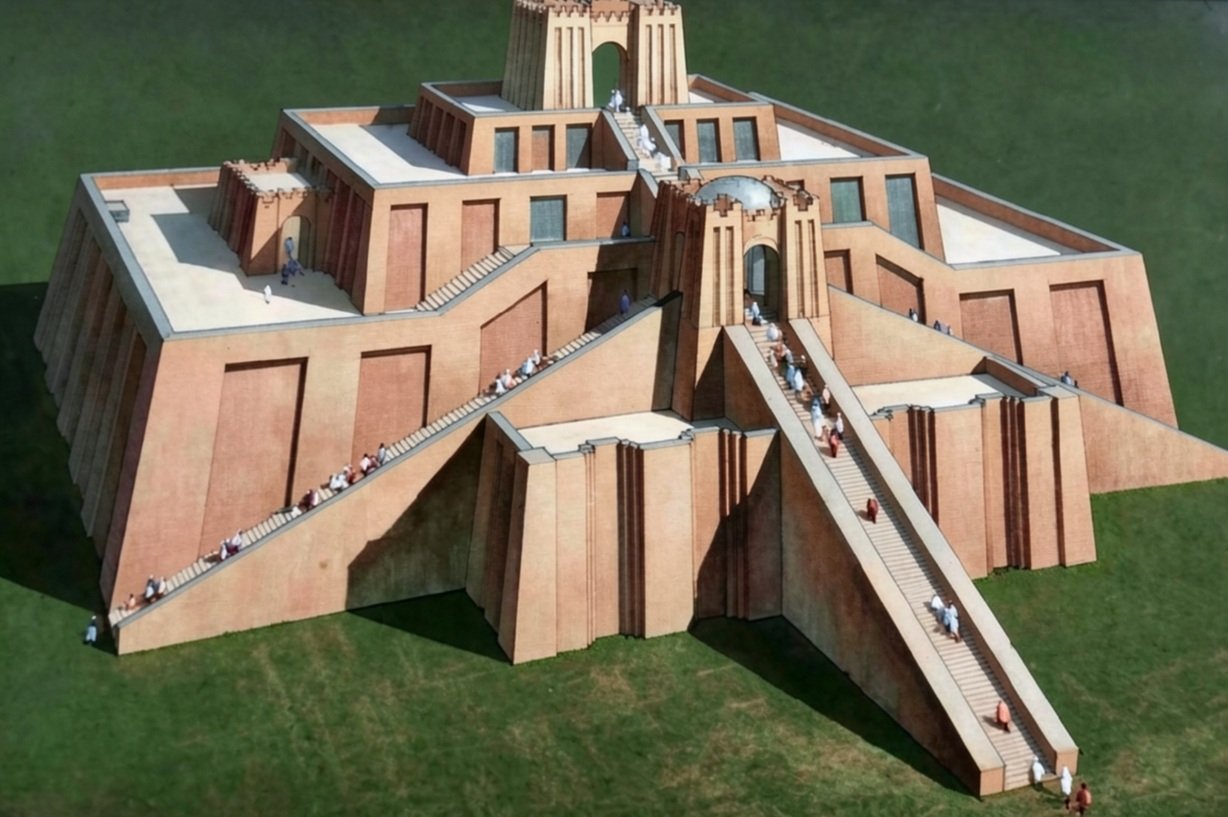
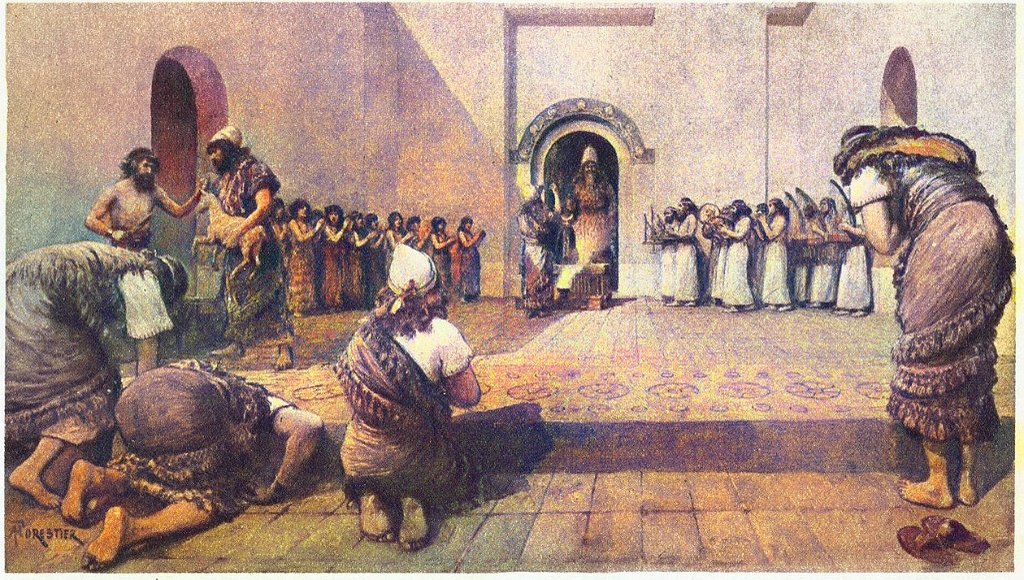
This served as the ideological anchor for urban society.
- State Myth: Cities were physically designed around the deity’s temple or Ziggurat. The myths tell us that the city belonged to a specific deity and humans were created to serve them. A standardized behavior by framing work and taxes as religious duties.
- Priestly Class: Archaeologists identify these through specialized residential quarters near temples. This class managed the state cult by controlling the calendar, agricultural cycles, and the redistribution of surplus grain, effectively acting as the first administrative bureaucracy.
Legitimacy
Legitimacy is the glue that makes these elements work without constant violence.
- Divine Right: In Mesopotamia, legitimacy was archaeologically visible in King Lists and inscriptions where rulers claimed they were chosen by the gods. When the public accepted this state myth, they viewed the laws and taxes not as theft, but as the natural and right order of the world.
- Performance: The state maintained legitimacy by providing physical benefits, such as large-scale irrigation systems and defensive city walls. By providing security and food stability, the ruling class earned the right to lead in the eyes of the population.
4. The Ledger of Power: Writing and Arithmetic
A state cannot exist if it cannot count its transactions and trade, calculate its resources, or record its own rules. In The Emergence of Civilization, Charles Keith Maisels demonstrates that the invention of writing systems—such as Mesopotamian cuneiform—did not begin as a creative outlet for literature. It began as a practical tool for data processing, economic management, and political control. [1, 2]
MATHEMATICS & WRITING
Without calculus and a writing system, there can be no state, because it is absolutely necessary for:
– Administration (Taxes & Land Surveys) and Trade Logistics (Exchange Rates & Inventories)
– Legal Codes (Codified Penalties & Royal Decrees)
– Public Mythology (State Rituals & Sacred Narratives)
Early bureaucracies deployed mathematics and writing to manage three critical arenas of state survival:
- Trade and Economics: Scribes used clay tablets to track grain surpluses, calculate exchange rates, log imports, and issue binding commercial receipts.
- Law and Enforcement: Oral laws are easily forgotten or manipulated. By freezing laws in written stone, the state created fixed, unyielding legal codes that established uniform penalties for each class and projected absolute authority.
- Mythological Infrastructure: To ensure the public state cult survived across generations, the ruling class used writing to standardize its state mythology. Scribes codified exact rituals, calendars, and divine origin stories, preventing regional variations from fracturing the unified state identity. Political motivations directed these changes—elevating one local deity’s status over another—for instance, the Babylonian Epic of Creation elevated the Babylonian god, Marduk, to supremacy.
5. The Metal Ages: Chronology of the State
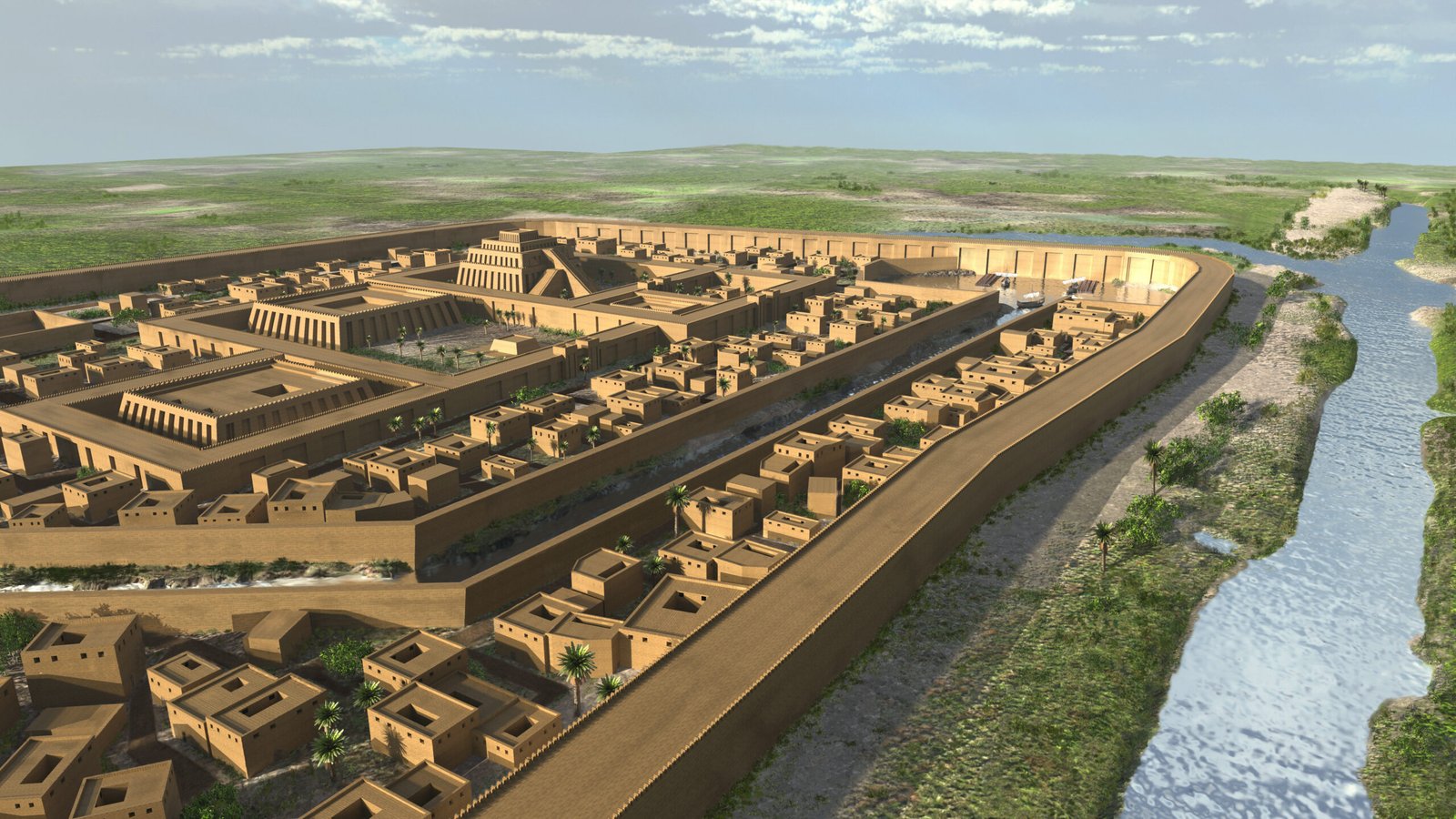
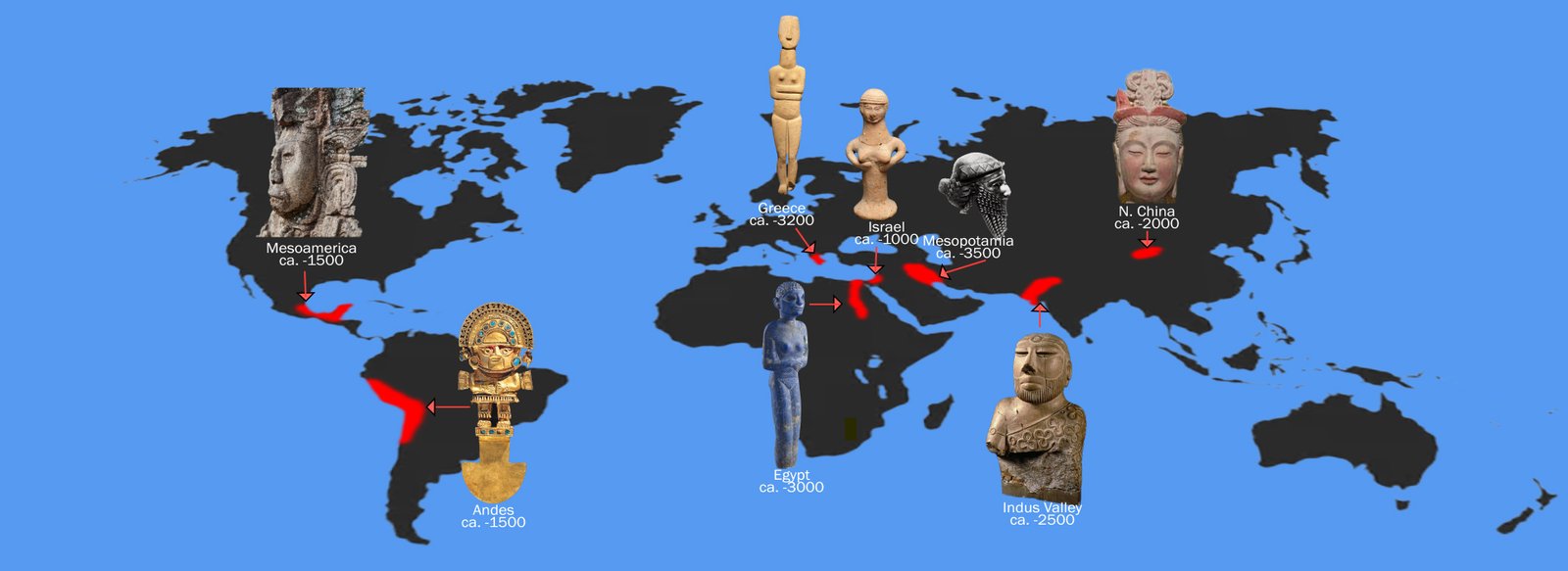
While the absolute earliest pristine states—such as Uruk in Mesopotamia or the Early Dynastic Period in Egypt—initially triggered their urban revolutions during the Late Chalcolithic and Bronze Age (around 4000–3000 BCE), the true global explosion of statehood occurred during the Iron Age (starting around 1200 BCE).
| Archaeological Era | Timeline (Approx.) | State Development Milestones |
| Bronze Age | -3300 to -1200 | Birth of the world’s first pristine city-states and river valley empires (Mesopotamia, Egypt). Highly centralized, elite-controlled economies due to rare, expensive tin and copper. |
| Iron Age | -1200 to -500 | The Global Explosion of Statehood. Iron ore is cheap, abundant, and widely accessible. This democratized metal production, allowed for massive standing armies, and fueled the rise of sprawling, interconnected mega-states across Asia, Europe, and the Mediterranean. |
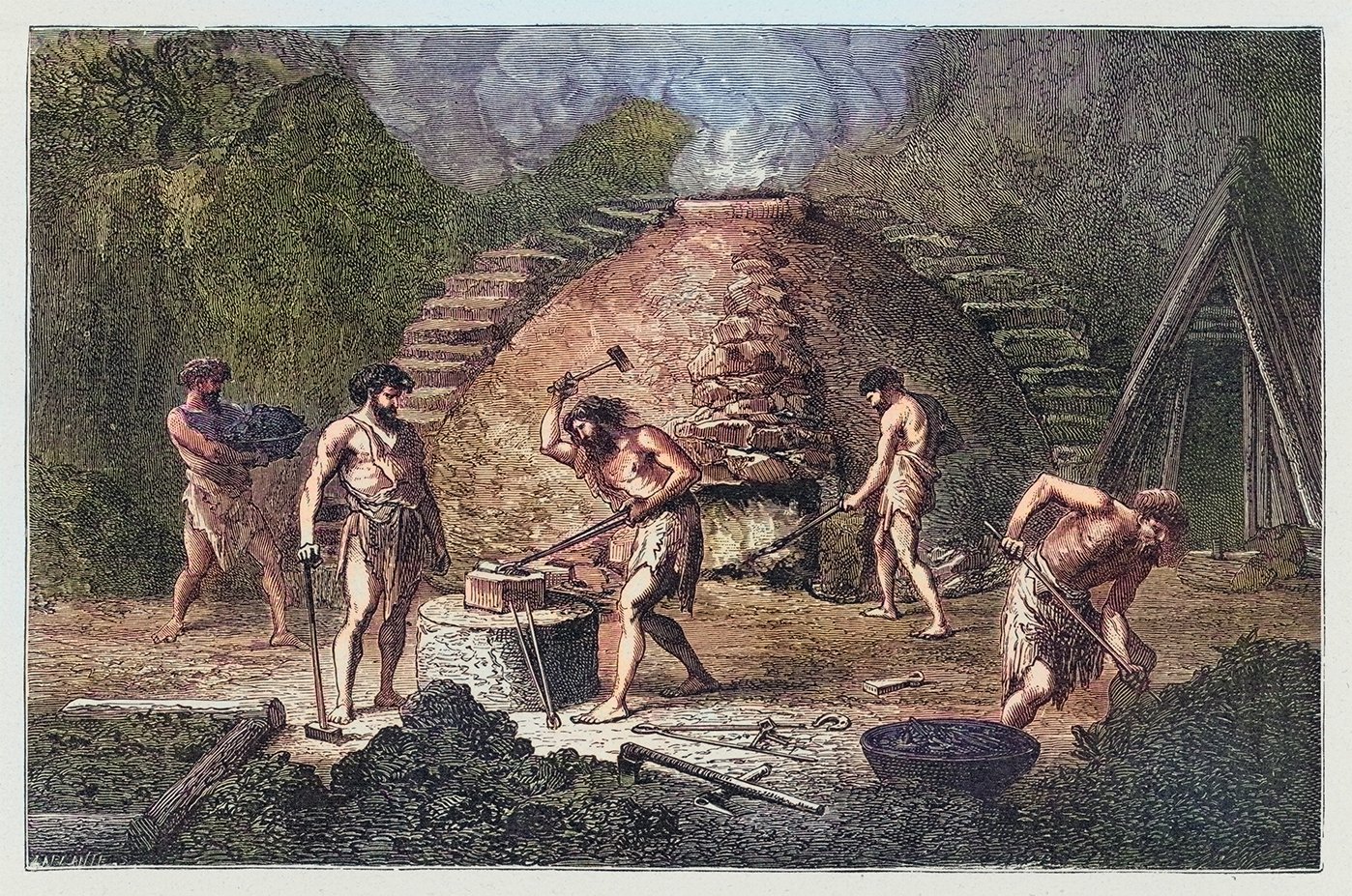
Bronze required complex, elite-controlled trade networks to secure rare deposits of copper and tin. Iron ore, by contrast, was incredibly abundant and found almost everywhere. The transition to iron technology democratized the production of tools and weapons, allowing expanding societies to clear massive forests for agriculture, feed exploding populations, and equip massive standing armies. It was during this iron-fueled geopolitical boom that the institutionalized state truly became the dominant form of political organization across the globe.
6. The Scribe Schools: Forging the Imperial Mind
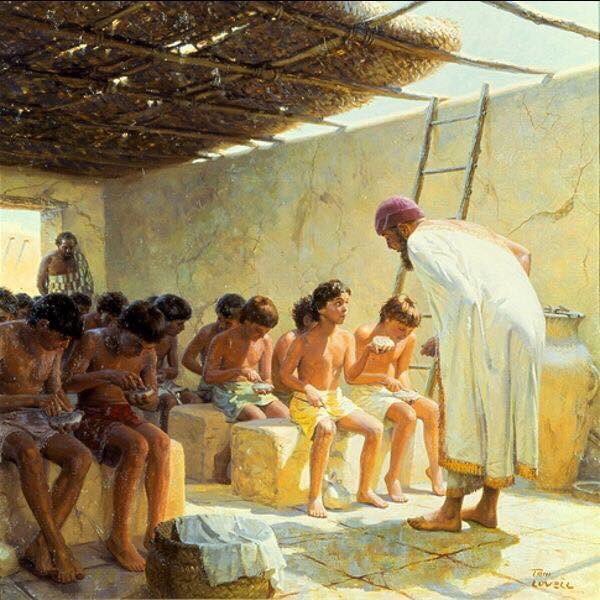
To maintain a grip on a growing population, the divine king could not rely on raw strength alone; he needed an army of literate administrators. Early states engineered the world’s first formal educational institutions—such as the Edubba (tablet house) in Mesopotamia—not to foster free thought, but to strip away regional identities and forge an intensely loyal, standardized elite class.
[Raw Recruit] ➔ [Years of Brutal Rote Copying] ➔ [Mental Realignment] ➔ [Loyal Bureaucrat]
(Discipline by the Rod) (Privileged Identity)
The mechanics of this institutional training operated through strict psychological and practical channels:
- The Discipline of Rote Copying: Students spent years memorizing and copying economic ledgers, legal forms, and lists of nouns. Disobedient or sloppy students were routinely beaten with rods. This brutal repetition broke individual defiance and conditioned absolute obedience to hierarchy and procedure.
- Indoctrination Through Myth: Scribes did not just practice handwriting; they copied the exact state mythologies and royal hymns commissioned by the king. By rewriting these emotional narratives thousands of times, the state’s political propaganda became hardwired into the scribe’s worldview as truth.
- Class Alienation as a Retention Tool: The state deliberately elevated scribes above the illiterate masses. Scribes were exempt from manual labor, military conscription, and heavy taxation. This economic privilege created a profound psychological divide: the scribes viewed the common people as chaotic and uneducated, linking their own high social status directly to the survival of the king’s regime.
7. Legal Code vs. Divine Will: The Dual Mandate
A king who rules purely by whim creates an unpredictable environment that ruins trade and invites rebellion. Conversely, a king who binds himself entirely to a rigid, written law limits his own absolute power. Early rulers solved this dilemma by positioning written legal codes not as human inventions, but as copies of the cosmos’s flawless design, dictated directly through the king.
[The Deities] (Ultimate Cosmic Order)
│
▼ (Divine Dictation / Appointment)
[The Divine King] (The Intermediary & Supreme Justice)
│
▼ (Written in Stone)
[The Legal Code] (Enforced on the Illiterate Population)
In Origins of the State and Civilization, Elman Service proposed a “managerial benefits” framework of state power. He argued that early state leaders maintained authority not purely through raw class oppression, but because they provided massive, centralized organizational benefits to society—such as public works, resource distribution, and centralized judicial systems. The legal code was the primary tool used to implement these systemic benefits, balanced carefully with claims of supernatural backing:
- The King as the Filter of Justice: Rulers argued that laws were immutable, but because the king was the sole intermediary between the deities and humanity, only he could correctly interpret or update them. The law was absolute, but the king controlled the law.
- Sanctioned Coercion: Breaking a written law was framed as an assault on the gods who kept the universe functioning. This allowed the state to execute criminals, seize property, or crush rebels while framing these acts of raw violence as necessary rituals to restore cosmic harmony and prevent divine anger.
8. Case Study: Mesopotamian Reality
The cradle of statehood in Mesopotamia perfectly illustrates this entire structural framework in action.
The Edubba (Sumerian Scribe Schools)
In cities like Nippur and Ur, archaeological excavations have unearthed thousands of school exercise tablets. Young elites were systematically broken into the state apparatus through a rigid curriculum. They copied the Sumerian King List, a highly politicized, heavily mythologized historical narrative designed to prove that centralized kingship was handed down directly from heaven. The school structure explicitly taught them that without their ledgers, the world would collapse into tribal chaos.
The Code of Hammurabi (Babylon, c. 1750 BCE)
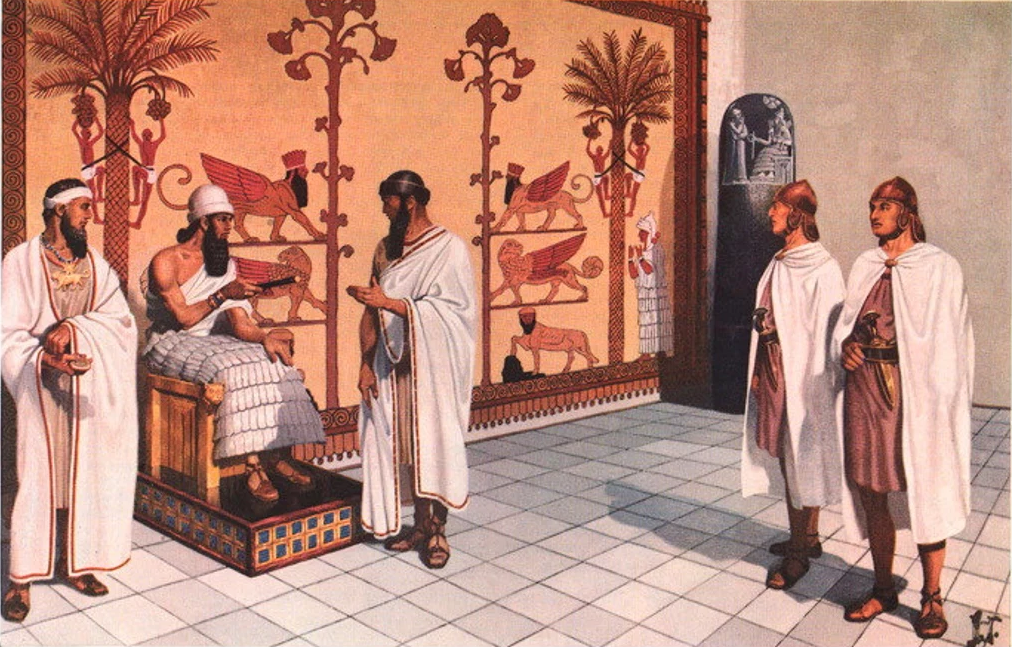
The famous diorite stele of Hammurabi is the ultimate example of balancing a legal code with divine will. At the very top of the massive stone monument, Hammurabi is visually carved standing before Shamash, the god of justice. Shamash is handing Hammurabi the measuring rod and tape—the mathematical tools of state administration.
The prologue explicitly lays out the emotional narrative the king financed: Hammurabi is the “pious prince” appointed by the gods to destroy the wicked and prevent the strong from oppressing the weak. The document concludes with terrifying curses, promising that any future ruler or citizen who defaces the laws will have their empire destroyed by the gods through famine, war, and pestilence. Hammurabi used advanced writing to standardize penalties across his empire, but he wrapped the entire legal apparatus in divine fear to ensure absolute, unquestioned obedience.
9. Case Study: The Roman State
The Roman State is history’s premier example of a stratified society, where a tiny elite controlled all vital strategic resources. In early agricultural states, this meant controlling land and irrigation water. In modern industrial societies, it means controlling natural resources. Rome’s entire political trajectory was shaped by this steep social inequality.
👑 Phase 1: The Divine Kingdom
Rome emerged after its citizens overthrew their Etruscan rulers. It began as a divine kingdom organized into five strict social classes:
- The King and Priests: Held ultimate religious power.
- The Patricii: The wealthy aristocratic elite.
- The Equites (Knights): Elite military officers and cavalry.
- The Plebs: Common citizens and workers.
- The Slaves: Forced laborers without rights.
🏛️ Phase 2: The Roman Republic
After six kings, Romans abolished the monarchy. They established a Republic that lasted until Julius Caesar. This system dropped the king, leaving four social classes (Patricii, Equites, Plebs, and Slaves) and intentionally leaving the apex of the pyramid vacant.
Religion remained a powerful tool for elite political control. Wealthy patricians exclusively ran the state’s religious colleges. These powerful bodies were led by the Pontifex Maximus (Chief Priest) and the Augur (prophetic official).
🗡️ The Rise and Fall of Julius Caesar
During the 1st century BCE, ambitious leaders like Sulla and Pompey began promoting personal cults. Julius Caesar took this trend to its absolute peak. Caesar was a dominant political figure who served as both Pontifex Maximus and prefect. He doubled Rome’s territory through conquest and became Dictator for Life (Dictator perpetuo) in February 44 BCE.
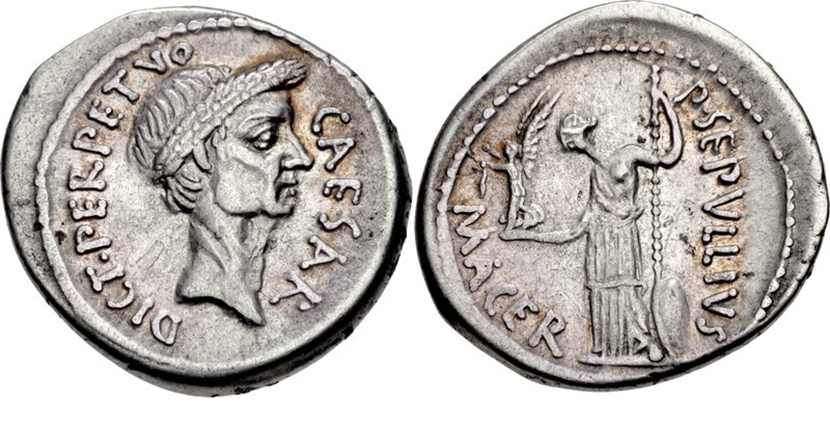
Caesar heavily publicized his power using advanced currency writing. He issued a lifetime silver coin—a 19mm, 3.70g, 6h denarius minted in Rome by moneyer P. Sepullius Macer. The coin displayed his wreathed head on the front. The back featured Venus Victrix (the goddess of victory) holding Victory, a scepter, and a shield. Caesar claimed he was a direct descendant of this deity.
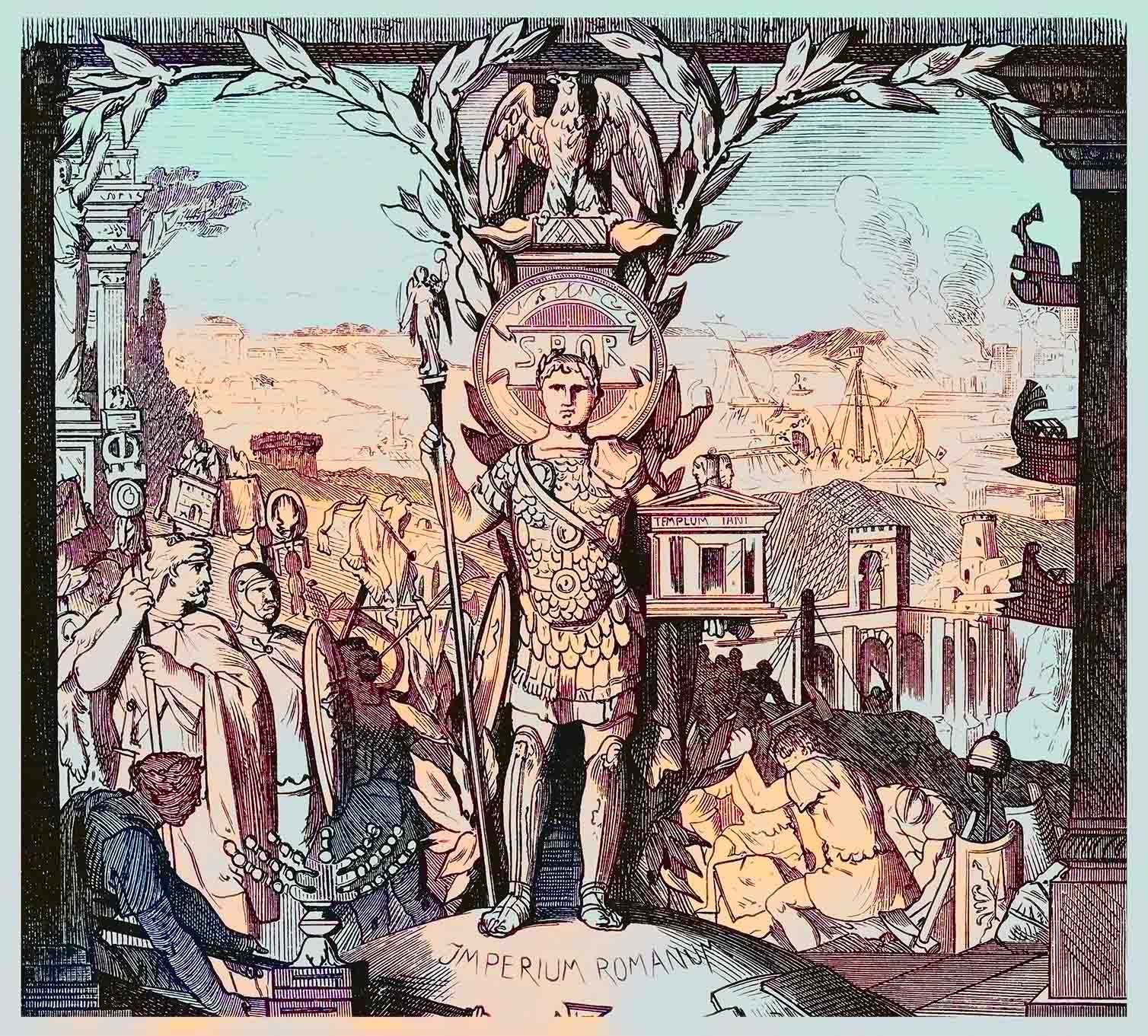
Fearing his absolute power, rival aristocrats assassinated him on March 15, 44 BCE. After his murder, the Roman Senate officially consecrated him as a god: Divus Julius.
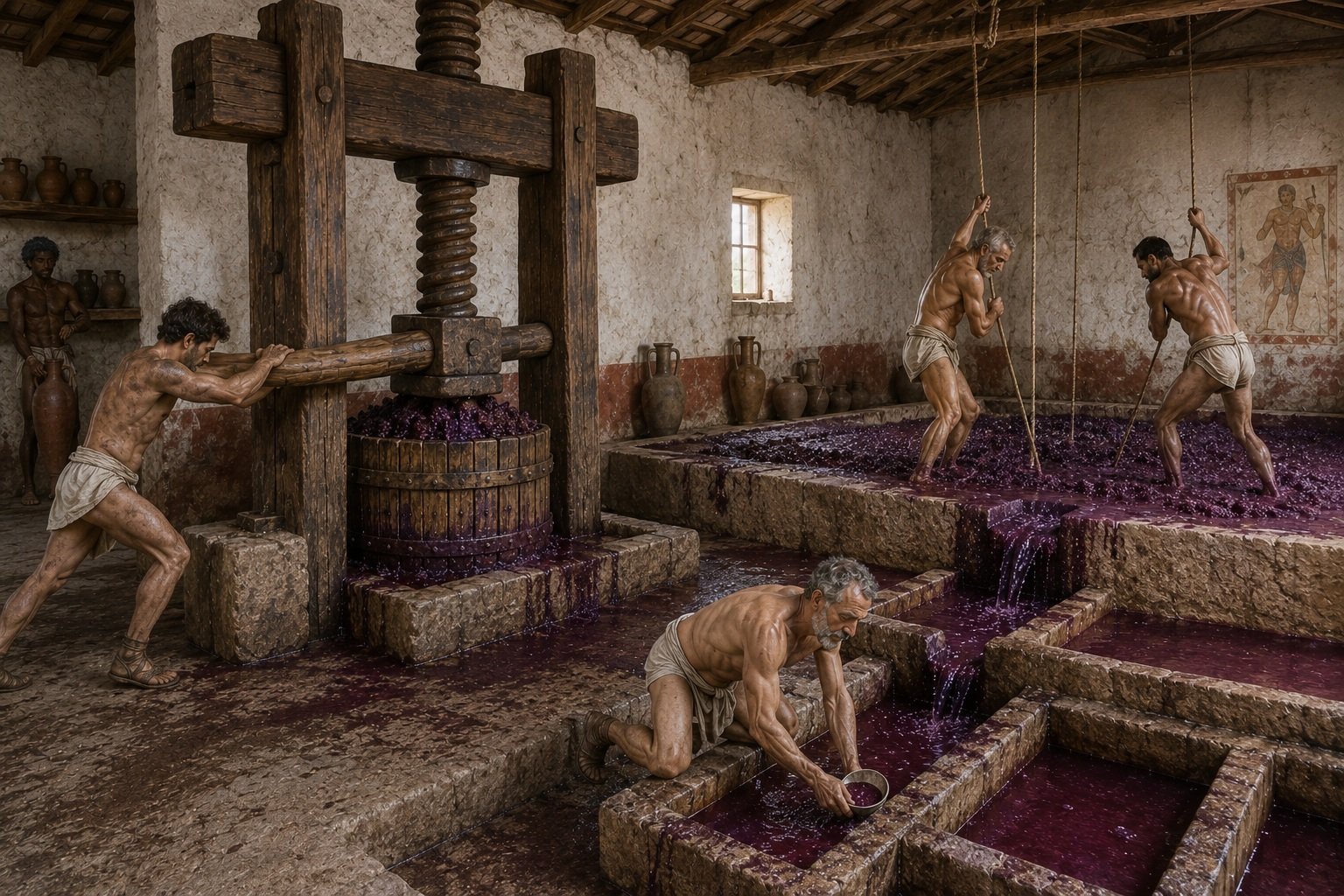
👑 Phase 3: The Roman Empire & The Imperial Cult
The foundations of the Imperial Cult began in the 2nd century BCE with the worship of the goddess Roma. She served as the spiritual personification of Rome’s global dominance.
With a single ruler restored to the apex of power, the empire evolved its class hierarchy. Rather than purely political lines, society split into two brutal new legal tiers: the Honestiores (the honorable upper class) and the Humiliores (the humble lower class). This system adjusted the five-class imperial hierarchy:
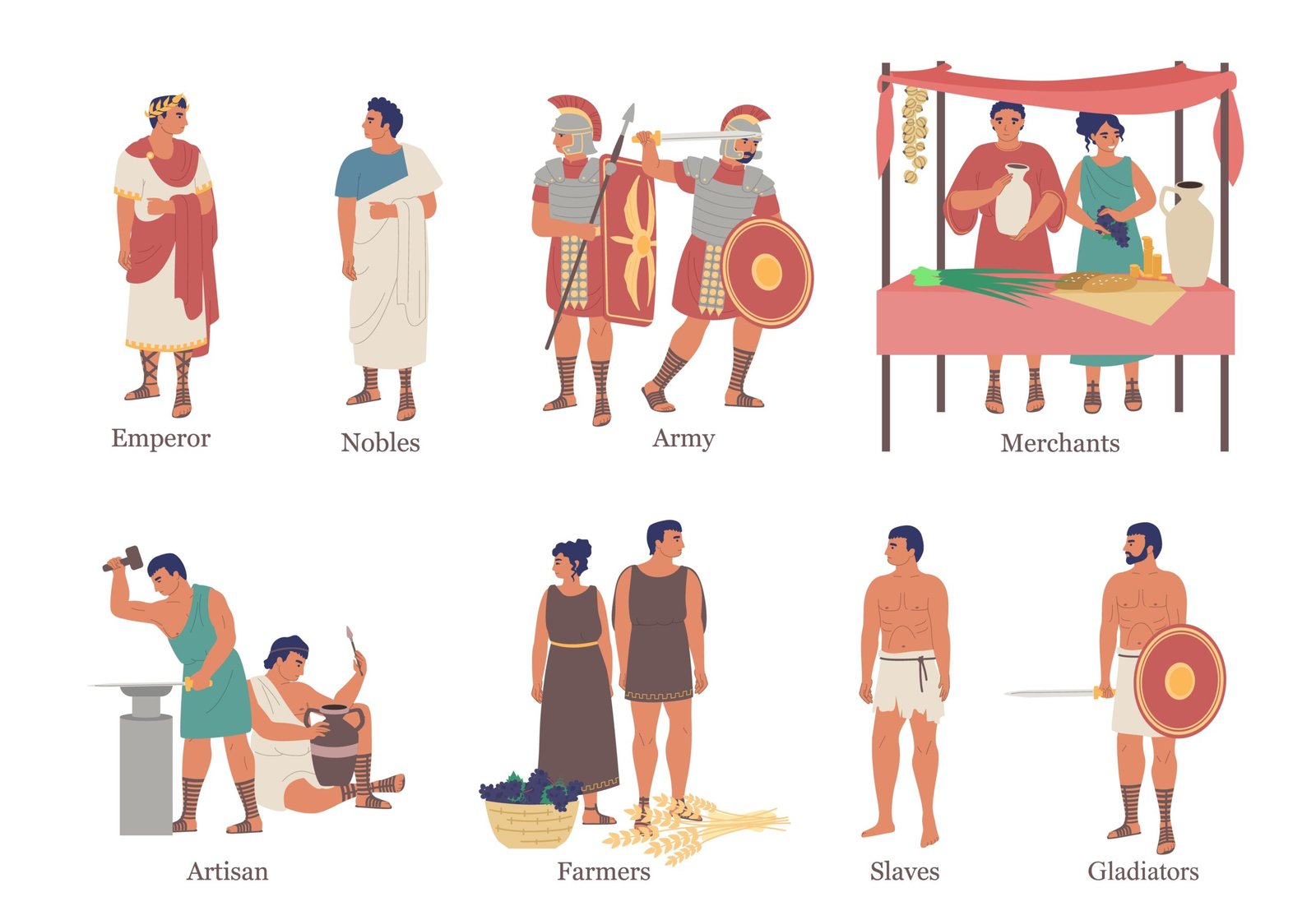
- The Emperor & Imperial Cult: Peak religious authority.
- The Patricii (Honestiores): Aristocrats and senators supporting the state.
- The Equites (Honestiores): Transitioned from military officers into the empire’s vital administrative and tax-collecting backbone.
- The Plebs (Humiliores): Common free citizens and workers, who legally lost many Republican protections.
- The Slaves: Bottom tier sustaining production.
Following Caesar’s assassination, a brutal civil war erupted. His adopted son and triumvir, Caesar Octavian, won the war and became Rome’s first emperor: Augustus. Because his adoptive father was deified, Augustus took the divine title Divi filius (Son of a God).
Managing the Living Ruler
Traditional Roman religion strongly rejected the concept of a living “man-god”. To maintain compliance without violating local traditions, Augustus enforced careful geographical rules:
- Inside Rome: Citizens did not worship the living emperor directly. They worshiped his genius Augusti—his protective, supernatural guardian spirit.
- Outside Rome: Eastern cities eagerly requested to honor the ruler. Augustus permitted a living cult exclusively in the East, mandating it be paired directly with the goddess Roma.
Post-Mortem Deification
When Augustus died, the Roman Senate passed a formal public act of deification (deificatio). He officially became a divus, transforming into an open object of religious worship. The state built magnificent temples, established dedicated priestly colleges, and declared public holidays on his birthday (dies natalis).
This exact political blueprint was repeated for 92 subsequent “clone” emperors. Worshiping the living emperor’s genius became a mandatory civic duty for all citizens.
✝️ The Christian Shift
The imperial cult flourished until the 3rd century under Emperor Alexander Severus, after which it slowly fell into disuse due to the rise of the Christian cult. Christians steadfastly refused to participate in the mandatory imperial cult, making it a primary cause of state-sponsored persecutions starting in the 1st century.
However, rulers refused to abandon the immense utility of divine backing. Pagan deification customs lingered for centuries, even being applied as a legacy ritual to Constantine I. To preserve the emperor’s vital religious function, the new Christian cult adapted. They elevated the ruler to the sacred rank of Isapostle (“Equal to the Apostles”).
The imperial cult officially ended in 380 CE when Emperor Theodosius I issued the Edict of Thessalonica. This decree replaced all traditional civic cults with Christianity. The Emperor and the Empire were completely rebranded, transforming into the ultimate earthly guarantors of a new, divine Christian order.
📊 Comparison of Roman Social Structures
| Social Tier | 👑 1. Divine Kingdom | 🏛️ 2. Roman Republic | 🛡️ 3. Roman Empire (Evolved) |
|---|---|---|---|
| Tier 1 (Peak) | The King & Priests (Ultimate ruling power) | The Emperor & Imperial Cult (Ruler worshiped as divine) | |
| Tier 2 | The Patricii (The elite aristocracy) | The Patricii (Aristocrats controlling the Senate) | Honestiores (Upper Class) (Senators & Elite Families) |
| Tier 3 | The Equites (Military cavalry) | The Equites (Wealthy business class) | The Equites (Imperial Bureaucrats) (The administrative backbone) |
| Tier 4 | The Plebs (Common free citizens) | The Plebs (Common free citizens) | Humiliores (Lower Class) (All free common citizens & workers) |
| Tier 5 | The Slaves (Forced labor) | The Slaves (Forced labor) | The Slaves (Bottom tier sustaining production) |
10. Systemic Collapse: The Fragility of the Pillars
Because the state is an interconnected machine rather than a natural organism, it is highly vulnerable to systemic collapse. If even one of its primary pillars fails, the entire apparatus can quickly dissolve back into localized chiefdoms or tribal fragmentation.
[Resource Scarcity / War] ➔ [Bureaucracy Fails to Tax] ➔ [Army Deserts] ➔ [State Cult Loses Faith] ➔ [Collapse]
Historical state collapse typically occurs through a domino effect across the core infrastructure:
- The Failure of Administrative Logistics: When environmental degradation, climate shifts, or blocked trade routes dry up resources, the bureaucracy can no longer collect taxes or distribute grain surpluses.
- The Fracturing of Coercion: If the state treasury runs dry, bureaucrats and soldiers stop getting paid. An unpaid military either deserts or turns its weapons inward, splintering into localized warlords and destroying internal social control.
- The Death of the Myth: The ultimate crisis of the state occurs when the intermediary narrative shatters. If a divine king fails to stop a severe drought, a plague, or a foreign invasion, the public state cult loses its emotional hold over the population. The illusion of divine backing evaporates, exposing the ruler as a mere human tyrant and triggering widespread peasant rebellions.
When these complex systems failed—as seen during the Late Bronze Age Collapse or the fall of various Mesopotamian dynasties—the writing systems, mathematical schools, and grand bureaucracies vanished, proving that statehood is a fragile cultural construct that requires constant, resource-heavy maintenance to survive.
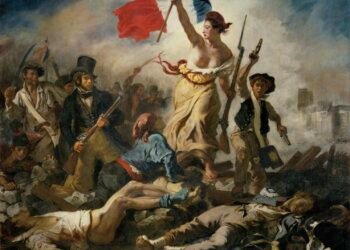
It was not until the American and French revolutions that there was put an end to these divine king practices.
Academic Source References
- Maisels, Charles Keith. The Emergence of Civilization: From Hunting and Gathering to Agriculture, Cities, and the State in the Near East. Routledge, 1990.
- Maisels, Charles Keith. Early Civilizations of the Old World: The Formative Histories of Egypt, The Levant, Mesopotamia, India and China. Routledge, 1999.
- Maisels, Charles Keith. The Archaeology of Politics and Power: Where, When and Why the First States Formed. Oxbow Books, 2010.
- Service, Elman R. Primitive Social Organization: An Evolutionary Perspective. Random House, 1962.
- Service, Elman R. Origins of the State and Civilization: The Process of Cultural Evolution. W. W. Norton & Company, 1975.