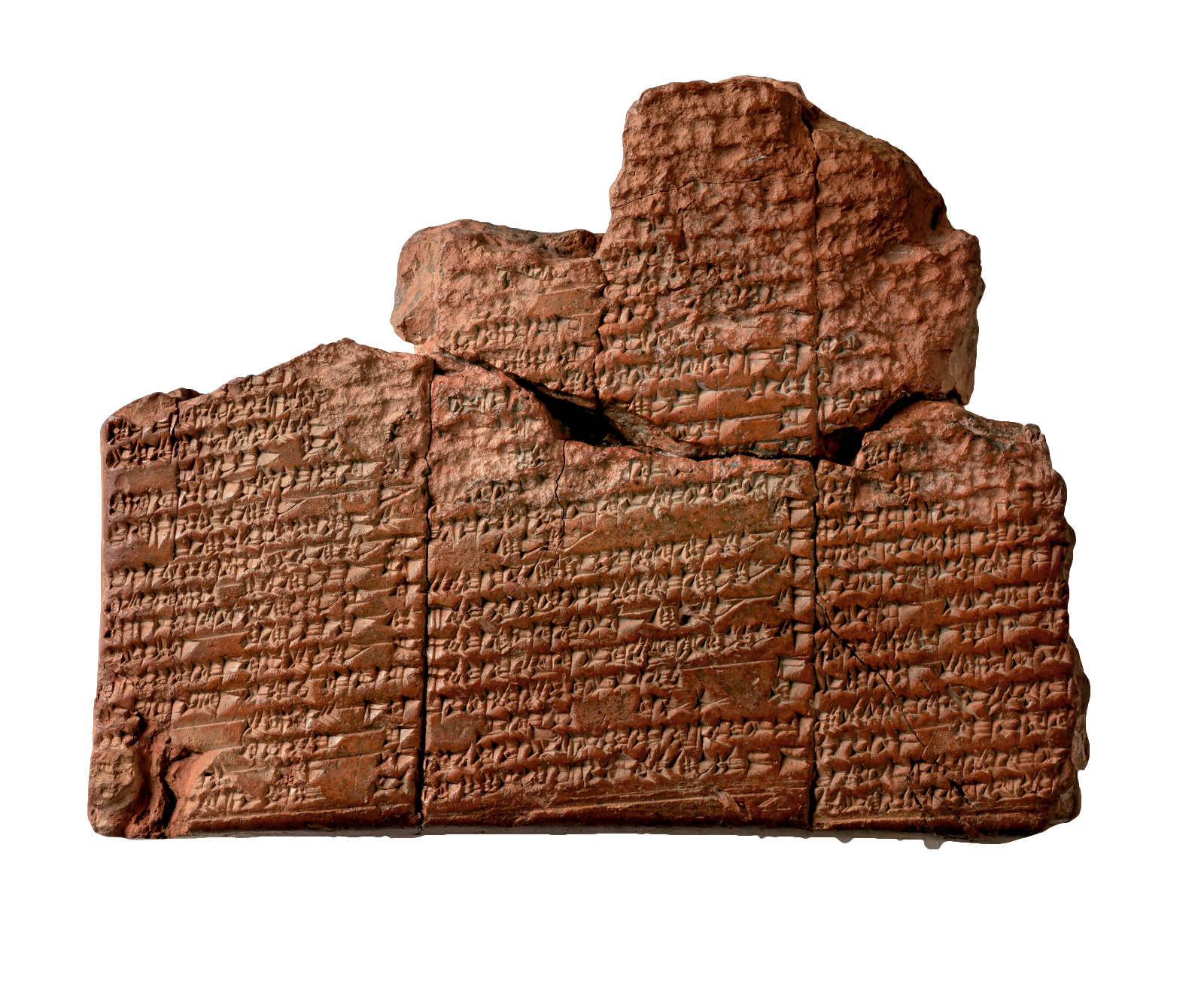
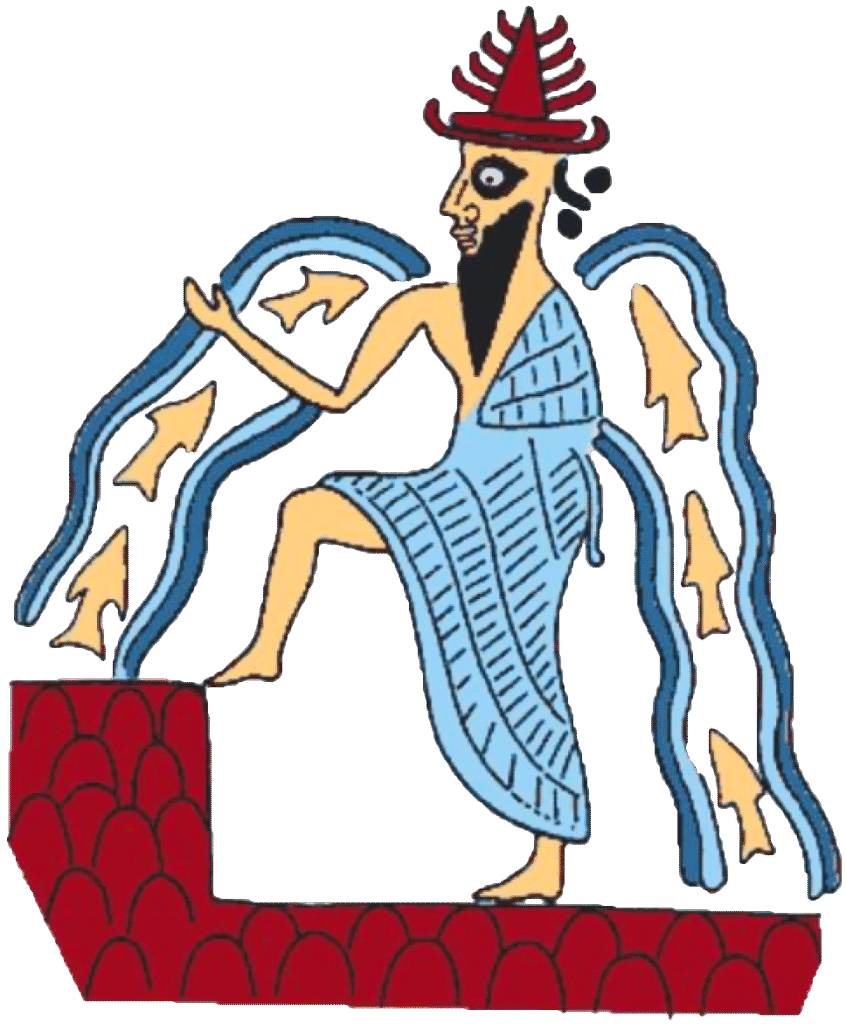
The Eridu Genesis (c. -1,600) is the Sumerian Creation-Flood Story. It tells us of the creation of humanity, the institution of kingship, and a massive flood sent by the gods to destroy humanity. But the god Enki warns the pious king Ziusudra and saves him from the divine deluge, serving as a precursor to later versions of the story.
A glimpse into Antediluvian Life from a tablet text originating from Ur, dating back to around -1600:
This fragment from Ur reveals that during those early nomadic times, no irrigation canals had been constructed, and no ditches were dug. The seeder-plow had yet to be invented, and sowing grain was unheard of. For years, people endured famine as nothing was cultivated. The god of herds, Sumukan, had not yet made his presence known, leaving people without wool for weaving cloth, thus forcing them to remain unclothed. At this point in history, communities were still small, living in the old Stone Age, and there was no institution of a divine king yet.
The birth goddess Ninhursaga has decided to end mankind’s nomadic, vagrant existence, and have them build antediluvian cities thus become sedentary and civilized, especially for the worship of the gods, including herself:

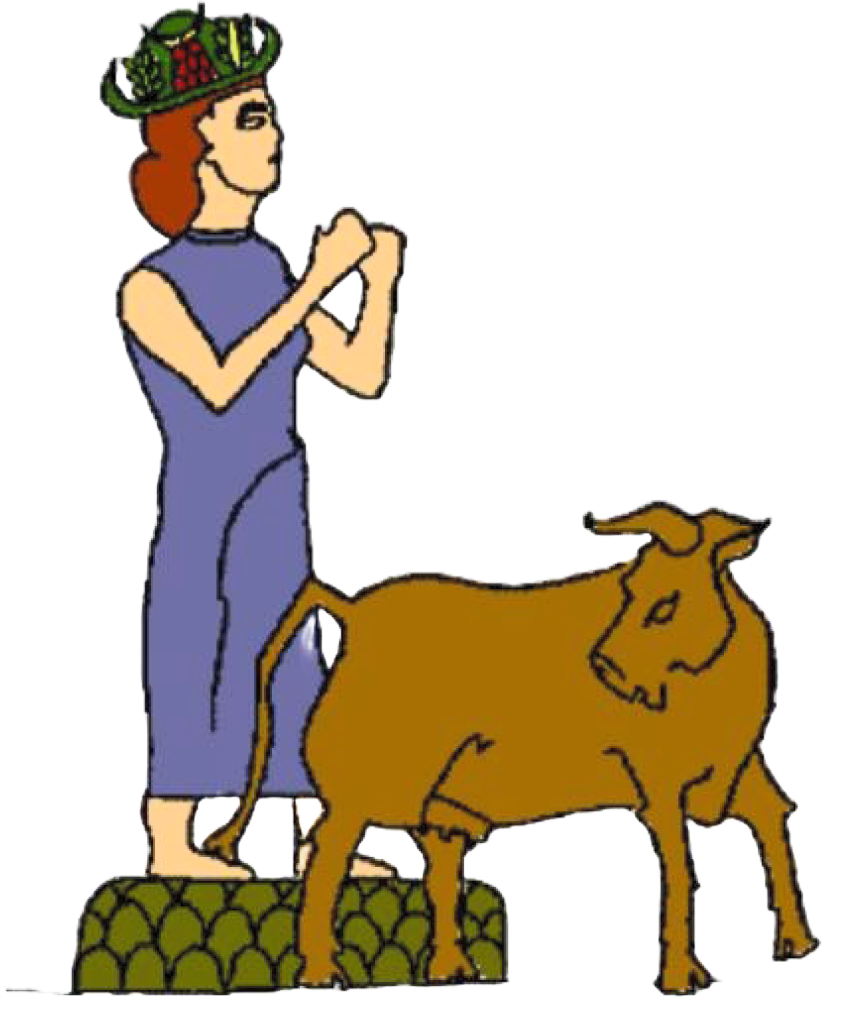
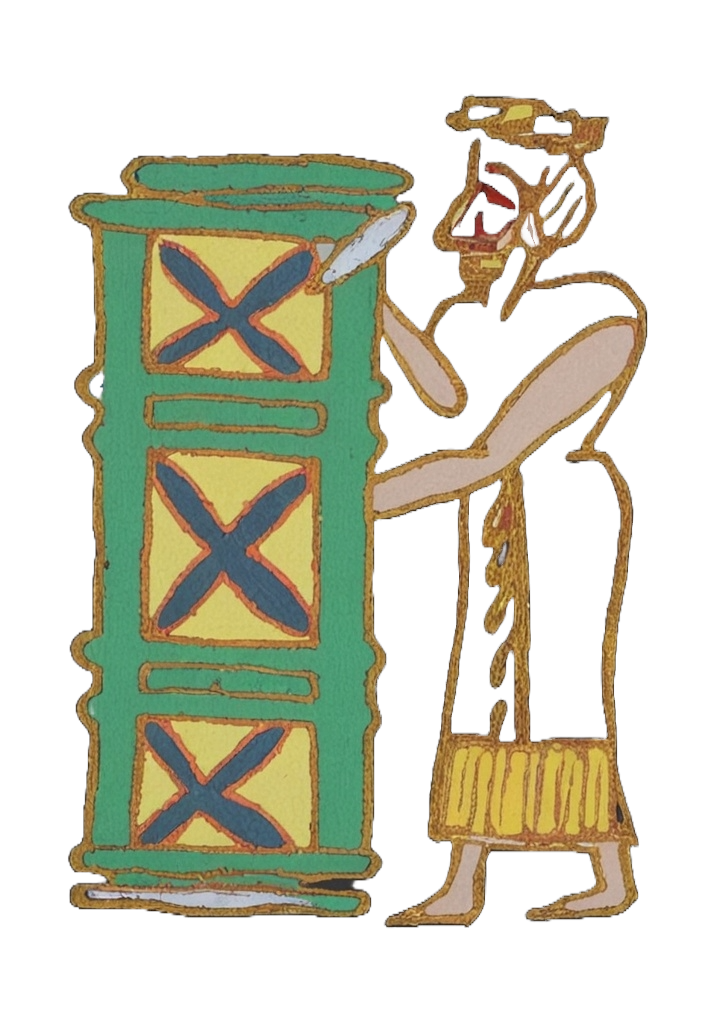
Eridu Genesis
COLUMN I:
- The creation of men (now lost).
- The Creator Goddess thinks about humankind: their miserable condition (I, line 1-16):
Let me bethink myself of my humankind, all forgotten as they are; and mindful of mine, Nintur’s, creatures let me bring them back, let me lead the people back from their trails.
“May they come and build cities and cult-places, that I may cool myself in their shade;
may they lay the bricks for the cult-cities in pure spots, and may they found places for divination in pure spots.”
She gave directions for purification, and cries for quarter, the things that cool (divine) wrath.
She perfected divine service and the august offices, she said to the (surrounding) regions:
“Let me institute peace there.”
- Then follows a summary statement on the initial creation (I, line 17-22):
When An, Enlil, Enki, and Ninhursaga [Nintur] fashioned the dark headed people (the Sumerians) they had made the small animals that come up from out of the earth come up from the earth in abundance, and had let there be, as befits it, gazelles, wild donkeys, and four-footed beasts in the desert. “
COLUMN II, Missing 3 lines
- Creation of kingship by the gods (II, line 4-13):
and let me have him advise; let me have him oversee their labor, and let him teach the nation to follow unerringly like cattle!
When the royal scepter was coming down from heaven, the august crown and the royal throne being already down from heaven, he i.e., the king regularly performed to perfection the august divine services and offices, laid the bricks of those cities in pure spots…
- The first cities (II, line 14-19):
The firstling of those cities, Eridu, she gave to the leader Nudimmud, the second, Badtibira, she gave to the Prince and Sacred One the third, Larak, she gave to Pabilsag, the fourth, Sippar, she gave to the gallant, Utu the fifth, Shuruppak, she gave to Sud.
These cities, which had been named, and been allotted half-bushel baskets, dredged the canals, which were blocked with purplish (wind-borne) clay, and they carried water. Their cleaning of the smaller canals established abundant growth.
COLUMN III, Missing 14 lines:
- The kings who ruled before the Great Flood (lost). This information has been preserved in the first portion of the Sumerian King List. Antediluvian kings had remarkably long reigns: The longest length of reign is 64,800 years for three different kings. The total duration of kingship during the antediluvian world is 352,800 years. The antediluvian patriarchs listed in Genisis 5 convey a similar picture of a small number of long-lived antediluvian patriarchs. Lamech was 182 when he begat Noah.
- The supreme god Enlil’s decision to destroy humankind (lost).
- Ziusudra is worthy (III, line 15-25):
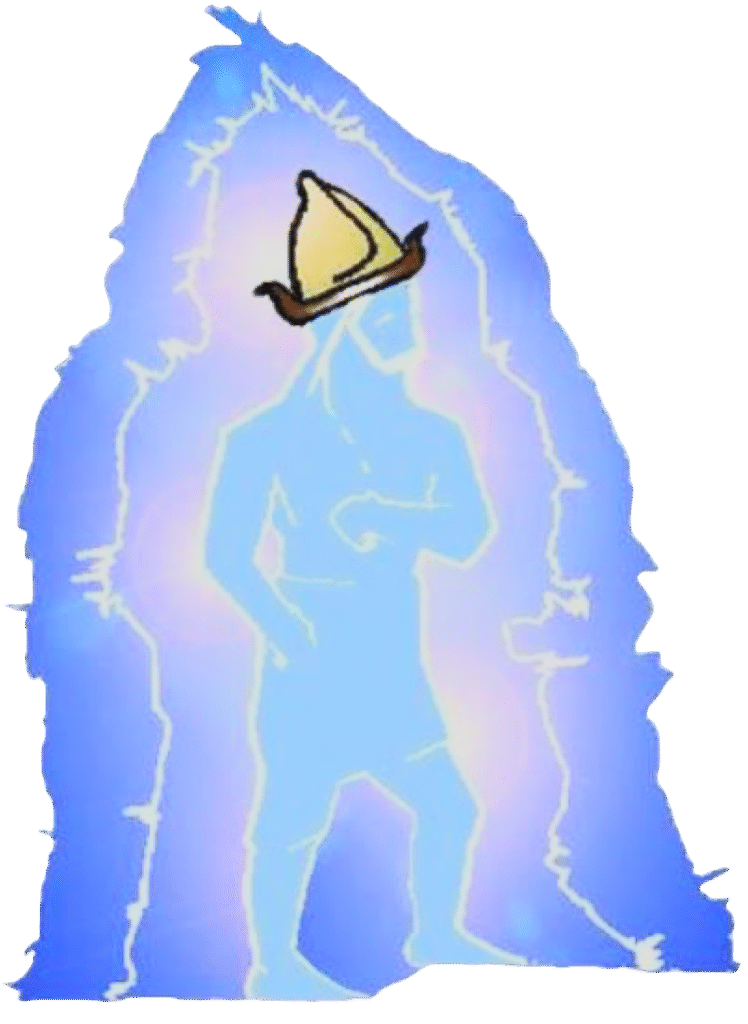
That day Nintur wept over her creatures and holy Inanna was full of grief over their people; but Enki took counsel with his own heart. An, Enlil, Enki, and Ninhursaga had the gods of heaven and earth swear by the names An and Enlil. At that time Ziusudra was king and lustration priest. He fashioned, being a seer, a statue of the god of giddiness inducing ecstasy and stood in awe beside it, wording his wishes humbly.
COLUMN IV
- Ziusudra learns of the approaching calamity (IV, line 2-6):
As he stood there regularly day after day he heard something that was not a dream appearing: conversation a swearing of oaths by heaven and earth, a confirming touching of throats and the gods bringing their thwarts up to Ki-ur.
- Enki’s warning of the flood and his advise: (IV, line 7-23):
And as Ziusudra stood there beside it he went on hearing: “Step up to the wall to my left and listen!
Let me speak a word to you at the wall and may you grasp what I say, May you heed my advice! By our hand a flood will sweep over the cities of the half-bushelbaskets, and the country, the decision, that mankind is to be destroyed, has been made, a verdict, a command by the assembly, cannot be revoked, an order of An and Enlil is not known ever to have been countermanded, their kingship, their term, has been uprooted they must bethink themselves (of that) Now ………………… What I have to say to you…………………”
- Enki’s advice: Building of the Ark for his family and the animals (lost)
COLUMN V
- The Great flood swapped over the cities, for seven days and nights (V, line 1-9):
All evil winds, all stormy winds gathered into one and with them, the Flood was sweeping over the cities of the half-bushel baskets for seven days and seven nights. After the flood had swept over the country, after the evil wind had tossed the big boat about on the great waters, the sun came out spreading light over heaven and earth.
- Ziusudra’s sacrifice (V, line 10-22):
Ziusudra then drilled an opening in the big boat. and the gallant Utu (the sun-god) sent his light into the interior of the big boat. Ziusudra, being a king, stepped up before Utu kissing the ground before him. The king was butchering oxen, was being lavish with the sheep barley cakes, crescents together with ….. he was crumbling for him juniper, ….. the pure plant of the mountains he filled on the fire and with a ….. clasped to the breast he ….
COLUMN VI
- Ziusudra’s let the animals leave the boat (VI, line 1-7):
“You here have sworn by the life’s breath of heaven, the life’s breath of earth, that he verily is allied with you yourself; you there, An and Enlil, have sworn by the life’s breath of heaven, the life’s breath of earth, that he is allied with all of you, He will disembark the small animals that come up from the earth!”
- Ziusudra Reward: eternal life (VI, line 8-18):
Ziusudra, being king, stepped up before An and Enlil kissing the ground, And An and Enlil did well by him, were granting him life like a god’s, were making lasting breath of life, like a god’s descend into him. That day they made Ziusudra, preserver as king of the name of the small animals and the seed of mankind, live toward the east over the mountains in Mount Tilmun.
19 . . . . . . . . .