The Tablet of the Covenant

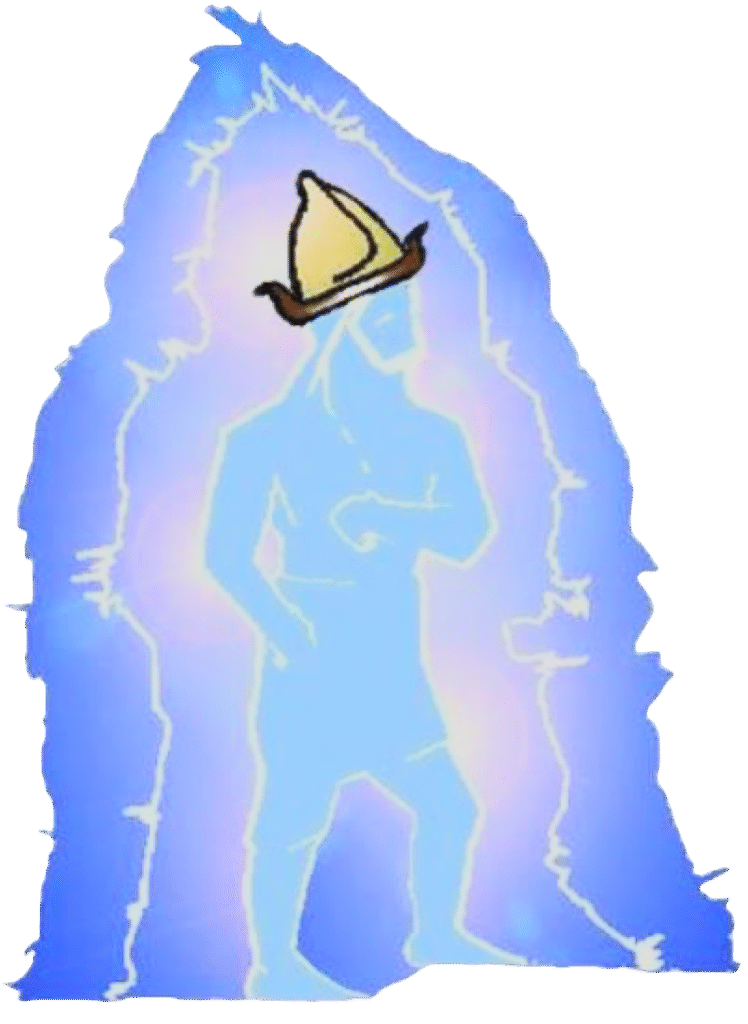
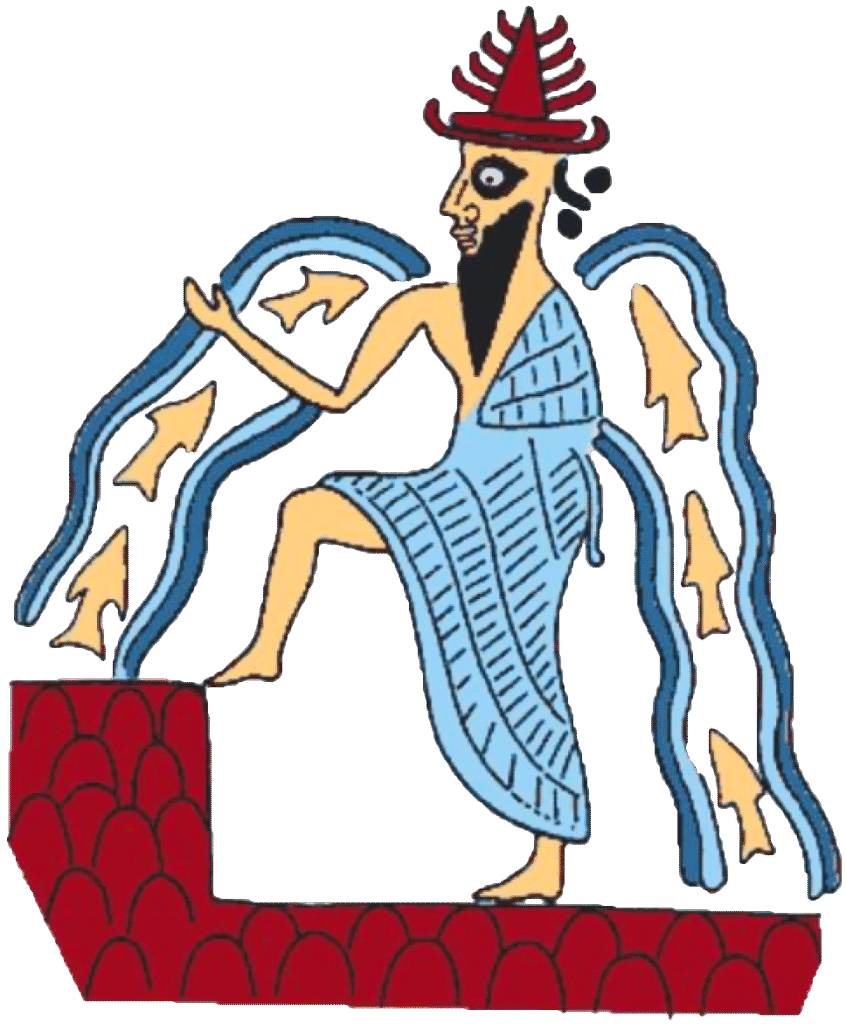
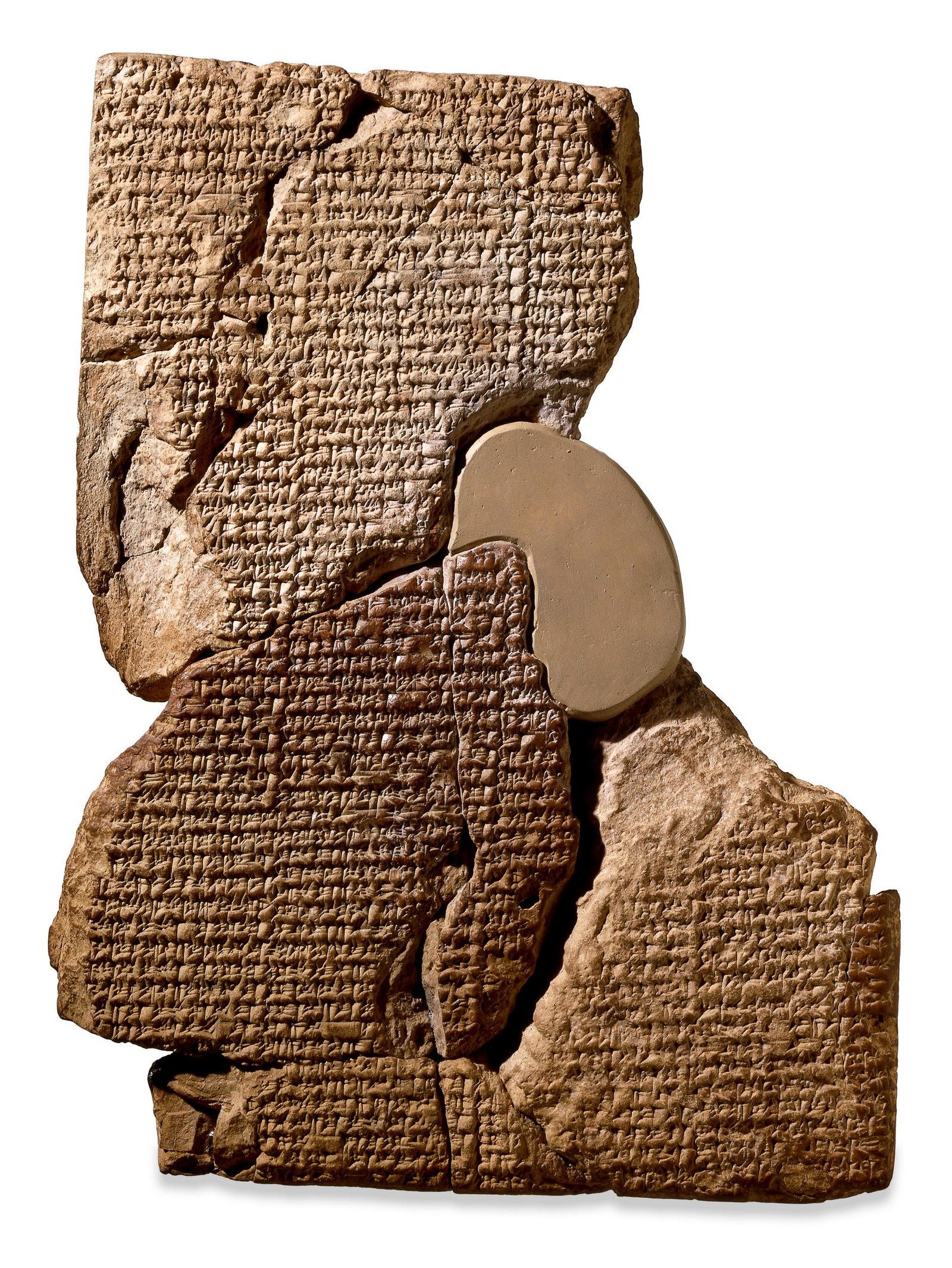
Atra-Hasis (c. -1,600) is the Babylonian Creation-Flood Story written in Akkadian. The epic contains the myth of the creation of mankind by the creation triad Enlil, Anu, and Enki. Enlil plans to destroy humanity because of overpopulation and the noise they make. One pius man, favored by Enki, is told to build a great ship to escape the floodwaters that doomed the earth.
Are Ziusudra, Atrahasis, and Utnapishtim the same?
Ziusudra is the name used in the earliest Sumerian version; a later Akkadian version uses the name Atrahasis; and the Babylonian version most well known today uses Utnapishtim.
Tablet I Genesis: Creation
Tablet I contains a creation myth about the Sumerian gods, the great Creation Triad Anu, Enlil, and Enki, gods of heaven, wind/earth, and water.
Following the Cleromancy (casting of lots), heaven is ruled by Anu, earth by Enlil, and the freshwater sea by Enki together the great Creation triad.
Enlil assigned junior divines to do farm labor and maintain the rivers and canals, but after 3600 years the lesser gods rebelled, burned their work tools, and refused to do strenuous labor.
Gibil the rebel leader:’ Every single one of us gods declared war! We have put a stop to the digging. The load is too excessive, it is killing us! Our work is too hard, the trouble too much! So every single one of us gods has agreed to complain to Enlil.’
Instead of punishing the rebels, Enki, who is also the kind, wise counselor of the gods, suggested that humans be created to do the work.
The mother goddess Mami is assigned the task of creating humans by shaping clay figurines mixed with the flesh and blood of the slain god Geshtu-E, “a god who had intelligence”.
Mami to Nintu: ‘You are the womb-goddess to be the creator of mankind! Create a mortal, that he may bear the yoke! Let him bear the yoke, the work of Enlil! Let man bear the load of the gods!’
Nintu: ‘It is not proper for me to make him. That work is Enki’s. It is not proper that I should make a mortal slave. I shall create a co-worker, a co-creator, but I will not make a slave!
This is the work of Enki; he must make everything pure! If Enki gives me the clay, then I will do it.’
Enki: let a ghost come into existence from the slain gods’ flesh, let her proclaim it as his living sign, and let the ghost exist so as not to forget the slain god.’
Foresighted Enki and wise Mami went into the Room of Fate. The womb goddess Nintu was assembled. Enki trod the clay in her presence; Mami kept reciting the incantation for Enki, staying in her presence, made her recite it.
When she had finished her incantation, she pinched off fourteen pieces of clay, and called up the knowledgeable womb-goddesses.
Seven created males, seven created females, for the womb-goddess Nintu is the creator of fate. Enki paired them two by two in her presence.
After she had mixed that clay, she called up the Creation Triad: An, Enki, and Enlil. The triad spat spit upon the clay. After ten months, a specially made womb breaks open and humans are born.
Institution of Mariage is made:
Mami: ‘A girl shall be ready by the sign of her bosoms, a young man, by the beard upon his cheek. In the gardens and the waysides they shall cleave unto each other, a wife and her husband shall choose each other.’
The new mortals grew quickly and soon they took hold of tools, made new picks and spades, made big the canals so as to feed the people and sustain the gods.
60 times 3600 years had passed, and the country became too wide, the people too numerous and too noisy. In those days the Triad sent the Watchers to the Earth. The holy sons and daughters of the Triad Watchers became the leaders of the Land (divine kings).
Enlil: ‘The noise of mankind has become too much, I am losing sleep over their racket. Give the order that the suruppu-disease shall break out, let Namtar put an end to their noise straight away! Let sickness: headache, suruppu, blow in to them like a storm!’
Now in those days, there was one Atrahasis (Ziusudra), a leader of the people, whose ear was open to his god Enki.
Atrahasis: ‘How long will the gods make us suffer? Will they make us suffer illness forever?
Enki to his servant Atrahasis: Start an uprising in your own house. … Bring a baked loaf into the presence of Namtar and make the flour offering reach him, may he be shamed by the presents and wipe away his punishing “hand”.’
Tablet I continues with legends about overpopulation and plagues. Atrahasis is mentioned at the end of Tablet_I.
Tablet II Antediluvian Life: Plagues
Tablet II begins with more overpopulation of humans and the god Enlil sending first famine and drought at formulaic intervals of 1200 years to reduce the population.
Atrahasis spoke to Lord Enki: ‘O Lord Enki, how long must the people suffer at the hands of the gods? How long will the Triad punish the children of men and the children of gods? Why are we made to starve? Why has Ishkur ceased his rain? The people are eating one another, none are safe. Happiness is no longer in the land.’
On Enki’s order, the people built a temple for Ishkur in the city and made offerings to him.
Ishkur opened his clouds and released the rains. The drought left the land and the gods went back to their regular offerings.
Now Enlil was furious with the Igigi.
Enlil: ‘All of us agreed together on a plan. But Enki has instead bestowed upon mankind, the secrets of our heavens, he is the one who has caused knowledge to increase, he has corrupted mankind. Enki is to blame for our woes.’
In this epic Enlil is depicted as a nasty capricious god while Enki is depicted as a kind helpful god, perhaps because priests of Enki were writing and copying the story.
Tablet II is mostly damaged, but ends with Enlil’s decision to destroy humankind with a flood and Enki bound by an oath to keep the plan secret.
Tablet III The Flood
Enki came to Atrahasis (Ziusudra) in a dream and Enki warns the hero Atrahasis to dismantle the tempel and build a boat with its’ materials to escape the flood planned by the god Enlil to destroy humankind.
The boat is to have a roof like the Apzu so that the sun cannot see inside it, upper and lower decks, and to be sealed with bitumen.
Atrahasis boards the boat with his family and animals and seals the door.
The storm and flood begin.
Even the gods are afraid and Nintu wept.
After seven days the flood ends and Atrahasis (Ziusudra) opened a window in the boat and saw that the sun was shining. He took a raven and released it from the boat. The raven never returned.
Atrahasis let out all the animals and people within.
Atrahasis offers sacrifices to the gods. The gods smelt the offered food and eat the offering.
Enki looked upon the bodies of his children which lay scattered about the land, he summoned his powers and turned them all into great flies. Enki wept in sorrow for what Enlil had forced him to do.
Nintu: ‘His grief is mine! My destiny goes with his! He must deliver me from evil, and appease me! Let me go out in the morning, let these flies be the lapis lazuli of my necklace by which I may remember them daily, forever.’
Enlil is furious with Enki for violating his oath. But Enki denies violating his oath and argues: “I made sure life was preserved. I have given vent to my feelings!”
Enki to the womb-goddess Nintu”: ‘You are the womb-goddess who decrees destinies. You have created the destinies of the people, you have created the destinies of the gods, whatever you say shall be made so. I propose a covenant, a bond of Heaven and Earth, and make Enlil swear to it just as he made me swear to his oath.’
Enlil swear to the covenant known as Duranki, the Bond of Heaven and Earth, never again to harm the people of the land. And so the years passed, and mankind flourished, and the gods were made happy by the people of the land.