The New Stone Age revolution marks a key point when humans shifted from mobile hunting and gathering to settled farming communities. While this change was revolutionary in its lasting effects, it was a very slow process in transforming subsistence or culture.
Augmented and stratified households arose as corporate units during the Samarran period (-6,250 to -6,000) and Ubaid (-6,000 to -5,000) as a means of marshalling and managing labour and other resources needed to pioneer irrigation and exploit the rain-deficient alluvium. The successful advance down the alluvium to the head of the Gulf was made possible by this corporate unit. Clusters of such hierarchically organised and stratified households, with the gods’ households at the centre, served as the nuclei of city-formation on the southern alluvium, the earliest in the world.
1. Climate change
The ending of the last Ice Age and the onset of the present warm period, the Holocene, is what ended the Old Stone Age (Palaeolithic) hunting and gathering way of life and ushered in the Neolithic way of life based on farming and permanent settlement, with villages that spread rapidly over the landscape. “Environmental change is a principal reason for major episodes of biological change.
Farming – a socio-subsistence system that thereafter spread like an epidemic.
2. Pre-Pottery Levant
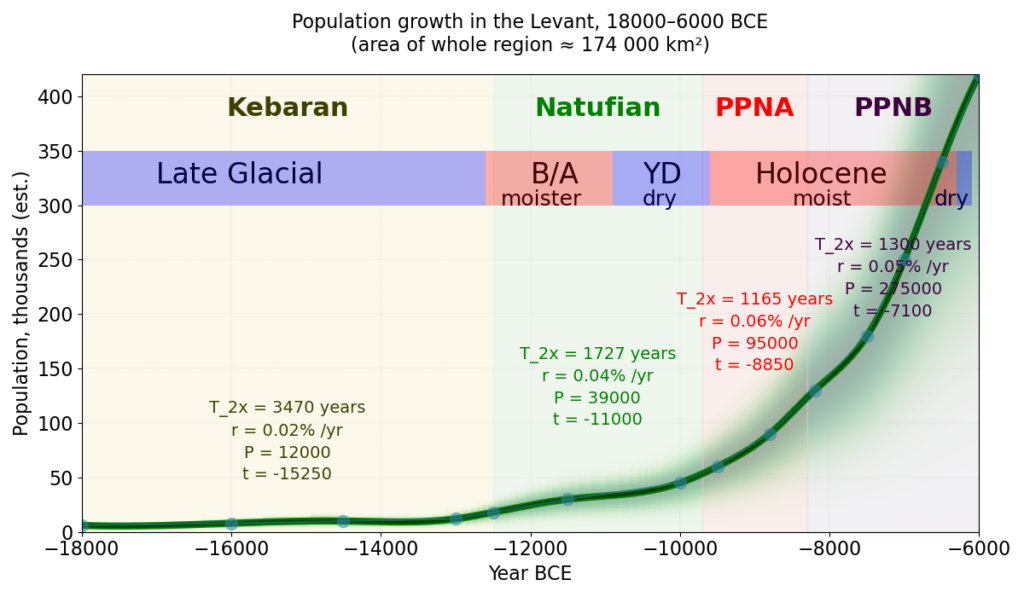
Pre-Pottery Levant’s Natufian (c.-12,500– c.-10,000)
A wave of terebinth-almond-hawthorn woodland expanded eastward from the northern Levant, followed roughly a thousand years later by oak-dominated woodland.
The earliest beneficiaries of an expanding resource base were the hunter-gatherers of the Levant. This late Old Stone Age culture of the Levant became a semi-permanent residence, a storage site for foodstuffs, and a location with some fixed architecture, known as the Natufian Culture, which stored wild grains at its proto-village sites. Using sickles with flint blades hafted in bone, they reaped wild barley and wheat, which they did not sow or cultivate.
Thereafter, in the Pre-Pottery Neolithic (PPN) or New Stone Age of the Levant, permanent villages emerged, at first exploiting wild flora and fauna, then domesticating grains and pulses, sheep and goats, cattle, and pigs. The shift from hunting and gathering to farming was made.
The transition was revolutionary but very slow, lasting at least a thousand years.
During the Pre-Pottery Neolithic Period A (PPNA), the transition period to farming that involved pre-domestication cultivation, in which wild resources were harvested/culled but not sown or raised.
The excavators of the PPNA site of Körtik Tepe state that “The differences in the quantity and quality of grave goods – such as stone vessels, thousands of stone beads, stone axes, and other tools – show variants of belief and social status among the earliest permanent community”.
Pottery New Stone Age Levant
The Pre-Pottery New Stone Age (Neolithic) of the Levant was succeeded by the Pottery Neolithic. The Levant lost the priority it once held, and the lead was taken up to the east, in Mesopotamia.
Mesopotamia’s first Pottery New Stone Age cultures Hassuna, Samarra, and Ubaid
The rivers produce deep alluvial soils and enable large-scale irrigation to exploit them. On the basis of intensive agriculture and rigorous organization, the large agricultural surpluses that could be produced allowed a cluster of cities to form there, the world’s first such cluster.
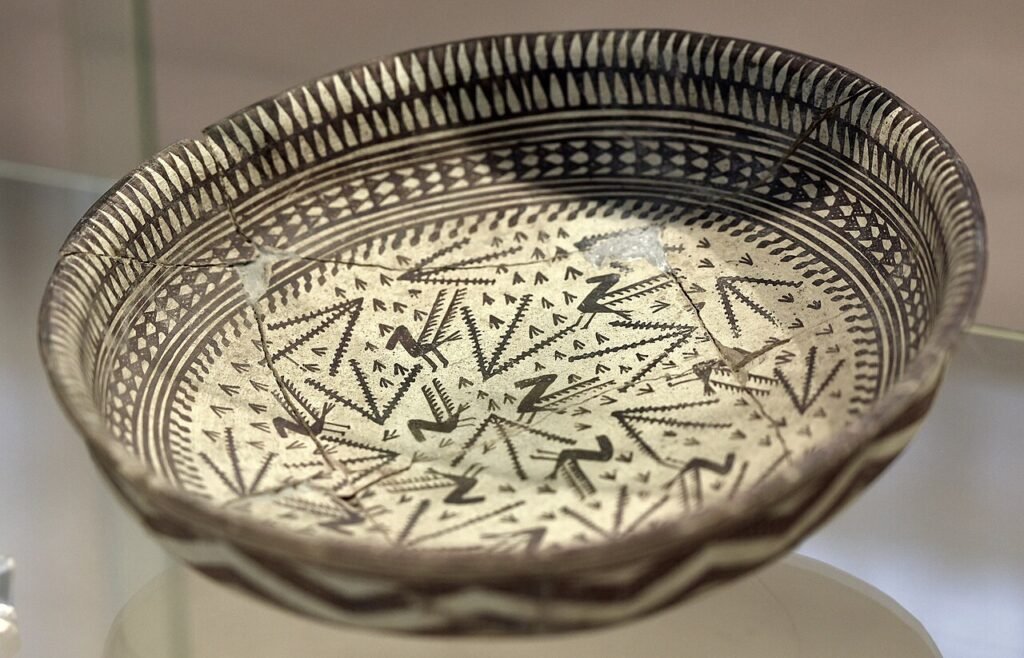
Hassuna: Around -6,800, we find Mesopotamia’s first extensive Pottery Neolithic culture, called Hassuna. The triangular wedge between the Tigris and Euphrates, north of present-day Baghdad Domestic arrangements took the classic Neolithic form of a homestead with rectilinear walls made from packed mud or mud brick and roofed with beams and a type of thatch. Farming too had assumed its classical form of grains and pulses, sheep and goats, cattle and pig.
Samarra: So successful was this farming that within half a millennium, a derivative culture called Samarran had pushed down the Tigris beyond the zone of sufficient rainfall (the 300 mm isohyet) and, in so doing, pioneered three seminal developments: irrigation techniques, the extended and stratified household (oikos), and nucleated settlements. The key response to agricultural risk was to be pioneering and to make household units large and diversified enough to cope. The households also clustered together around a central reserve, the temple.
Ubaid: Within another half millennium -6,000 the successor culture to the Samarran, called Ubaid, emerged. Ubaid is named from the type-site of Al-Ubaid, 5 km west-north-west of Ur on the southern reaches of the Mesopotamian alluvium.
Source: THE ARCHAEOLOGY OF POLITICS AND POWER Where, When and Why the First States Formed by Charles Maisels, 2010
3. Transport routes
Setting up transportation routes was key to obtaining the raw materials needed for building boats and extracting stone from more remote highlands. Having efficient transportation systems in place enabled the movement of goods and people and made it easier to share new ideas, discoveries, and innovations.
The farmers grew barley, dates, and herded cattle, sheep, and goats.
These groups of settlements are called ’Ubaid, named after a small site (al-’Ubaid) near Ur. ’Ubaid had mud-brick and reed huts with roofs of bent sticks.
4. Stratified society
Communal effort was crucial because digging even the smallest canal needed political and social leadership.
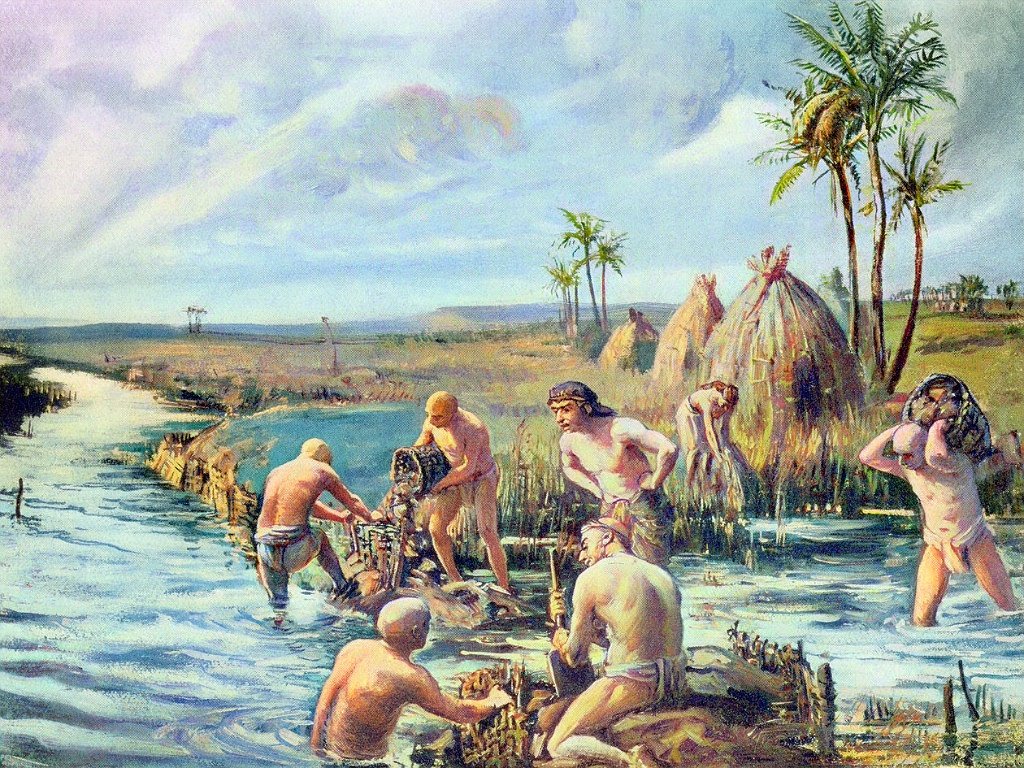
There’s a straight relationship between developing a stratified society and producing food surpluses. The more efficient food production systems that emerged in the delta led to significant social changes.
As food became more abundant and specialized agricultural practices in the ’Ubaid villages flourished, the shift towards more permanent settlements and rising population densities grew.
Around -4,600, communities began connecting through canals, signaling a shift from handmade pottery to wheel-thrown techniques, while temple construction became more prevalent.
Source: Origins of the State and Civilization by Elman R. Service 1975
5. Corporate clustered townships
Ubaidian settlements in Mesopotamia manifest the clustered or nucleated township.
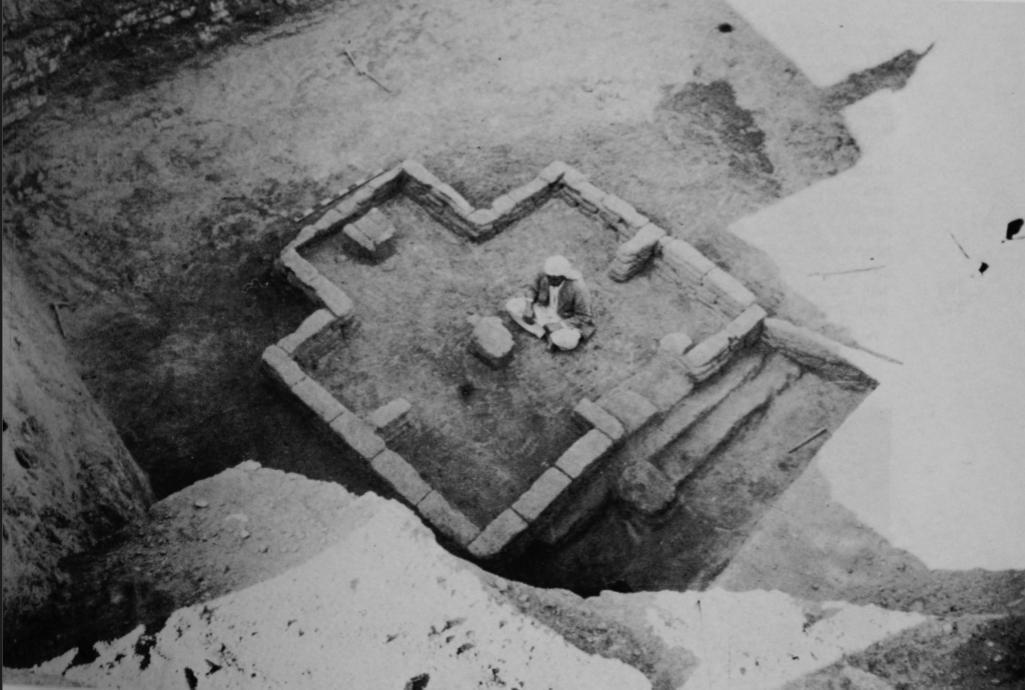
The houseform from the earlier Ubaidian site of Kheit Qasim III has three dwelling-units, but two are subsidiary. All three share a common entrance, but the existence of separate hearths and storage bins in each.
Such a hierarchically organised stratified household is called oikos in Greek, and includes slavery.
These households, structured for production are the basis for social stratification and ultimately for the advent of the city-state in Mesopotamia. These proto-urban clustered households form the basis for the appearance of many city-states on the alluvium.
They arose as corporate units during the Samarran period as a means of marshalling and managing labour and other resources needed to pioneer irrigation and exploit the rain-deficient alluvium. The successful advance down the alluvium to the head of the Gulf was made possible by this corporate unit. Clusters of such households, with the gods’ households at the centre, served as the nuclei of city-formation on the southern alluvium, the earliest in the world.
Source: THE ARCHAEOLOGY OF POLITICS AND POWER Where, When and Why the First States Formed by Charles Maisels, 2010
6. Revolution by the first public cult
You had the private family oikos and the public temple oikos.
Temple households
The temple households originated as community focus, storehouse, clearinghouse, food procurement and processing as well as textile production, which is why we find them at the centres of settlements of all sizes and periods.
What was so revolutionary in Mesopotamia was that the powers and processes involved in hunting magic and spirits were eventually supplanted by human-like with supernatural powers, mostly with eternal life (anthropomorphic deities), who are just like homo sapiens and define, explain, and legitimise the homo sapiens social order. This was already the case at the beginning of the first civilization in Mesopotamia; see the Pantheon (link) of the Sumerian City-State.
Hunting magic, and spirits did not disappear with the onset of farming, but their former pre-eminence was supplanted by named deities with specific functions and their ministrants. The development of the Roman Public State cults followed the same pattern.
Domestic and Public Cult
In the ancient Near East, everyday religious life was domestic, centering on household gods, ancestor veneration, and local deities, especially the patron deity of the city.
The anonymous house god (and house goddess) had to protect the house and the household. The cult of the family god outside the house links the household to the larger social group of clan, town and neighbourhood. The cult of dead kin, finally, which had its focus within the house, identifies the family as part of a diachronic reality, linking the living with their ancestors.
Much later, in ancient Rome, the lararium became the household shrine dedicated to the family’s guardian spirits, the Lares.
However, as in ancient Rome, family gods did not disappear. In Rome, family gods/spirits functioned domestically (as lares et penates and Vesta/Hestia, the latter goddesses of the hearth and storeroom) in a subsidiary capacity to the public or city-gods (and latterly the deified Emperor). Public gods had, however, clearly won the Neolithic contest in the Levant and Mesopotamia where they formed a divine society, individual members serving as patrons of city and state.
Magic
In domestic religion, a magical individual tries to tap and direct supernatural forces on behalf of other individuals, in the home or in some informal setting. Magic is an activity performed they believed to manipulate controlling supernatural entities in order to influence the well-being of group members”, that is, group members as individuals. This can be positive, in the form of help or negatively in the form of a curse.
In a public cult, authorized individuals acting in the name of the community conduct magical ritual activities in a formal setting (temples, churches, ‘high places’) on behalf of the community or congregation as a whole.
The religious magic seeks a good harvest, a good life, a good afterlife; also a search for meaning in causality, since everyone wants their life to have meaning and value.
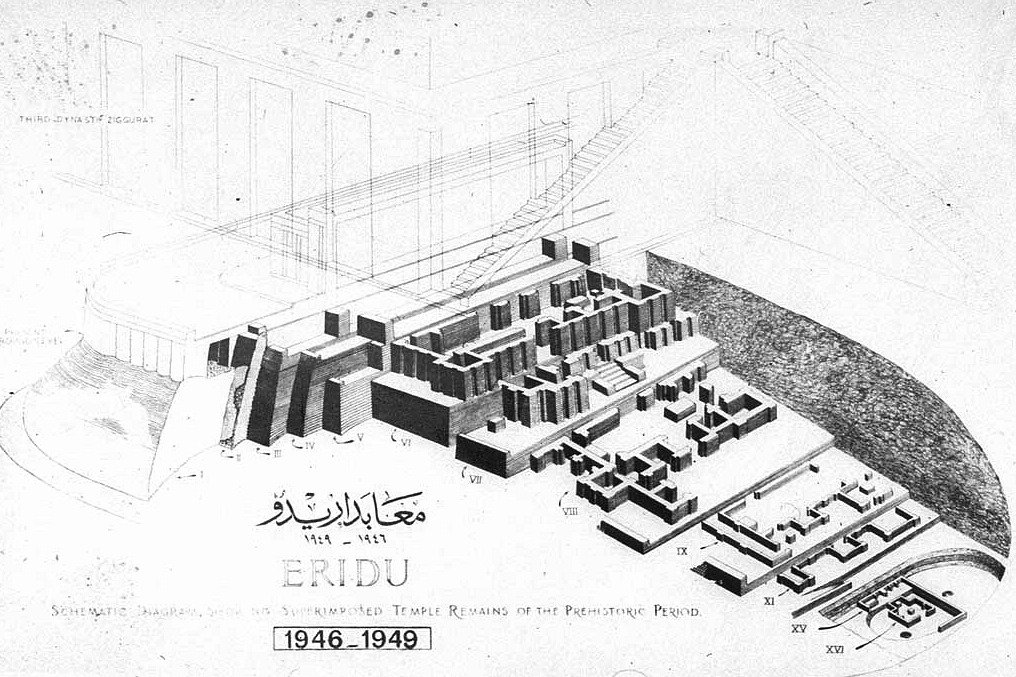
Al-’Ubaid and similar small settlements shared ceremonial cult centers. They were linked by kin and clan ties, with one clan authority overseeing the villagers’ affairs and the irrigation systems linking them.
Over time, these small village ceremonial centers expanded, including the one at Eridu, which was first established around –5,300. Eridu was one of the first Sumarian cities.