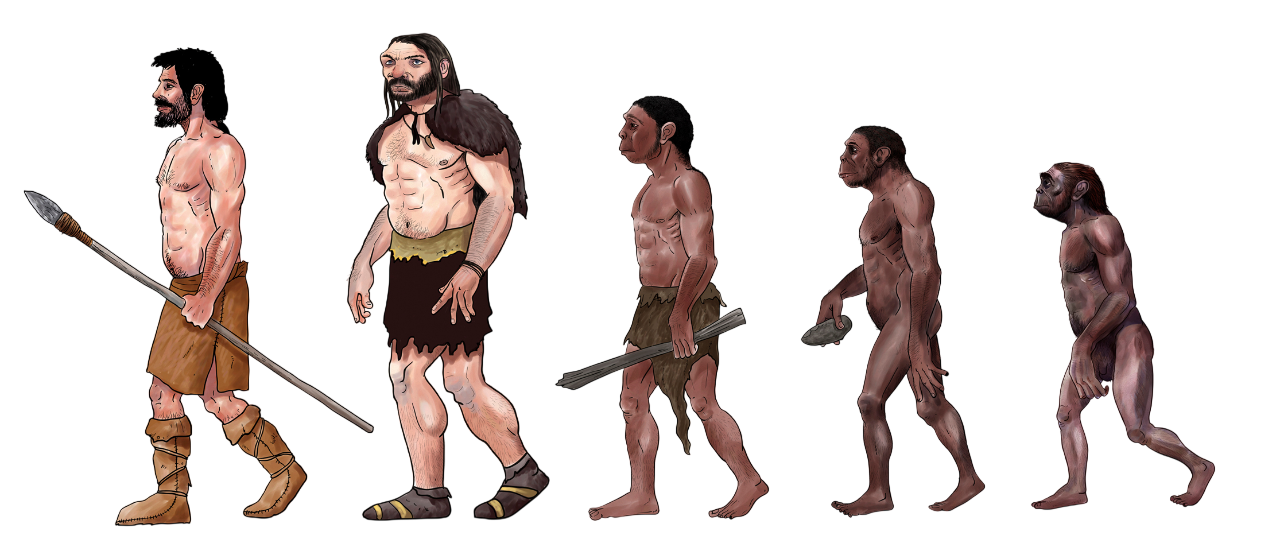
Humans evolved in Africa through the lineage of hominins, which arose 7–5 million years ago. The ability to walk on two legs emerged after a split. Our ancestors are known only through their fossilised remains, stone tools, broken bones, carved figurines and other left-overs.




The Ardipithecus Ramidus is the earliest recorded hominin that can walk on two legs.
The Australopithecus afarensis is the first hominin adapted to life on the ground.
The Homo habilis is the first recorded hominin of the genus Homo that used the first stone stools. c. 2.4 million years ago.
The Homo erectus is the first homo species that spread around the world, out of Africa.
1. Our Ancestors
Hominids began using rudimentary stone tools about 3.3 million years ago (Lomekwi site Kenya by Sonia Harmand Stony Brook University USA). This marks the beginning of the Old Stone Age, also known as the Paleolithic. The Paleolithic Age is the earliest stage of human development where organized societal structures are known to have existed. These social structures consisted of people living in bands that survived by hunting and gathering food.
> Homo habilis >
> Homo erectus >
> Homo heidelbergensis >
> archaic Homo sapiens >
> Homo sapiens
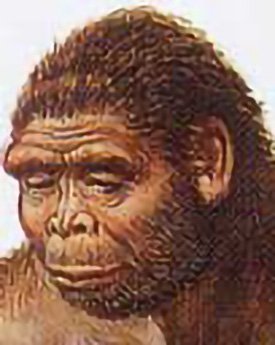






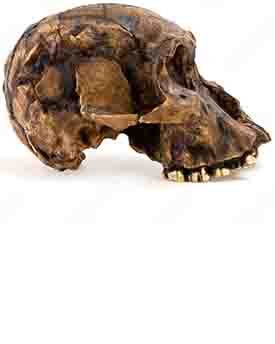


- Lived from 2.4 – 1.4 million years ago
- Lived in Eastern and Southern Africa
- Best known example: KNM-ER 1813
- Site: Koobi Fora, Kenya
- Year of Discovery: 1973
- Discovered by: Kamoya Kimeu
- ca. 1.9 million years
- Species: Homo habilis
- Social structure: lived in bands
- Social organization: Egalitatian informal leadership
- Economic: Normadic hunter-gatherers
- Living space: Temporary shelters
- Tools: simple fractured stones (mode 1) to create a sharp edge like the Oldowan scrapers, chopper, etc, wooden sticks.
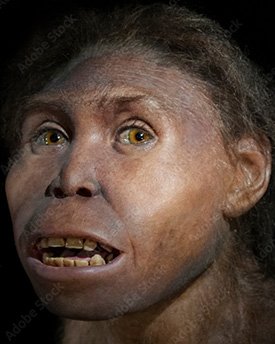
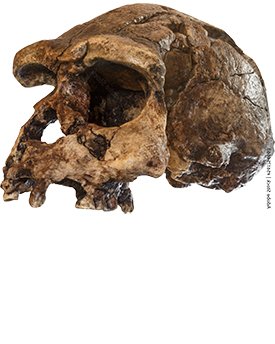
- Lived between 2 million and 100,000 years ago
- Lived in Africa, spread to southern Europe-Asia
- Best known: Turkana Boy
- S.: Nariokotome, Kenya
- Year of Discovery: 1984
- Discovered by: Kamoya Kimeu
- ca.1.6 million years
- Species: Homo erectus
- Social structure: lived in bands
- Social organization: Egalitatian informal leadership
- Economic: Normadic hunter-gatherers
- Living space: Temporary shelters
- Tools: stone tools of the Oldowan type, but these were rapidly replaced by a more complex Acheulean (Mode 2) tool kit based on large bifacially flaked artifacts, such as handaxes, cleavers and picks. Fire, wooden spears, clubs.
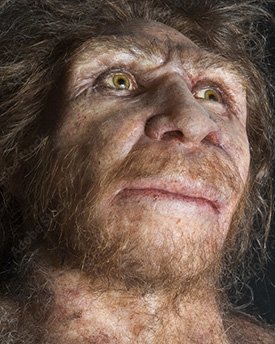
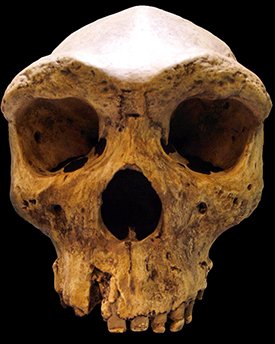
- Lived between 700,000 and 200,000 years ago
- Lived in Africa; Europe; Asia?
- Fossilised skull: Broken Hill Skull
- Site: Kabwe, Zambia, Africa
- Year of Discovery: 1921
- Discovered by: Tom Zwiglaar.
- About 300,000 years
- Homo heidelbergensis
- Social structure: lived in bands
- Social organization: Egalitatian informal leadership
- Economic: Normadic hunter-gatherers
- Living space: first to build simple shelters
- Tools: Later Acheulean hand axes, spears with stone points
- Lived between 400,000 and 100,000 years ago
- Lived in Africa; Europe; Asia
- Example fossil: Florisbad Skull
- Site: Florisbad, South Africa.
- Year of Discovery: 1932
- Discovered by: T. F. Dreyer, G. Venter.
- About 260.000 years
- Species: Homo naledi
- Social structure: lived in bands
- Social organization: Egalitatian informal leadership
- Economic: Normadic hunter-gatherers
- Living space: Shelters are numerous in caves and rock-shelters, as well as open-air sites on plateaus and along river floodplains.
- Tools: The Levallois method First in the archaeological record 250,000 years ago and is widely found in Africa, the Near East and in Europe. Points were part of thrusting or throwing spears. Fire and hearth structures are much more common during this period.
- The Homo sapiens lived since 300,000 years ago.
- Evolved in Africa, now worldwide
- Oldest found: Jebel Irhoud-1
- Site: Jebel Irhoud, Morocco
- Year of Discovery: 1961
- Anthropologist: Émile Ennouchi
- Age: -300,000
- Species: Homo sapiens
- Social str.: lived in bands, New stone age: Tribes.
- S. o.: Egalitatian informal leadership, New stone age: Segmentary society.
- Economic: Normadic hunter-gatherers, New stone age: farmers, herders.
- Living space: Caves and rockshelters, later also open-air sites for hut, tent, or teepee structures. New stone age: Permanent huts, Burial mounts, shrines
- Tools: from –40,000 on, Sophisticated Blades, boomerangs, spear throwers, and archery. Controlled use of fire with hearths. Needles indicate that sewed clothing was common after –20,000.
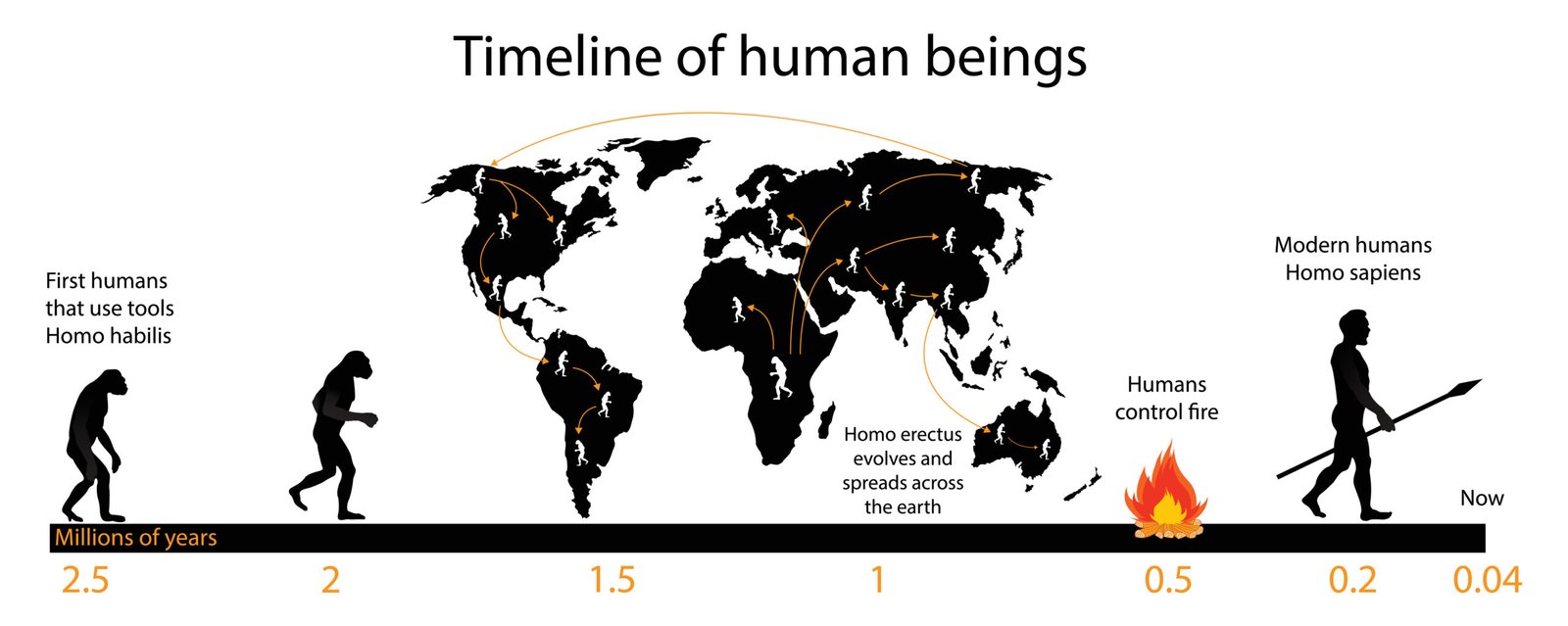
The timeline and spread of the genus Homo around the globe.
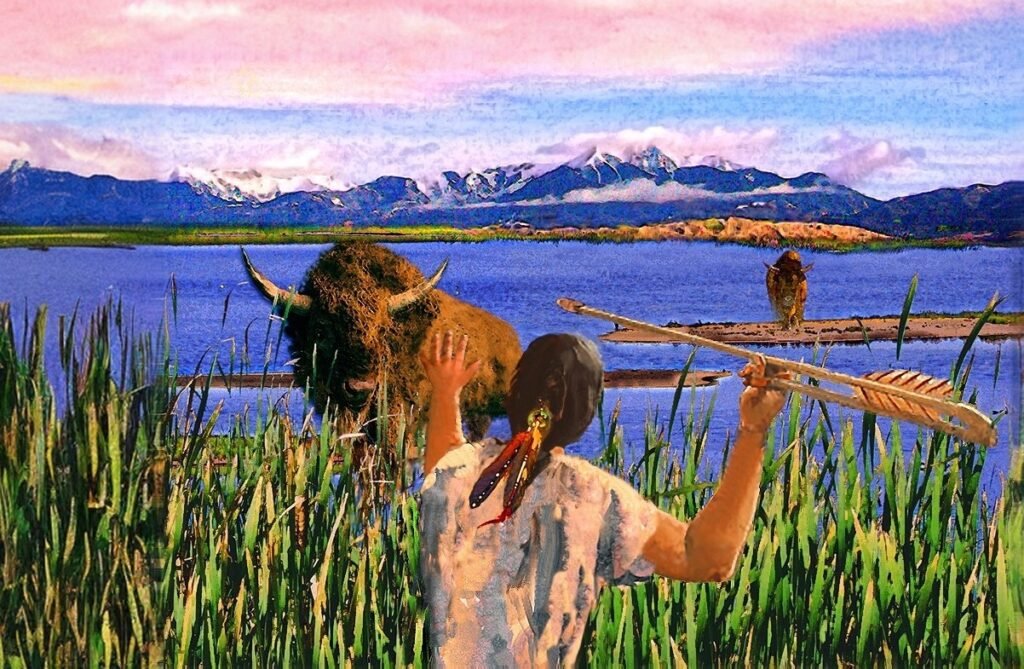
Using an atlatl, a hunter prepares to launch a spear at a Pleistocene-era bison by a large lake west of the dunes. Illustration: NPS/Patrick Myers.
Great Sand Dunes National Park and Preserve.
Public domain, via Wikimedia Commons.
Modern humans evolved from Homo sapiens, originating in Africa and the Middle East about 90,000 years ago, and appearing in Europe during the Ice Age period (-40,000 – -35,000). During this time, humanity spread over all major land masses following the retreating glaciers of the last Ice Age at -11,000 – -8,000.
2. MAMMAL BRAINS
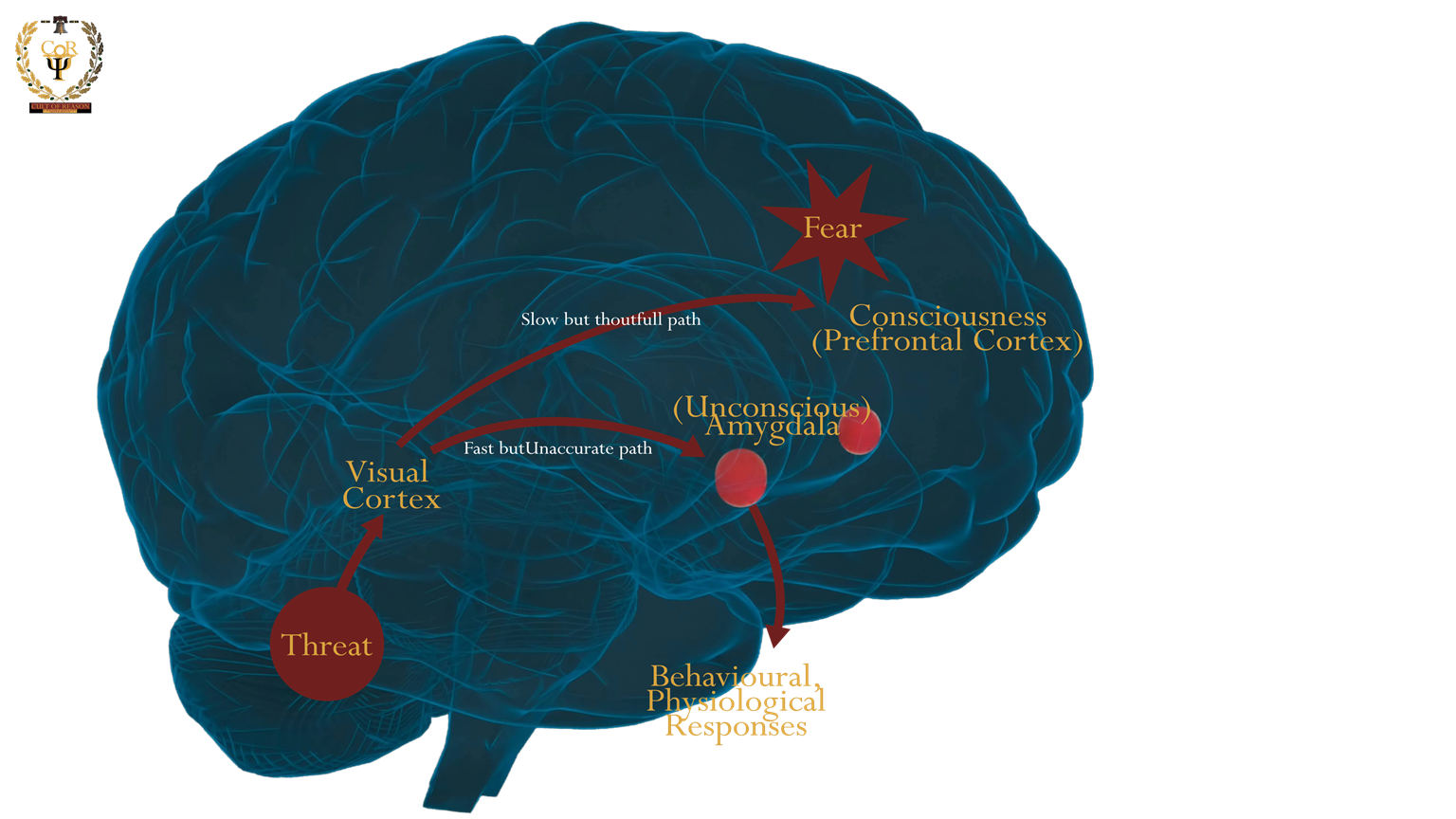
The mammalian brain comprises a cluster of structures that evolved on top of the limbic system, and the wrinkled covering called the cortex, which interconnects with the limbic structures beneath. The limbic system is the part of the brain around the amygdala that plays a crucial role in regulating emotions, memory, motivation, and behavior. These are responses to stimuli that go beyond the basic “grab” or “avoid” reactions. The limbic system also contains structures that encode experiences as memories, to be recalled for use in guiding future actions. The emotional and memory faculties greatly increase the range and complexity of behavior that a mammal displays, because it is not governed purely by instinct.
One striking aspect of mammalian brain evolution is the development of the cortex. This outer layer has evolved to serve the particular needs of each species, and therefore varies dramatically between one animal and another. A few mammals, such as humans, elephants, and dolphins, have a disproportionately large cortex compared to most mammals.
HOMINID BRAINS
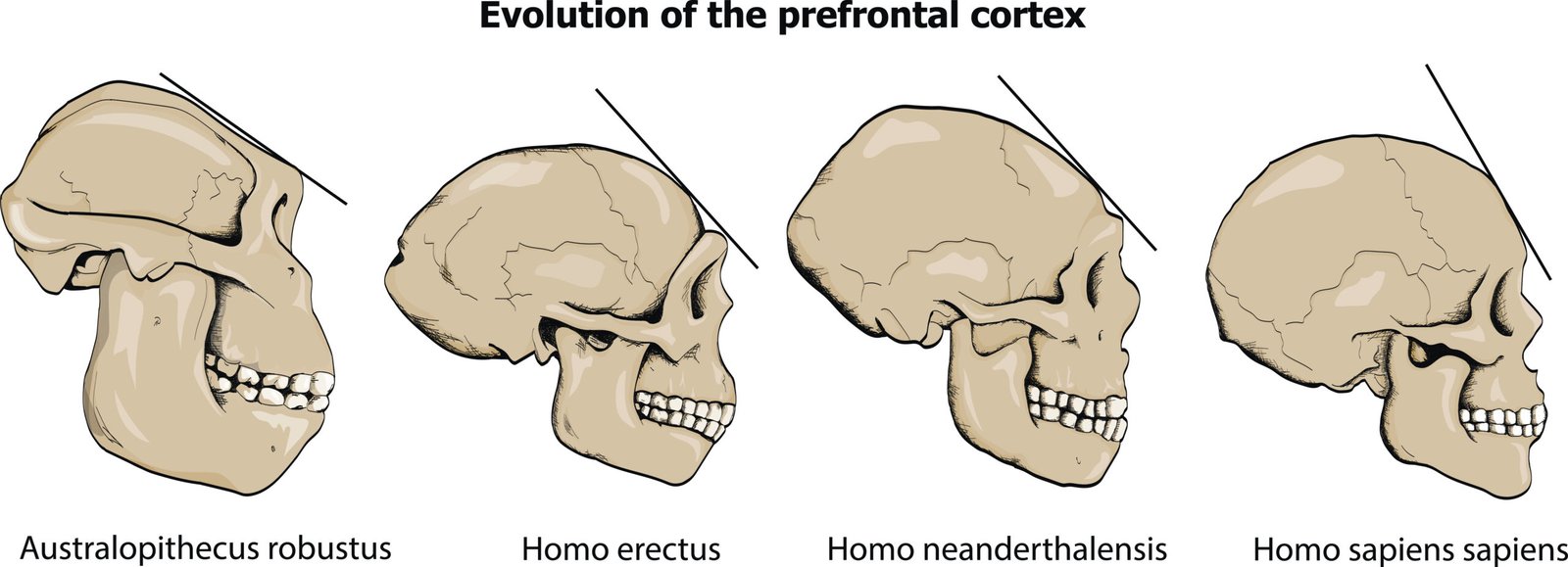
The brains of hominids (modern humans and their ancestors) underwent a surge of evolutionary changes. The main distinction between human and other mammalian brains is the size and density of the cortex, and particularly of the frontal lobe, which is responsible for complex thought, conscious judgement, and self-reflection. The neanderthalensis was a side branch of the Homo sapiens.
DOES SIZE MATTER?
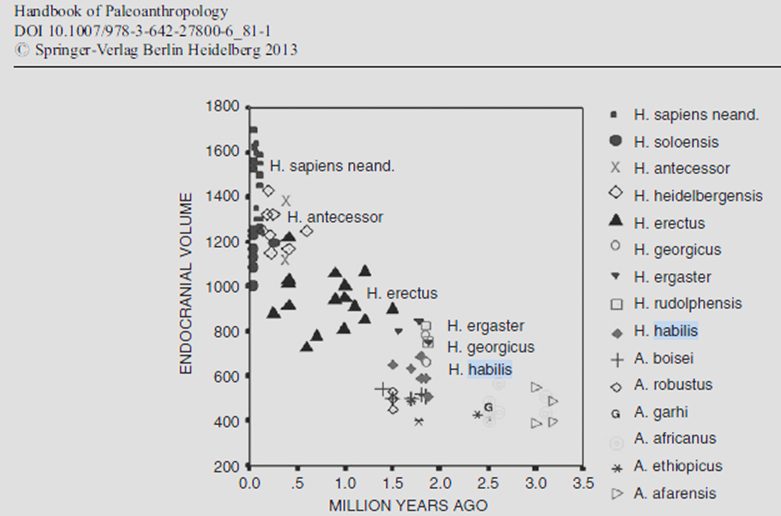
Brain size plotted against time, showing an accelerated change in volume from Homo erectus on to anatomically modern Homo. During the whole of hominid brain evolution, there is a increase in neural complexity, both cortical and subcortical.
Size is not the only factor that matters for intelligence or survival—the way brains are wired up is also important. Neanderthals had bigger brains than humans, but were less innovative and didn’t survive.
3. Late Palaeolithic (old stone) Age
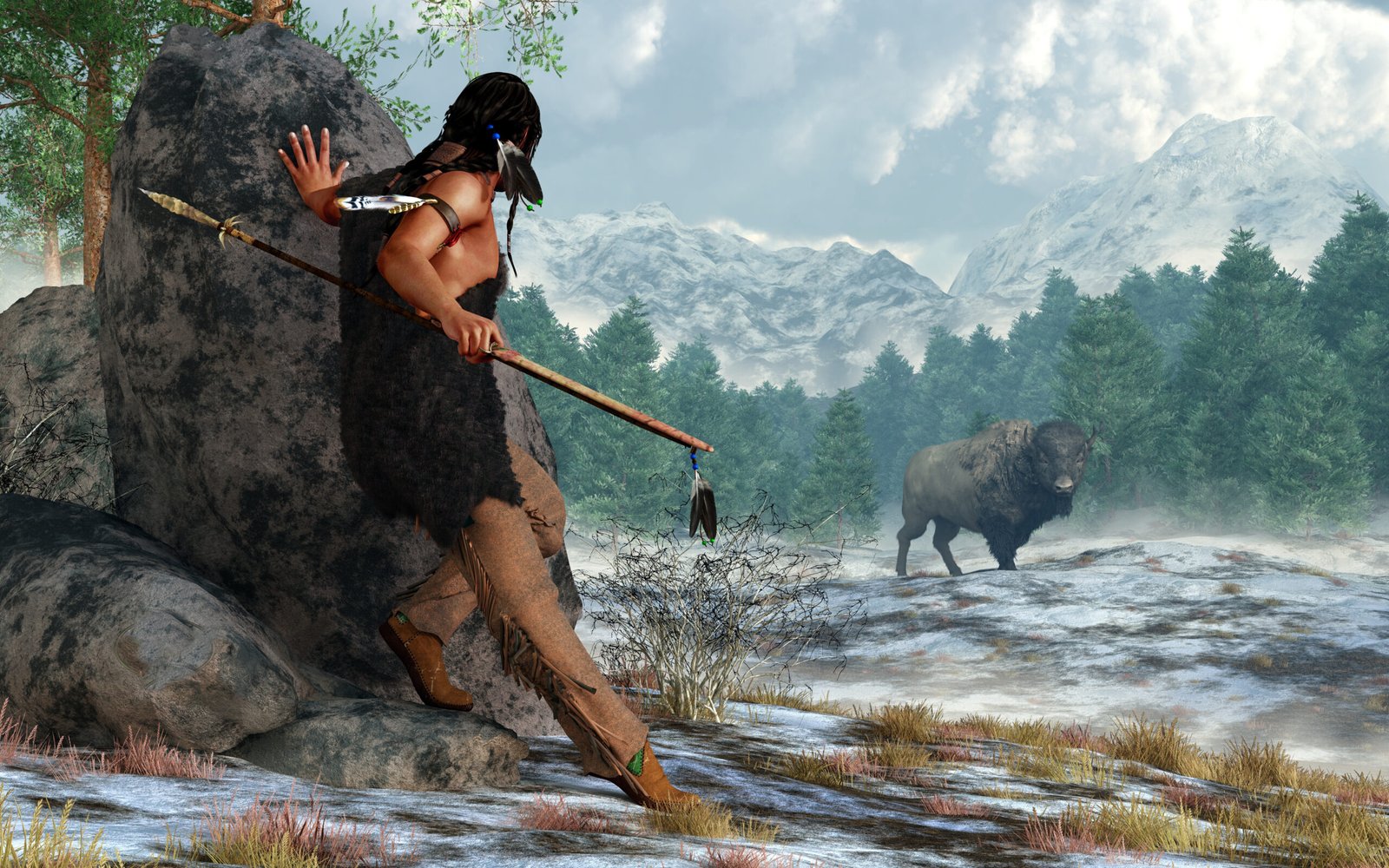
By -50,000, humans buried their dead, used projectile weapons, and engaged in seafaring. One of the most important changes was the development of syntactic language (using grammar rules), which dramatically improved the human ability to communicate. Signs of early artistic expression can be found in the form of cave paintings and sculptures made from ivory, stone, and bone. Paleolithic humans lived as hunter-gatherers and were generally nomadic.
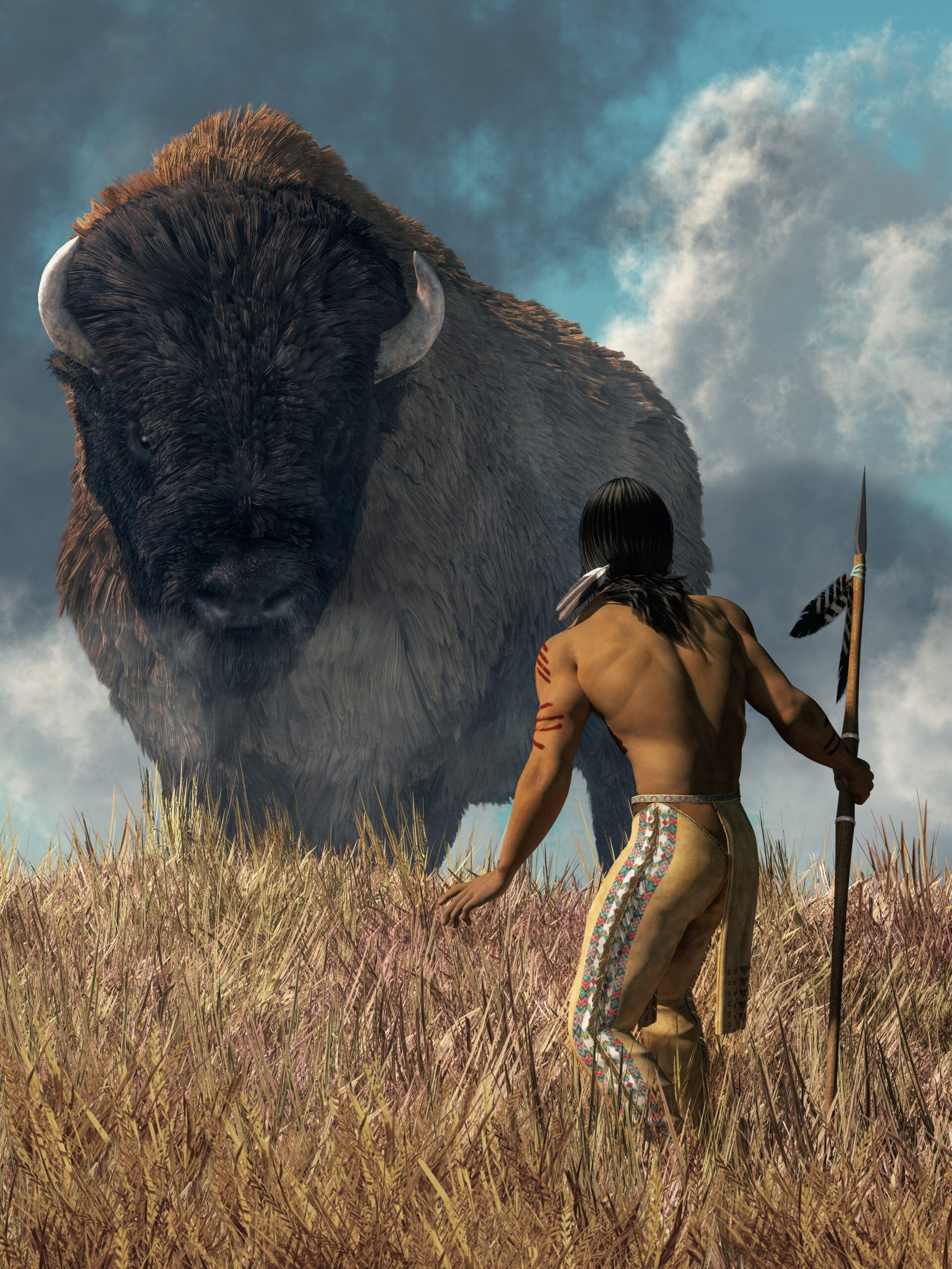
The earliest modern humans brought with them the highly sophisticated blade-based stone-working industries of the LATE PALEOLITHIC. This phase is most clearly documented in Europe, and is accompanied by the earliest evidence for and the emergence of engravings, sculpture, music, and elaborate body ornamentation. It was modern humans, too, who for the first time crossed into the New World (Americas; Paleoindian) and traversed a substantial sea barrier to reach Australia.
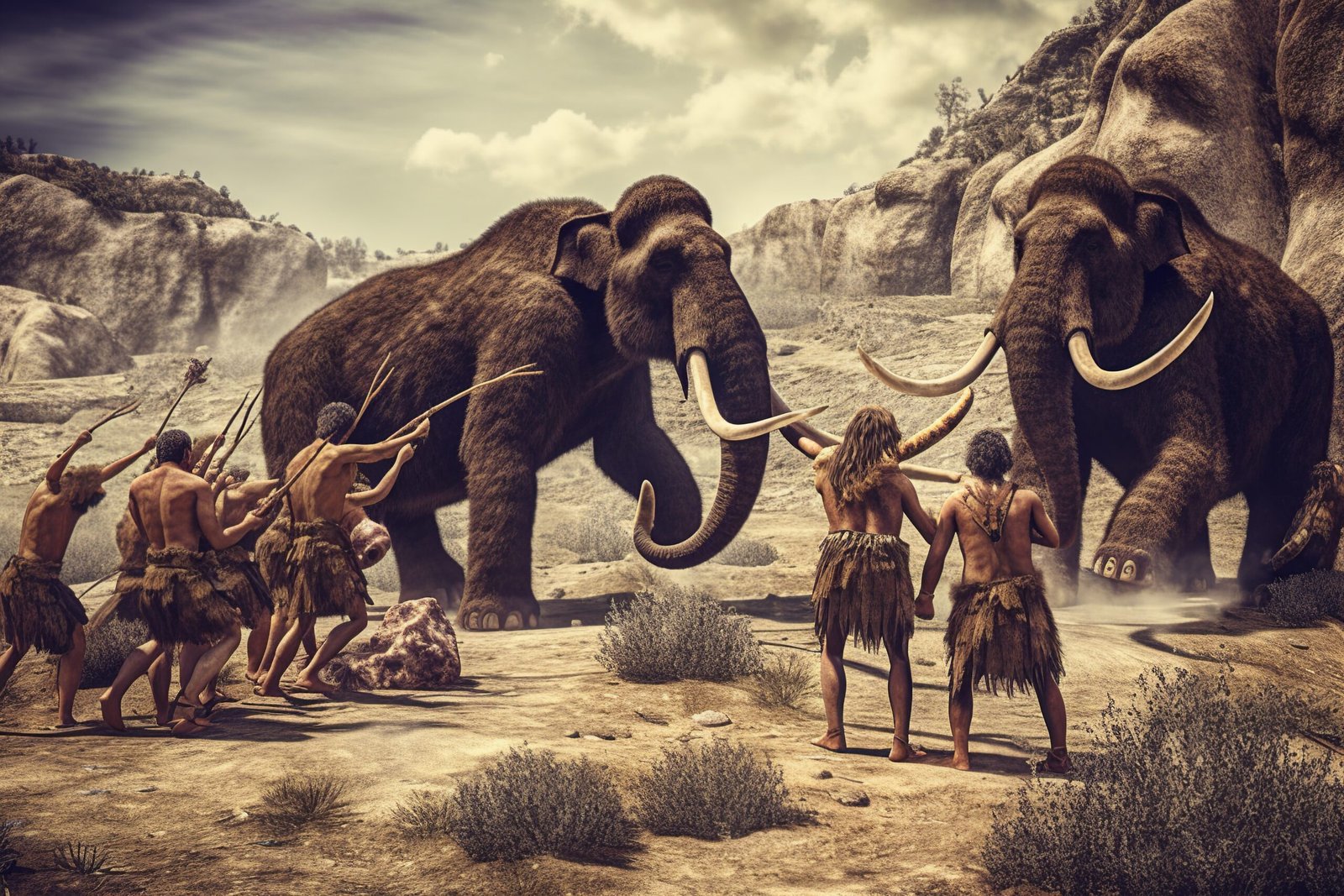
Reconstruction: Group of neanderthal cavemen hunting a mammoth, old stone age.
After the demise of all the other hominins, like the the Homo erectus (100,000 years ago) and the Neanderthal (30,000 years ago), the Homo sapiens is the only surviving member of the Homo lineage.
Sources:
- Encyclopedia of Human Evolution and Prehistory Second edition.
- Steven Mithen: The prehistory of the mind.
- Christian, David, ed. (2015). Introducing World History, to 10,000 BCE. The Cambridge World History 14.2 pp 339 36 Early humans tools language and culture.
- Handbook of Paleoanthropology: Overview of Paleolithic Archaeology by Nicholas Toth and Kathy Schick, Stone Age Institute and Indiana University, Bloomington, IN, USA DOI 10.1007/978-3-642-27800-6_64-4 # Springer-Verlag Berlin Heidelberg 2013, page 1681 – 1701.