The story of the Creation and Flood has been extremely influential. Stories like these where later rewritten to the Epic of Atrahasis, Tablet XI of the Babylonian Epic of Gilgameš, Berossus, the Biblical account of the ark and Noa, and several Greek and Roman sources, like Ovid.
We will trace how the Mesopotamian Genesis developed, beginning with the Sumerian Eridu Genesis and then moving into the Babylonian Atra-hasis covenant mythology. Finally, we will follow how this is used in the Hebrew Genesis 1-9, the Israelite/Judaean covenant version with a beginning, pre-flood life, and the flood story itself that ends the covenant myth.
Overview
- Sumer’s Pantheon
- The Sumerian Creation-Flood story: The Eridu Genesis
- The Babylonian Creation-Flood story: The Atra-Hasis
- Marduk, Babylonian protector and the king of gods: Marduk’s rise to supremacy
- Israel: Yahweh, Fall of the Kingdoms of Israel and Judah, Babylonian captivity
- Comparisons: Creation-Flood stories compared, Apocalyptic vs. Optimistic
- Building the mythology: Who wrote the bible, part 1?
1. Sumer’s Pantheon

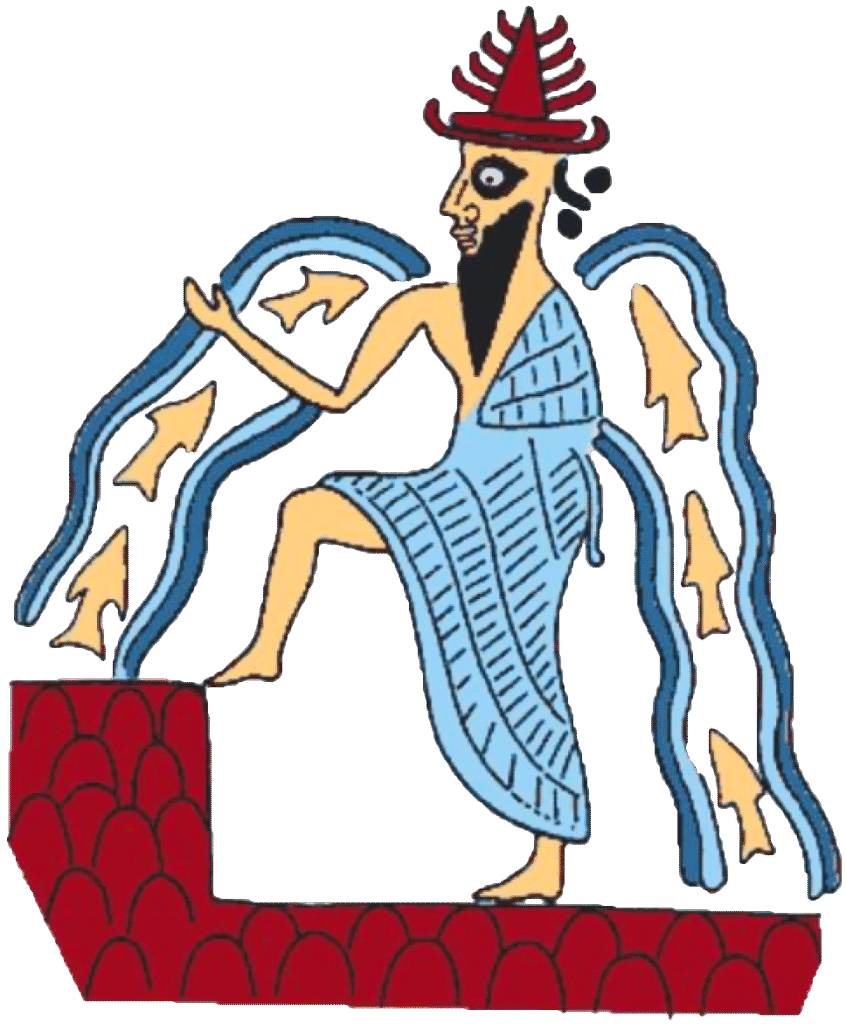
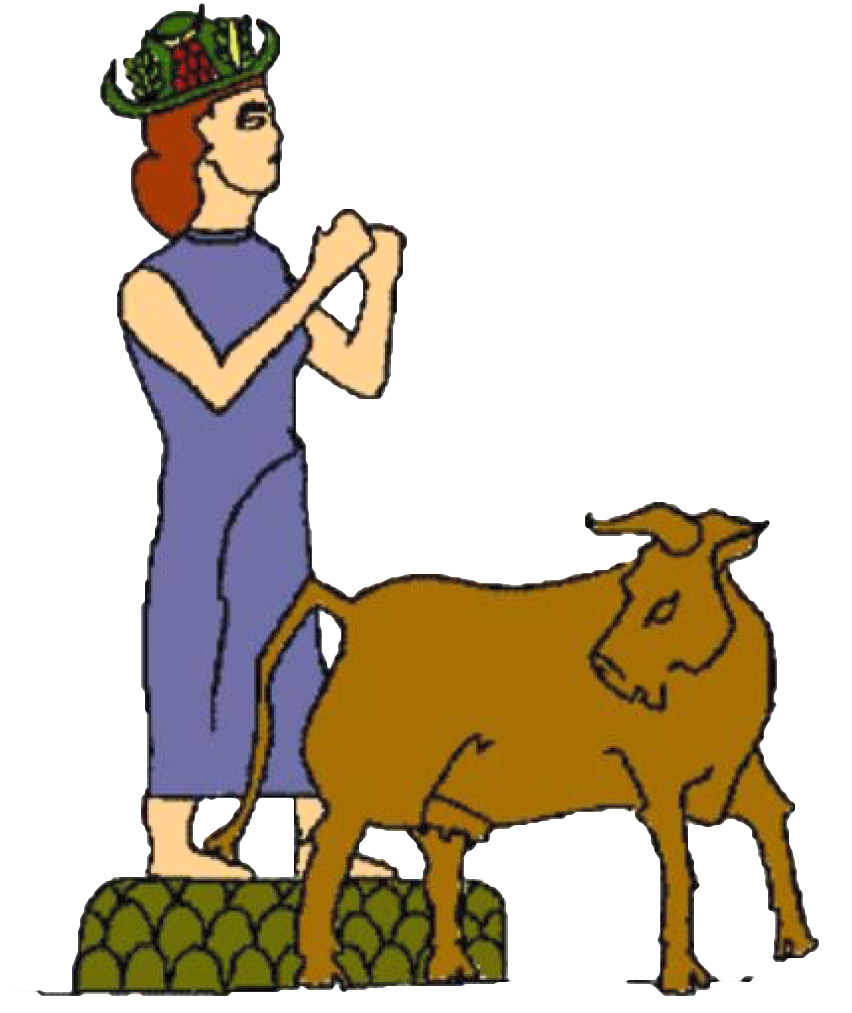
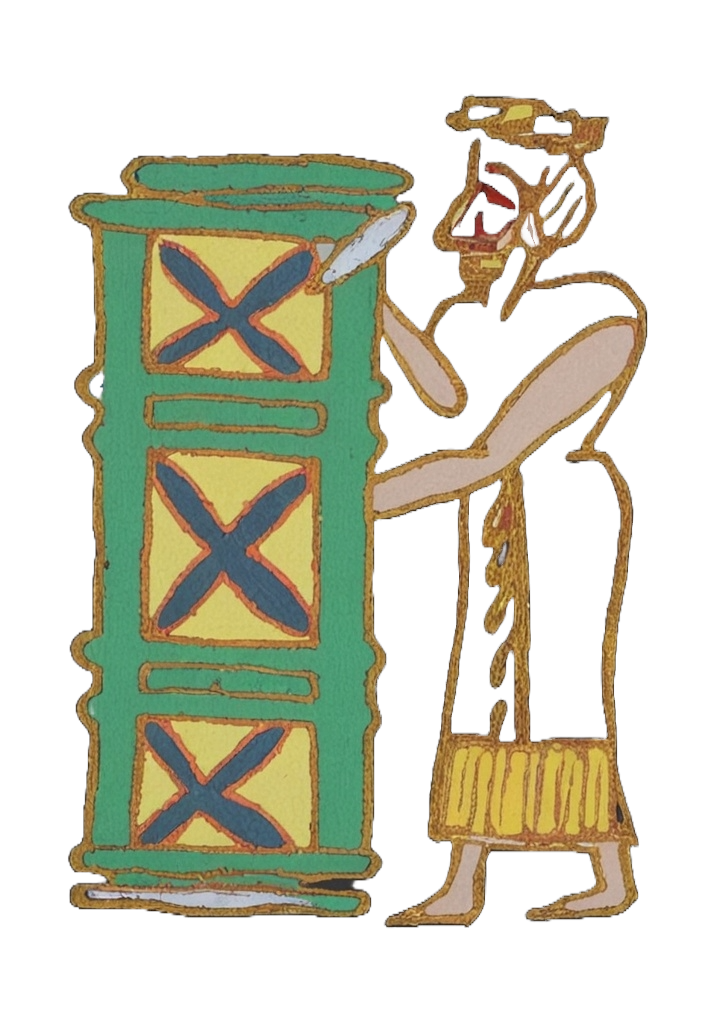
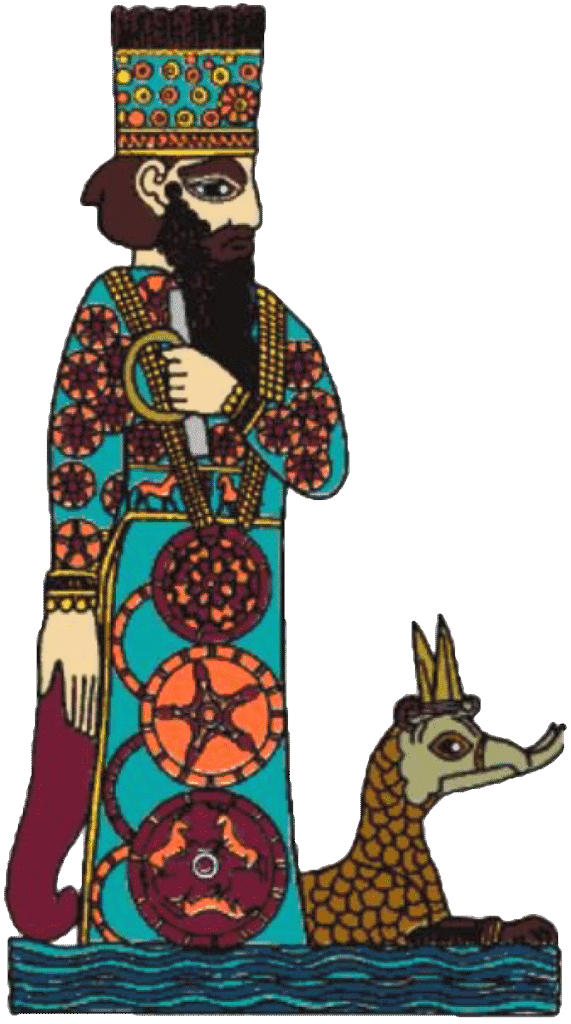
To understand the characters in Mesopotamian stories, it is essential to know the Mesopotamian Pantheon that started developing in Sumer.
There were many gods, responsible for every aspect of life, from rivers and mountains to making the daily bread. Each city-state had its own supreme god, founder and patron, who transferred power to the divine king. Read more … Sumer’s Pantheon LINK
2. The Sumerian Creation-Flood story: The Eridu Genesis
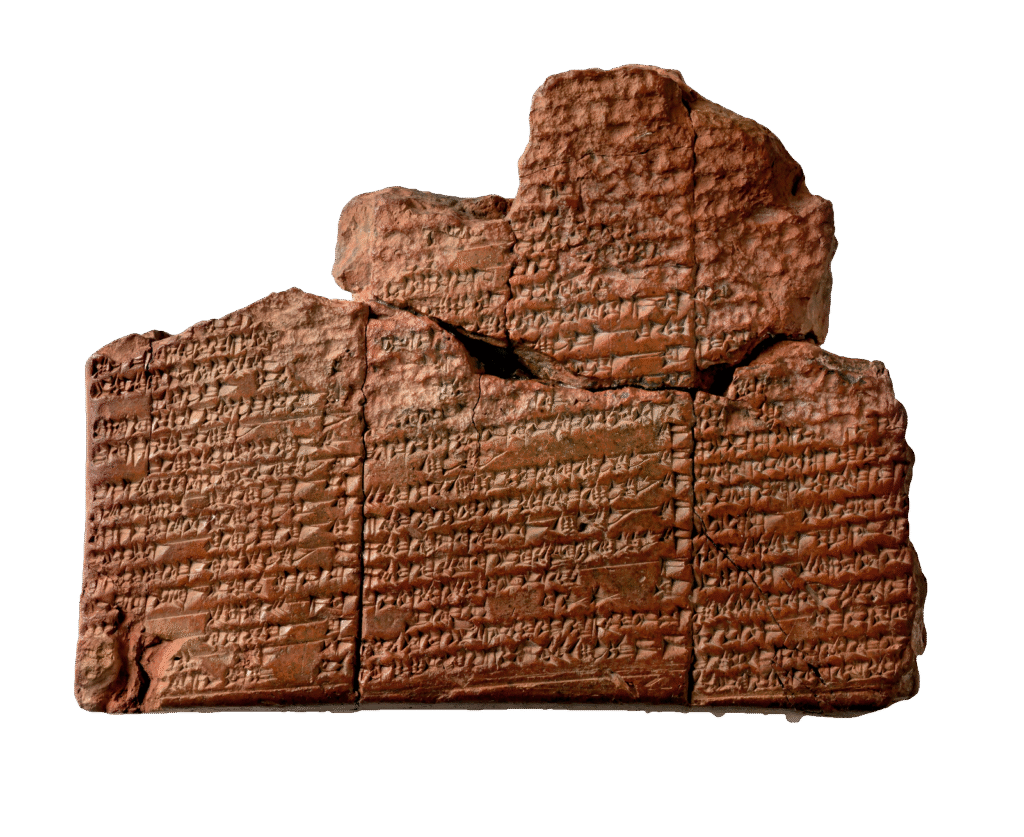
The earliest known source of the Eridu Genesis or Sumerian Flood Story is an Old-Babylonian clay tablet (dated -1,600) from Nippur, discovered during an expedition of the University of Pennsylvania (1893-1896):
Source Link: The Sumerian Erudu Genesis Tablet from Nippur, ca. -1600, featuring six columns: University of Pennsylvania.
Source Translation Link: Sumerian ⟶ English Translation by Thorkild Peter Rudolph Jacobsen, JBL 100, 513–529., 515–525 launch. The Eridu Genesis, Journal of Biblical Literature 100:513-529, 1981.)
The Sumerian Creation-Flood story of the city of Eridu itself is much older, likely dating back to around -2,500. The myth deals with the creation of man, the institution of kingship, the founding of the first cities, and the great flood. Thus, it is a story of beginnings, a Genesis. Every religious public state cult has a “beginning of the world”, an original story.
The Sumerian deities An, Enlil, and Enki created the “black headed people” (Sumerians), the animals, and assigned the cities among the deities. The Eridu Genesis describes man’s nomadic and uncultured condition which was remedied by the birth goddess Nintur’s instructions for building cities as centers of culture and worship. As the humans prospered, their great noise caused sleeplessness among the gods. The god Enlil’s plan to eradicate mankind through a flood was thwarted by the god Enki, who warned Ziusudra, the king of Shuruppak, to build an ark to save his family and the animals. After the Flood, Ziusudra appeased the gods by offering sacrifices and in turn was granted immortality and an eternal home.
Summary Eridu Genesis
Genesis
- Human’s Genesis, the creation of men (now lost).
Antediluvian Life (before the flood):
- Human’s life before the flood: their miserable condition.
- Then follows a summary statement on the initial creation.
- Creation of kingship by the gods.
- The first cities.
- The kings who ruled before the Great Flood (lost).
The Flood:
- The supreme god Enlil’s decision to destroy humankind (lost).
- Ziusudra is worthy.
- Ziusudra learns of the approaching calamity.
- Enki’s warning of the flood and his advise.
- Enki’s advice: Building of the Ark for his family and the animals (lost)
- The Great flood swapped over the cities, for seven days and nights.
- Ziusudra’s sacrifice.
- Ziusudra’s let the animals leave the boat.
- Ziusudra Reward: eternal life.
3. The Babylonian Creation-Flood story Atra-Hasis
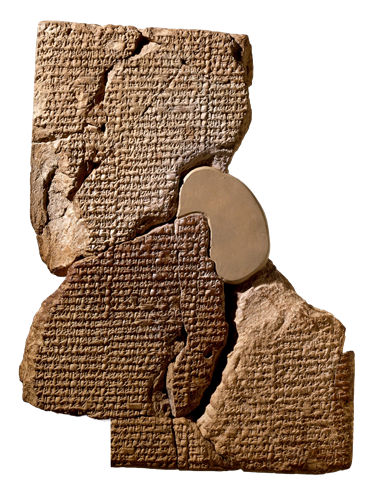
The Tablet of the Covenant
The Babylonian myth When the Gods Were Man also known as the Epic of Atra-ḫasīs, is written in Akkadian from the Old Babylonian period around -1650 – -1600. Akkadian was used until it was gradually replaced among Mesopotamians by Old Aramaic around -800.
The Atra-Hasis Synopsis
The Tablet of the Covenant is based on the Babylonian epic of Atrahasis. Atrahasis is Ziusudra in Sumerian. It is a tale of the early days of the earth, when mankind was still young, and the gods were upon the earth. Mankind’s corruption leads to the flood, a cleansing of the world wielded by the gods. One man, favored by the gods, is told to build a great ship to escape the floodwaters that doomed the earth.
Tablet I of the Covenant: Genesis: Creation
- Tablet I contains a creation myth about the great Sumerian Creation Triad Anu, Enlil, and Enki, gods of heaven, wind/earth, and water.
Following the casting of lots, heaven is ruled by Anu, earth by Enlil, and the freshwater sea by Enki. Enlil assigned junior divines to do farm labor and maintain the rivers and canals, but after forty years the lesser gods rebelled and refused to do strenuous labor. - Instead of punishing the rebels, Enki, who is also the kind, wise counselor of the gods, suggested that humans be created to do the work.
- The mother goddess Mami is assigned the task of creating humans by shaping clay figurines mixed with the flesh and blood of the slain god Geshtu-E, “a god who had intelligence”.
- All the gods in turn spit upon the clay. After ten months, a specially made womb breaks open and humans are born.
- Legends about overpopulation and plagues. Atrahasis is mentioned at the end of Tablet I.
Tablet II of the Covenant: Antediluvian Life: Plaques
- Tablet II begins with more overpopulation of humans and the god Enlil sending first famine and drought at formulaic intervals of 1200 years to reduce the population.
- In this epic Enlil is depicted as a nasty capricious god while Enki is depicted as a kind helpful god, perhaps because priests of Enki were writing and copying the story.
- Tablet II is mostly damaged, but ends with Enlil’s decision to destroy humankind with a flood and Enki bound by an oath to keep the plan secret.
Tablet III of the Covenant: The Flood
- Tablet III of the Atrahasis Epic contains the flood story. The god Enki warns the hero Atrahasis (“Extremely Wise”), to dismantle his house and build a boat to escape the flood planned by the god Enlil to destroy humankind.
- The boat is to have a roof “like Apsu”, upper and lower decks, and to be sealed with bitumen.
- Atrahasis boards the boat with his family and animals and seals the door.
- The storm and flood begin.
- Even the gods are afraid.
- After seven days the flood ends. Ziusudra (Atrahasis) let out all the animals and people, and offers sacrifices to the gods.
- Enlil is furious with Enki for violating his oath. But Enki denies violating his oath and argues: “I made sure life was preserved.”
- Enlil is forced to swear to the covenant known as Duranki, the Bond of Heaven and Earth, never again to harm the people of the land.
4. Marduk, Babylonian protector and the king of gods
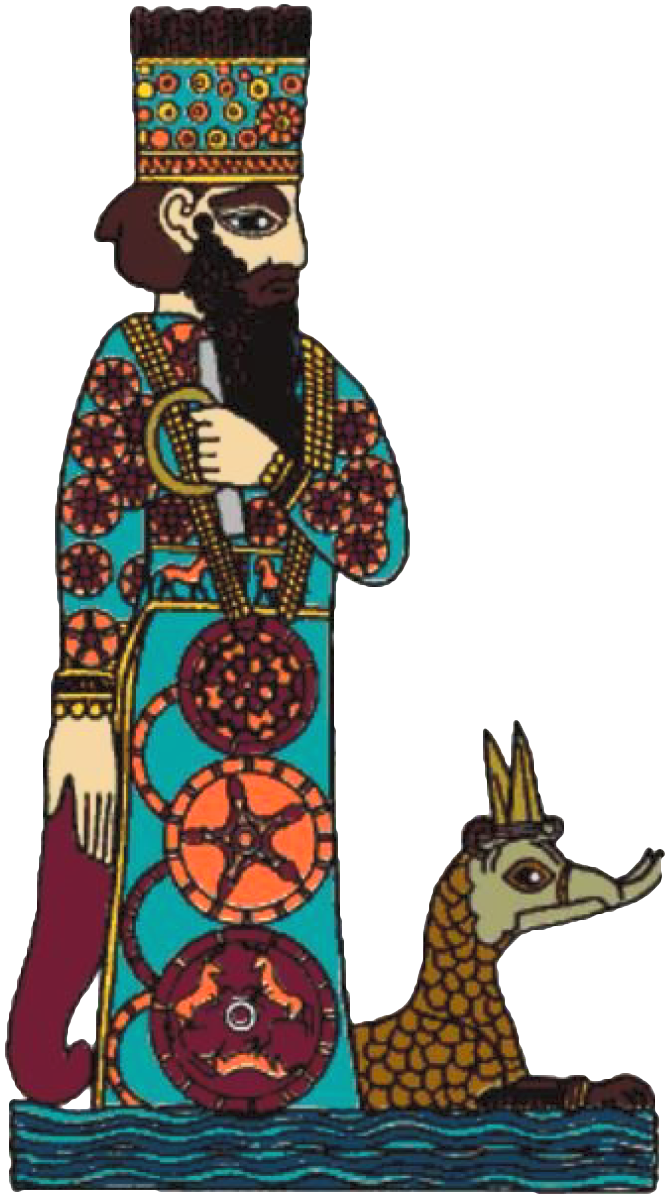
The main patron deity of the Babylonians, Marduk, later referred to simply as Bel (the Lord), was intrinsically linked to the city of Babylon. Marduk’s ultimate victory is vividly narrated in the Creation Epic Enuma Elish. His worship persisted into the Hellenistic era.
The Babylonians, under the authority of their divine king, constructed a make-believe world through their mythology that defined and legitimized their social order at the king’s behest.
This narrative was envisioned by festivals featuring processions, prayers, and sacrifices. Marduk was venerated as the king of the gods, the architect of both the heavens and the earth, and the giver of life. Moreover, various ancient texts indicate that Marduk was also the provider of water, the deity of abundance, and a savior of the people.
Marduk’s rise began when Hammurabi of the First Dynasty of Babylon (-1792 – -1750) put wide areas of Mesopotamia under his control. The rise of the political power of the Babylonian king prompted an equivalent rise in the status of its cult as well – Marduk is portrayed as the powerful ruler in the opening of the Codex Hammurabi, showcasing his status as a sovereign.
The Codex Hammurabi composed during -1755 – -1751, is the best-preserved law code of Mesopotamia.
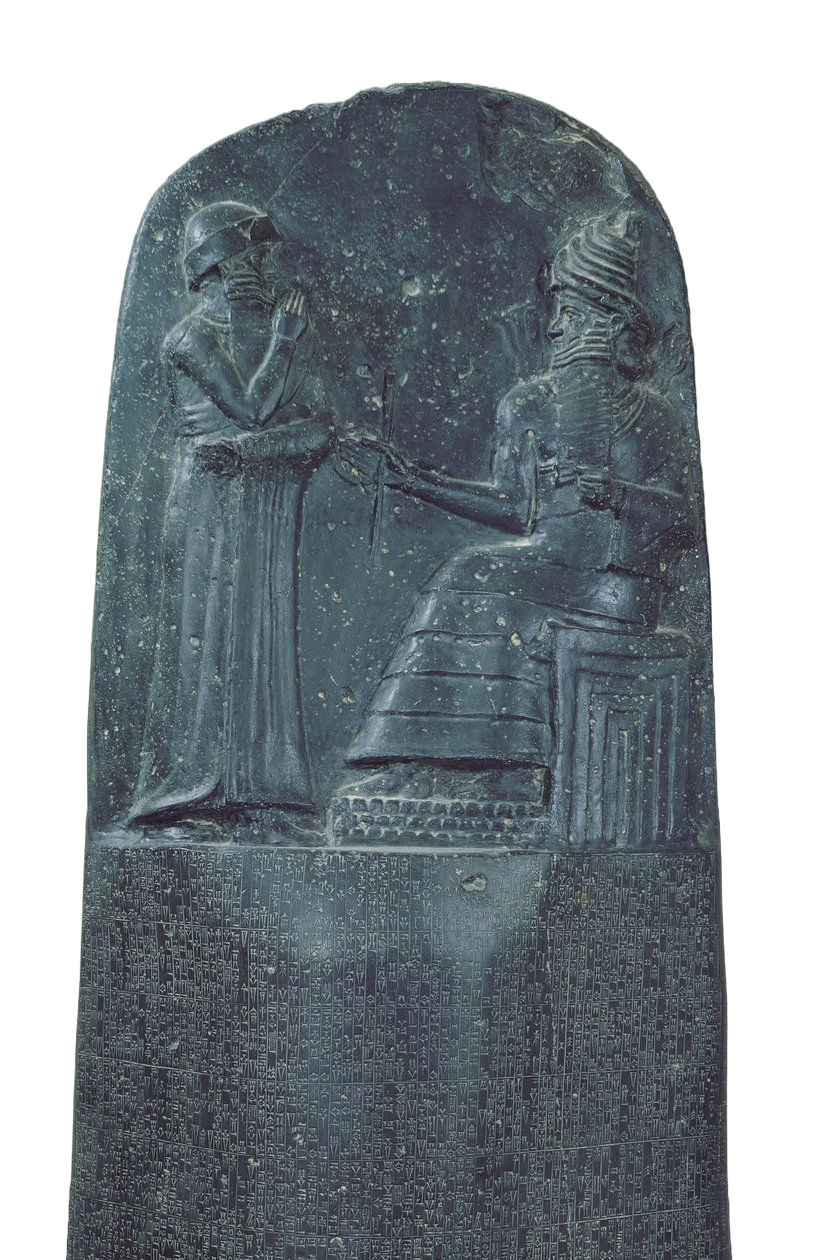
When the august god Anu, king of the Anunnaku deities, and the god Enlil, lord of heaven and earth, who determines the destinies of the land, allotted supreme power over all peoples to the god Marduk, the firstborn son of the god Ea, exalted him among the Igigu (lower) deities, named the city of Babylon with its august name and made it supreme within the regions of the world, and established for him within it eternal kingship whose foundations are fixed as heaven and earth.
King Hammurabi receiving the divine law and the rod, symbol of power and authority from the sun god and god of justice, Shamash.
Marduk gradually absorbed the identities of a number of the most powerful deities as he gained importance.
Through syncretism with Asalluhi, the divine exorcist, Marduk gained the position as the son of Enki/Ea in the Mesopotamian pantheon. By the end of the Middle Babylonian period, Marduk had assumed 50 names. Like Asalluhi, they were originally the names of different deities, but after the syncretism with Marduk each name presented different aspects of Marduk, such as the god of water, the god of fertility, and savior. (source: Martha Roth 1995 at omnika.org/library/law-collections-from-mesopotamia-and-asia-minor.)
After Marduk slowly rose to prominence, he was enshrined as leader of the Mesopotamian pantheon under Nebuchadnezzar I in c. -1,100.
Cult centre of Marduk: The Etemenanki Ziggurat and Temple of Marduk Esagila
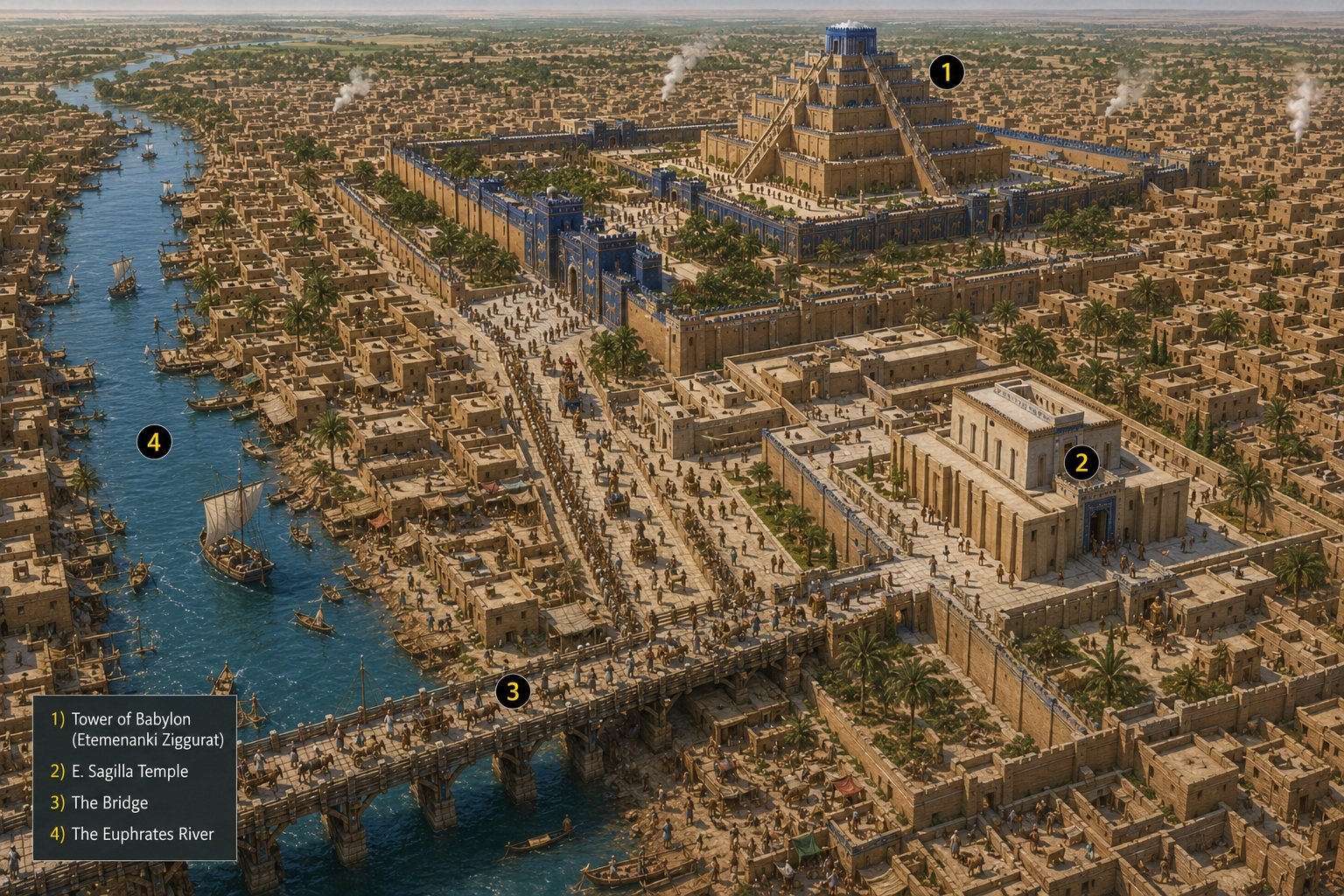
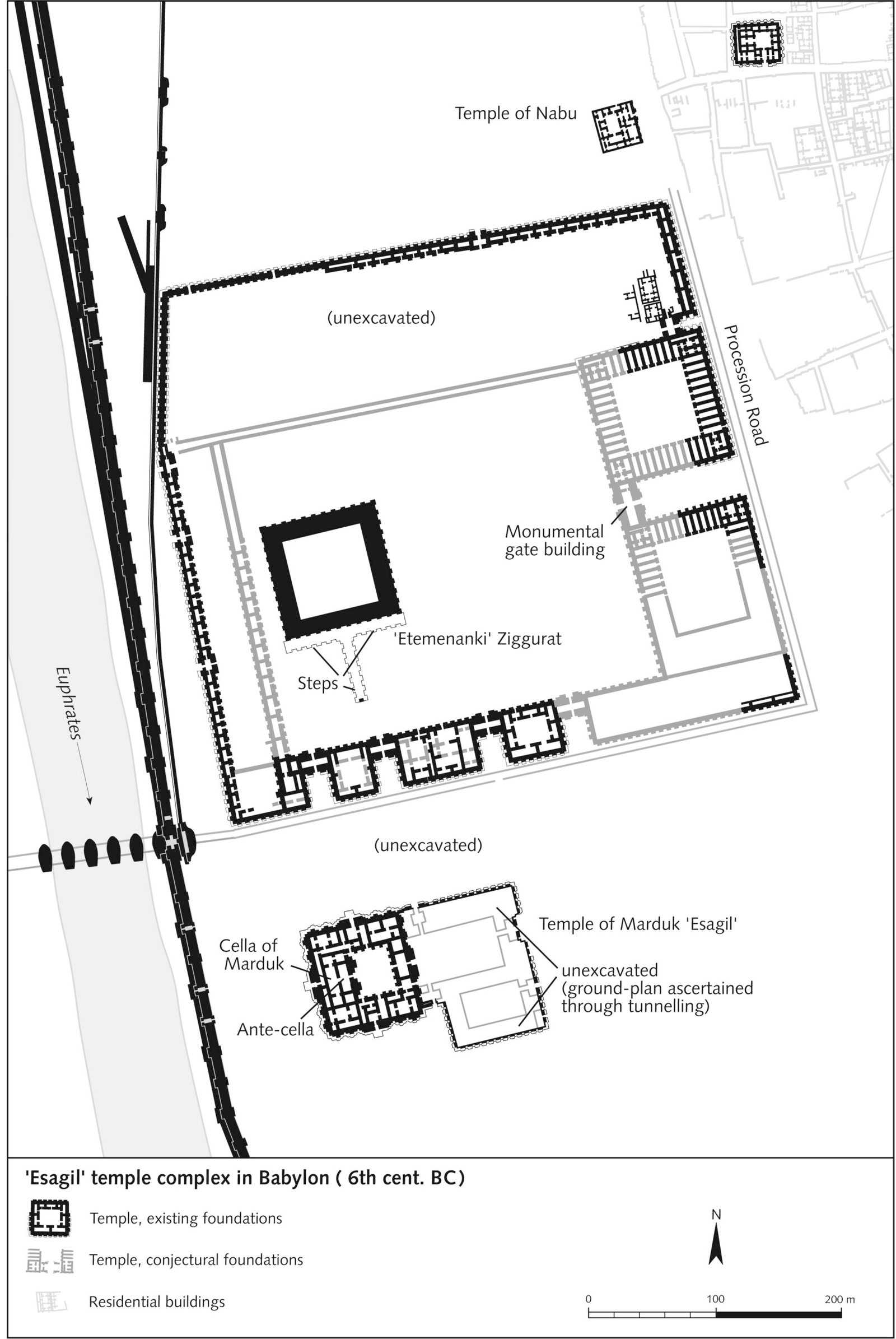
- Marduk was the patron deity of the city of Babylon, having held this position since the reign of Hammurabi (18th century BC) in Babylon’s first dynasty.
- Marduk’s main cult centre in Babylon was the temple Esagila (‘House whose Top is High’), with its ziggurat Etemenanki (‘House, the Foundation Platform of Heavens and Underworld’).
- Esagila served not only as the core of worship of Marduk but also as the centre of intellectual and economic activities over two millennia until it finally fell into disuse in the third century AD.
- The images of the gods played central roles in official cults as well as in private worship by being involved in different daily rituals, annual ceremonies and festivals, and occasional religious practices such as exorcism or absolution rituals. The ancients’ make-believe world told that the cult statues were manifestations of the divine presence. They saw Marduk’s cult statue as the living image of Marduk himself wherein he was present. Hence, his statue also received the appropriate treatment – for example, it was clothed with expensive garments and presented with large food and drinks on a daily basis.
Akitu-festivals
- The Akitu-festivals, particularly the New Year Festival of the month of Nisannu, held the most important place in the official cult activities in Babylon. This was the first month in the Babylonian calendar, corresponding to March/April in our calendar. Statues of other deities, including Nabu, the god of Borsippa and the son of Marduk, Anu, Enlil, and Ea, also participated in the Akitu-festival of the first month of Babylon. Most of the rituals of this festival were conducted by the priests in Esagila, where access was very limited, but the citizens of Babylon had the chance to see Marduk. On the eighth day of Nisannu, his statue left Esagila, escorted by the king of Babylon, and was carried in the Great Procession through the Procession Road of Marduk and the Ishtar-gate to the Akitu-temple located outside the city. This procession was the climax of the Akitu-festival of Nisannu and the moment when Marduk revealed the omen of the year to the people of Babylon.
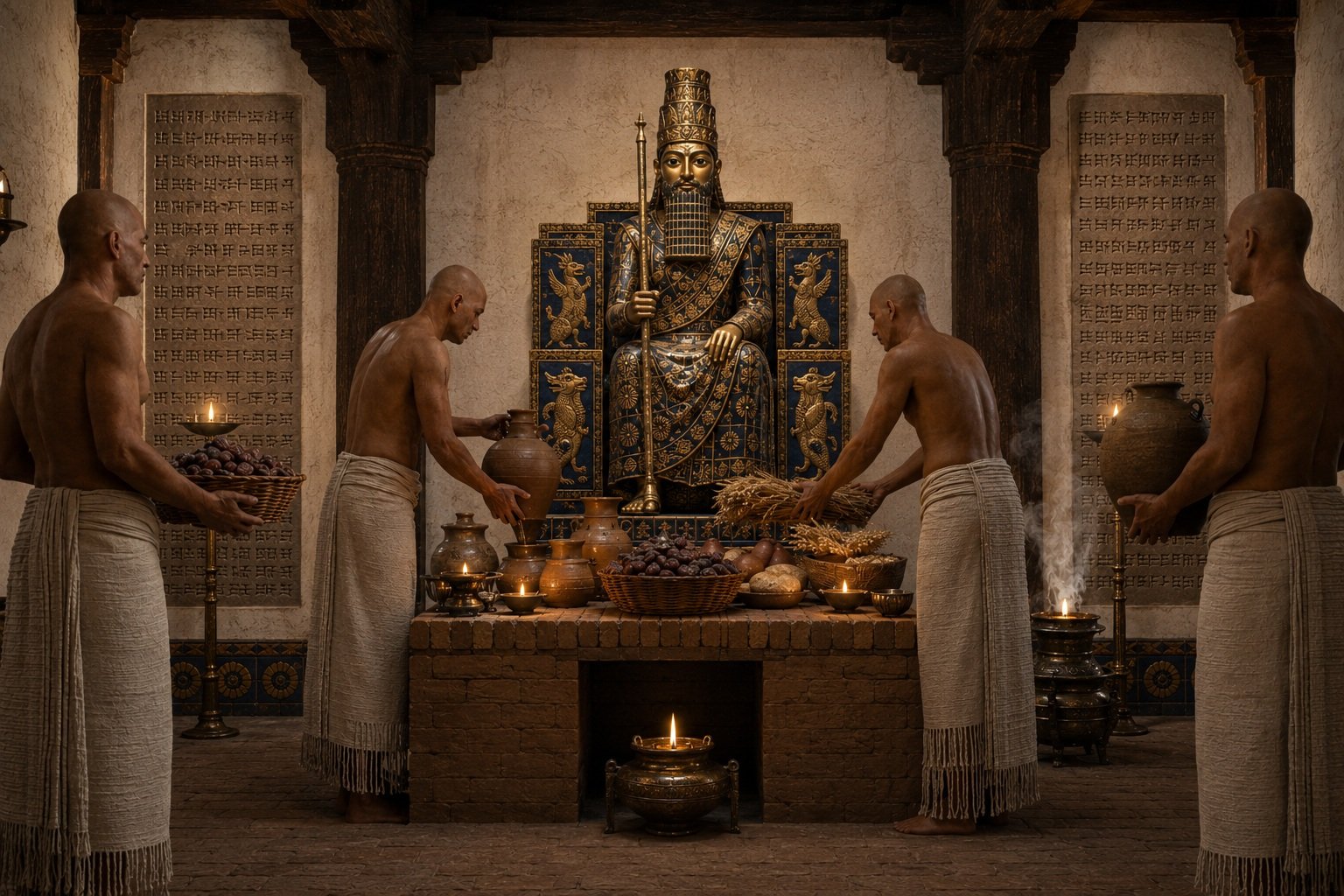
- During this procession, the rulers of Babylon escort Marduk by holding his hand, demonstrating to its citizens the monarch’s divine relationship with Babylon’s patron deity.
- On the tenth day, the people brought offerings, tributes, and booty of war to the presence of Marduk in the Akitu-temple. These offerings to Marduk during the festival were the source of Esagila’s wealth and sustained its activities even after the loss of Babylonian independence in -539.
Source: THE BABYLONIAN WORLD, edited by Gwendolyn Leick, Takayoshi Oshima p. 348-358.
A realistic historical AI rendering of the inner sanctuary cella of the Esagila temple during the Akitu festival.
The Statue of Marduk
A statue of Marduk, aptly named King of the gods of Heaven and the Underworld, was placed in Enlil’s shrine in Babylon, and Marduk receives the title bēl mātāti, King of the lands, in the Enuma Elish.
The Statue of Marduk was the physical embodiment of Marduk, located in Babylon’s main temple, the Esagila. Although Babylon housed seven different statues of Marduk—four within the Esagila and its surrounding complex, one in the Etemenanki (the ziggurat dedicated to Marduk), and two in temples dedicated to other gods—the term ‘The’ statue typically refers to Marduk’s main statue. This primary statue was prominently displayed in the Esagila and played a central role in the city’s rituals.

The Enûma Eliš – Marduk as the King of the gods
- The epilogue of Enuma Elish describes the composition as a ‘song of Marduk [who] defeated Tiamat and took the kingship’ (VII 161–162). The Enuma Elish tells how Marduk gained the supremacy in the Mesopotamian pantheon and how his city, Babylon, became the ‘capital’ of the world.
- We now know from late Babylonian ritual instructions that Enuma Elish was chanted in front of Marduk’s statue on the fourth day of the month Nisannu (Month I, March–April) and the month Kislimu (Month IX, November–December), during the Akitu-festivals.
5. Israel
Paleo-Hebrew
- Paleo-Hebrew, or Old Hebrew, was used in the kingdoms of Israel (Samaria) and Judah, and was a side branch of the Phoenician alphabet. It was used since c. -1,000.
- By around -500, among Judeans, the alphabet had been largely replaced by the Aramaic alphabet, which was used officially by the Achaemenid (Persian) Empire.
- The “square” variant, now known simply as the Hebrew alphabet, evolved directly from this by about -300.
Yahweh
- Yahweh was worshiped in Jerusalem alongside other deities, such as Baal, Asherah, the hosts of heaven, and even the national deities of neighboring lands. [The Bible Unearthed, 2001 by Israel Finkelstein and Neil Asher Silberman]
- Asherah was the wife of El, head of the Canaanite pantheon.
- The clearest archaeological evidence of the popularity of this type of worship throughout the kingdom is the discovery of hundreds of figurines of naked fertility goddesses at every late monarchic site in Judah.
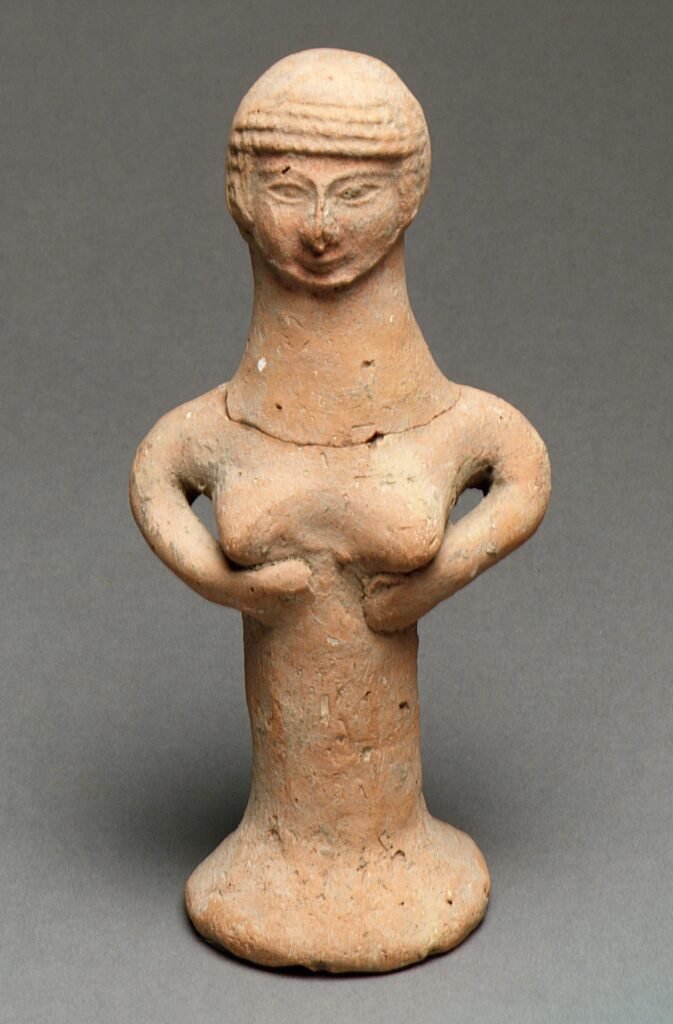
- Nude female Israelite figure ca. -800 to -700,
Source Link: metmuseum.org/art/collection/search/323163. - This type of pillar figurine is typical of those produced in great numbers in the kingdom of Judah at this time. Tell el-Duweir is ancient Lachish, the major fortified center in Judah that was destroyed by the Assyrian army under Sennacherib (-701).
Ketef Hinnom KH1 and KH2 scrolls
- The Ketef Hinnom scrolls, or Ketef Hinnom amulets, are the oldest surviving texts from the Hebrew Bible, dated to c. -600 (University of Southern California). The text is written in the Paleo-Hebrew script and is at least partially in the Book of Numbers in the Hebrew Bible.
- The scrolls preserve the earliest known citations of the Hebrew Bible, as well as the earliest examples of confessional statements concerning Yahweh.
- The instruction to put the local deity Yahweh on the Israelites’ amulet reflects an ancient practice of physically wearing the deity’s name and blessing for protection against evil.
- They prove that some of the material in the Torah (the first five books of the Bible) existed during the First Temple period.
The KH1 Scroll
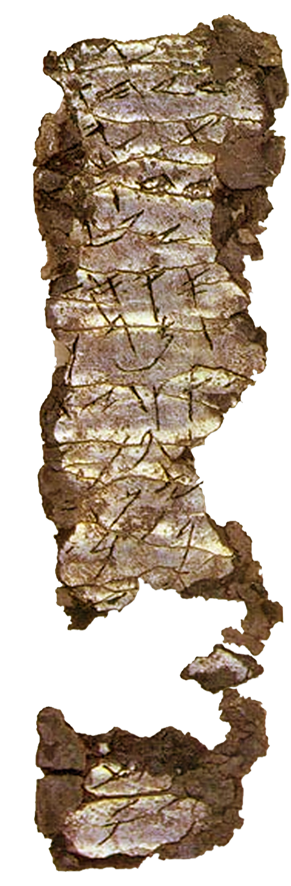
The scroll KH1 measures 27 by 97 millimetres (1.06 in × 3.82 in).
A scroll from the First Temple period, containing the Priestly Blessing, is on display at the Israel Museum. Found in the Ketef Hinnom archaeological site in 1979 by Gabriel Barkay, near the Old City of Jerusalem. Culture: Iron Age Judah.
Photo: Tamar Hayardeni, Public domain via Wikimedia Commons.
[…] Yahweh…the grea[t … who keeps] the covenant and [G]raciousness towards those who love [him]
and (alt: [hi]m;) those who keep [his commandments…the Eternal? […].
[the?] blessing more than any [sna]re and more than Evil.
For redemption is in him.
For Yahweh is our restorer [and] rock. May Yahweh bles[s] you and [may he] keep you. [May] Yahweh make [his face] shine .
The KH2 Scroll
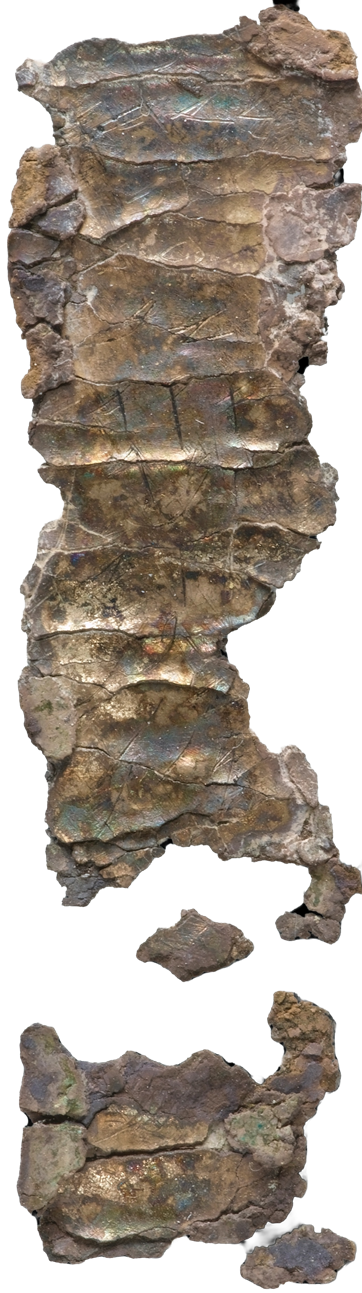
The scroll KH2 measures 11 by 39 millimetres (0.43 in × 1.54 in).
Ketef Hinnom Silver Scrolls, Public domain, via Wikimedia Commons. The Israel Museum.
[…]. May be blessed h/sh[e] by Yahweh the warrior/helper and the rebuker of [E]vil: May bless you, Yahweh, keep you.
Make shine, Yahweh, His face [upon] you and grant you p[ea]ce.
Compare these lines 5–12 to Numbers 6:24–26 (book nr. 4 of torah/bible):
6:24 Yahweh bless you and keep you;
6:25 Yahweh make his face shine upon you, and be gracious to you;
6:26 Yahweh lift up his countenance upon you, and give you peace.
The Levant: United Monarchy
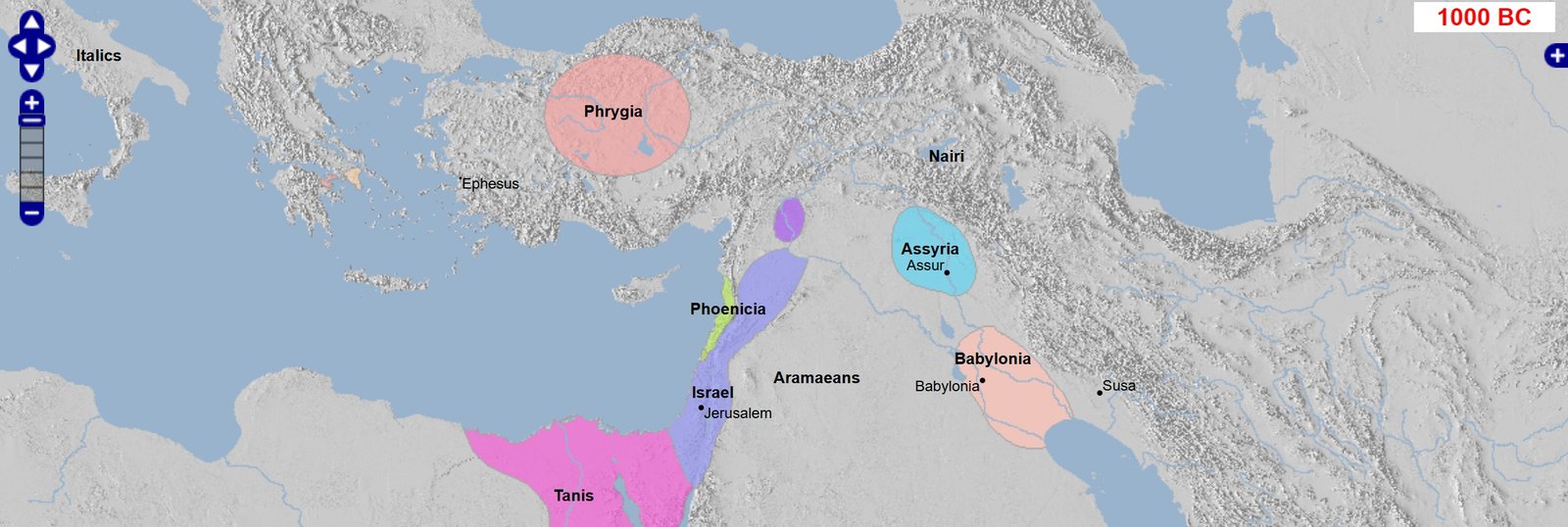
- Around -1,000, the highland communities united to form a single state, the United Monarchy, a short-lived entity that soon broke down into the more familiar dual pattern of a kingdom of Judah, centered on Jerusalem, and an Israelite kingdom centered on Shechem, and later Samaria.
- Part of the pattern of new states in the Early Iron Age was the rise of the kingdoms of Israel and Judah in the highland zones of the southern Levant. The settlers who founded the kingdoms of Israel and Judah came from sedentary and pastoral-nomadic societies. Through interactions with lowland neighbors, the highland settlements rapidly became complex urban societies in the Early Iron Age.
- Each had different political traditions that reached back to the Late Bronze Age.
Kingdom of Israel
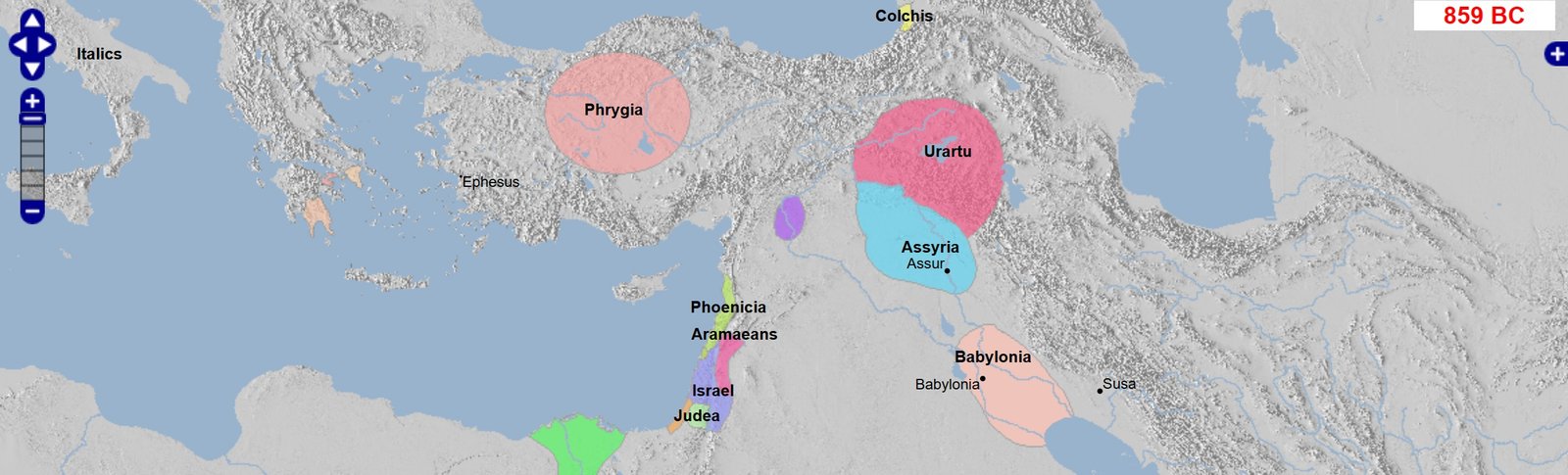
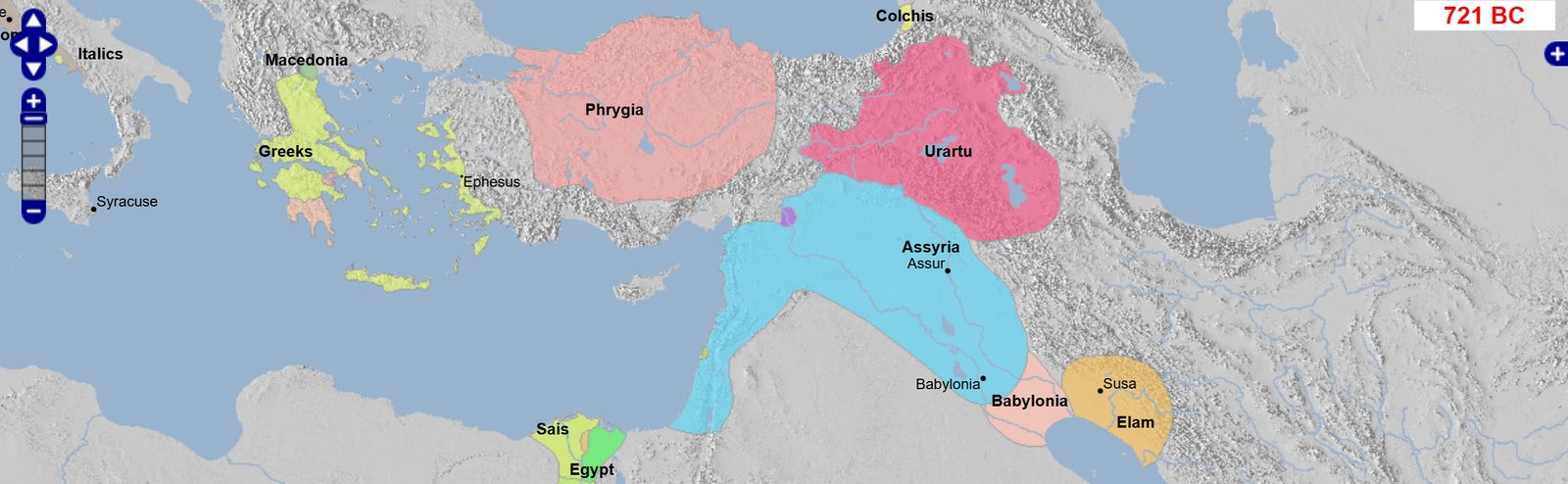
As in other areas of the Levant, Assyria’s impact grew more pronounced over the centuries, culminating in its destruction of the kingdom of Israel in -721.
Kingdom of Judah
- After the destruction of Israel in -721, from which Judea was largely spared, Yahweh’s exclusive cult grew very strong under the kings Hezekiah and Josiah.
- After the fall of Judea to the Babylonians in -597, the Jewish god was generally addressed as Adonai, “Lord”.

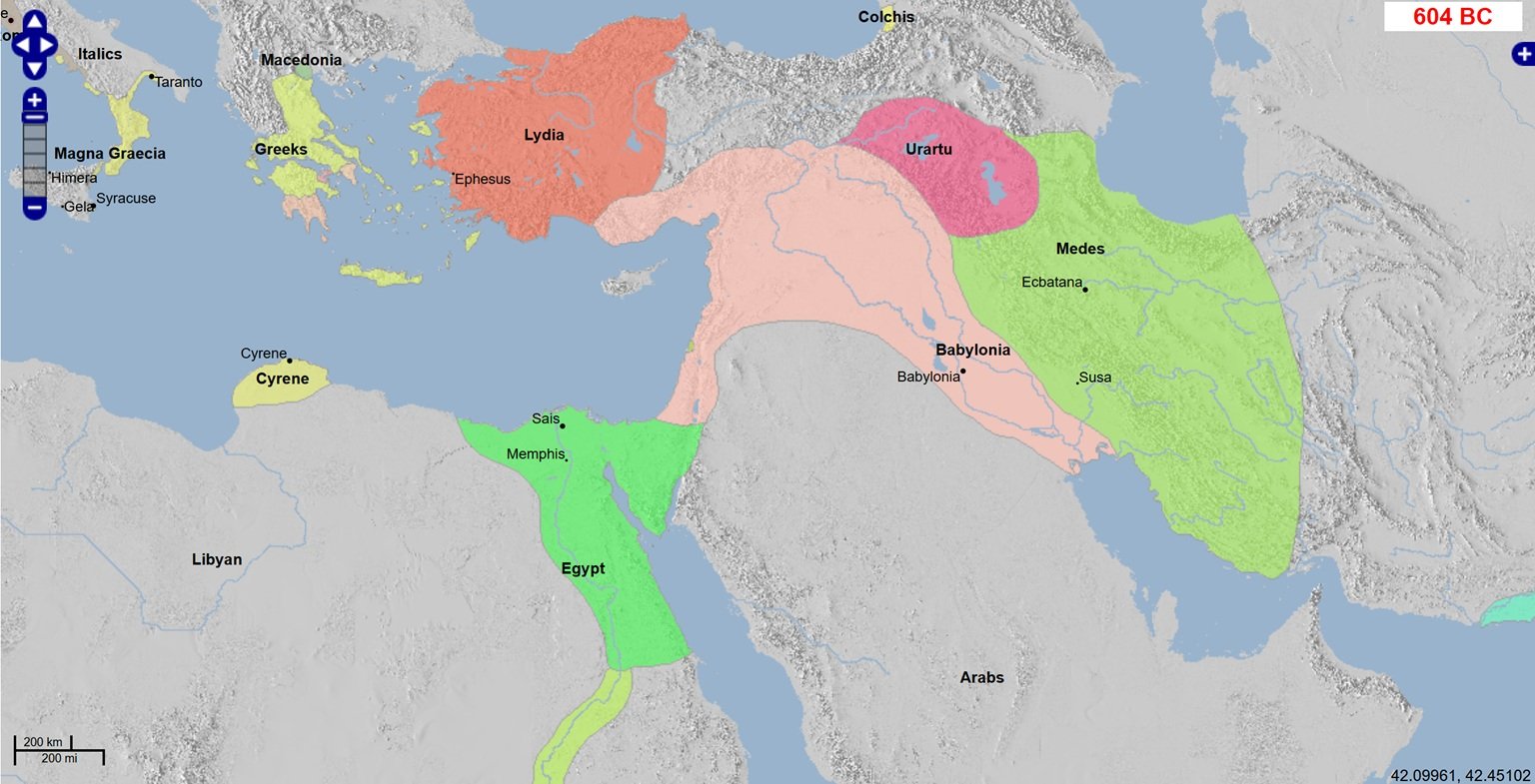
Judaea was strategically sandwiched between the superpowers of Babylon and Egypt.
How was it then that the story of the Flood and the Ark could pass from Babylonian cuneiform into Hebrew?
These flood narratives predates the formation of the Judean and Israelite states, therefore it is possible that they were familiar with them. During the Babylonian Exile, the Judeans were actually in Babylonia, so they came into direct contact with those stories. Some Judean scribes learned to read and write cuneiform, which they adapted for the Judean/Israelite public state cult (without a state) to record its history and unite its stateless people.
Hebrew mythology was created from existing Judaean/Israelite and Mesopotamian mythology and required narratives about very early times. Every public state cult has its own original story about the history of the world.
Why were the Judaeans in Babylon?
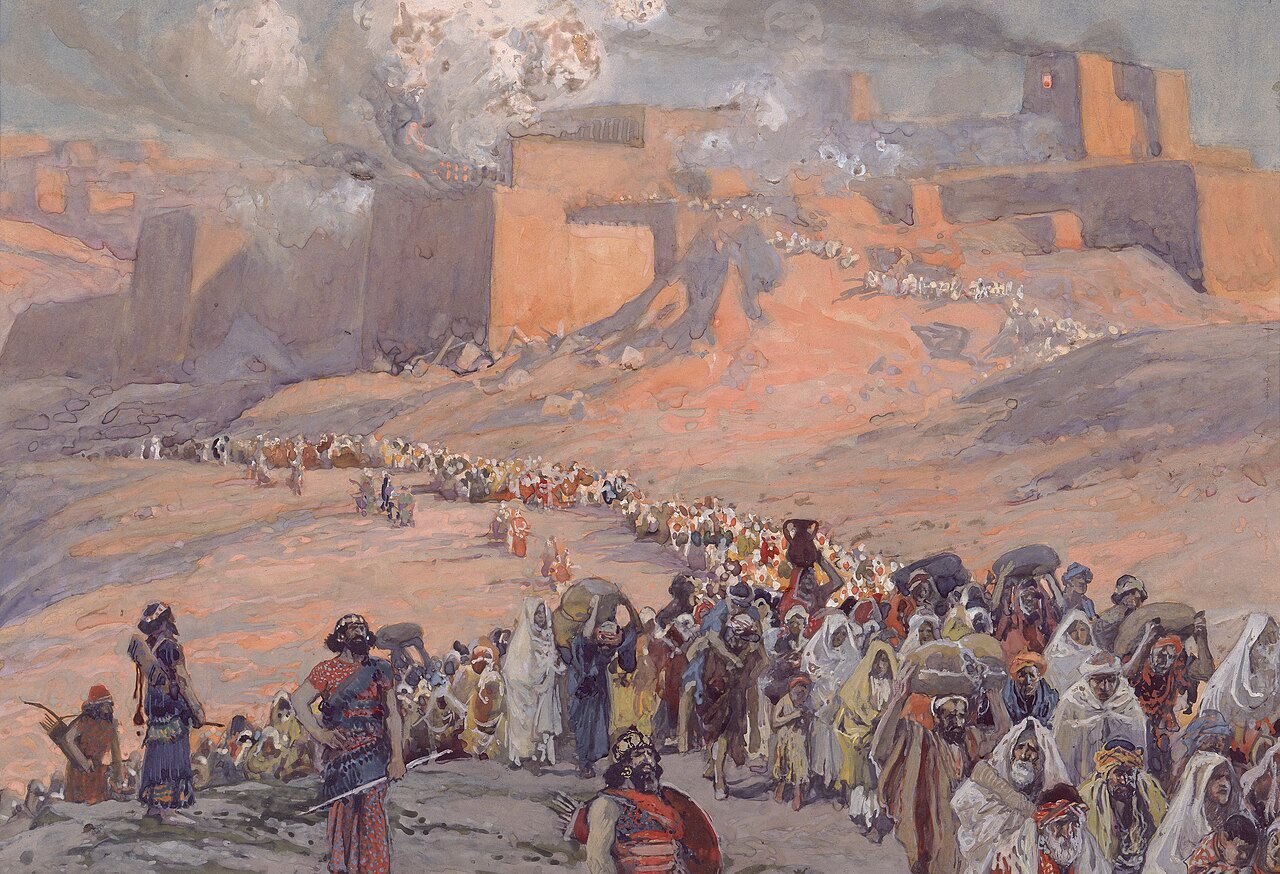
On 16 March -597, the army of Nebuchadnezzar II, king of Babylon, attacked Jerusalem, and Jehoiachin, the king of Judah, surrendered. The surrender of Jehoiachin marked the beginning of the Babylonian Exile.
The Flight of the Prisoners, c. 1896-1902 , gouache on board, 8 15/16 x 11 5/8 in. (22.7 x 29.7 cm), Jewish Museum, New York, NY.
Date between circa 1896 and circa 1902.
Source thejewishmuseum.org/collection/26577-the-flight-of-the-prisoners by Jacques Joseph Tissot
The Babylonians installed Jehoiachin’s Uncle, Zedekiah, but Zedekiah sided with the Egyptians, and the second campaign resulted in Nebuchadnezzar’s war machine inflicting punitive, total destruction a decade later in -587. The temple’s sacred contents were stolen, and the temple was destroyed. The city was left in ruins, and the historical event culminated in the mass deportation of the royal Judaean family, government officials, most of the military, and skilled craftsmen and artisans to Babylon. The country’s vital intellectual and skilled workforce was taken away.
It was during these fifty-eight (-597 to -539) years of exile that the Judaeans were directly exposed to a new world, new cults, and to cuneiform writing and literature, such as the Babylonian story of the Flood, the boat-builder and his Ark. Source: The Ark Before Noah, Decoding the Story of the Flood by Irving Finkel 2014.
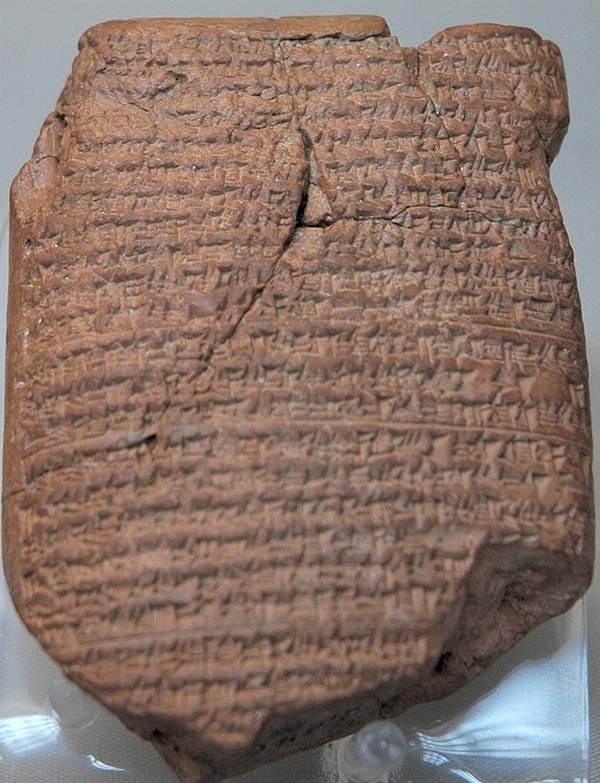
We have important evidence of this in Nebuchadnezzar’s own account of the first Jerusalem campaign, as recorded in the standard Babylonian court chronicle:
Jerusalem Chronicle of Nebuchadnezzar II (ca. -590).
The seventh year: in the month Kislev, the king of Akkad [i.e., Babylon] mustered his army and marched to Hattu [i.e., Syria].
He encamped against the city of Judah and on the second day of the month Adar he captured the city (and) seized its king [Jehoiachin]. A king of his own choice [Zedekiah] he appointed in the city (and) taking the vast tribute he brought it into Babylon.
By Jona Lendering – Livius.org Provided under CC0 1.0 Universal per “License” notice under the photograph, CC0.
Yahweh and Marduk
Marduk was the city god of Babylon, much as Yahweh was for the Judeans, Athena for the Athenians, and Diana for the Ephesians. Given Babylon’s importance and power, Marduk was likewise important and powerful. So Yahweh and Marduk were both city gods, but Marduk held supremacy in the expanding Mesopotamian empire during that period.
6. Hebrew Creation-Flood story Genesis 1-9 Comparisons
Story Structure
| I. The Sumerian Creation-Flood story, the Eridu Genesis, ca. -1,600: | ||||
| CREATION | PRE-FLOOD WORLD | FLOOD | ||
| Creation | Culture | King-List | Flood | |
| II The Akkadian Creation-Flood story, the Atra-hasis epic, ca. -1,600: | ||||
| CREATION | PRE-FLOOD WORLD | FLOOD | ||
| Creation | Plague | Plague | Plague | Flood |
| III. The Hebrew Creation-Flood story, Genesis 1-9: | ||||
| CREATION | PRE-FLOOD WORLD | FLOOD | ||
| Creation | Fall | Culture | Genealogy | Flood |
| Genesis 1, 2 | Genesis 3 | Genesis 4 | Genesis 5 | Genesis 6 – 9 |
The major overall literary unit is the same, as the three main sections and the principal levels are present in all three texts. It is mainly on the lowest literary level, the subsections, that the most variation is found between their contents.
Source: William H. Shea, Professor of Old Testament Studies Andrews University, Berrien Springs, Michigan 1983.
Similarities of Eridu Genesis, Atrahasis to Genesis 1-9
We cannot compare the Creation narratives in Genesis 1-2 with the Eridu Genesis because the latter’s portion is severely damaged. The main comparison, therefore, must come between Atra-hasis and Israelite/Judaean Genesis.
The Judeans renamed the roles from Akkadian to Hebrew.
Yahweh has the same role as the Lesser gods (Igigi), the Creation triad Enlil, and Enki
Primeval human (ha-‘adam)has same role as Primeval humans (Lullu) Noah has the same role as Atrahasis
| Atrahasis Roles | Genesis 1-9 Roles |
| The Creation triad Anu, Enlil, Enki and Lesser gods (Igigi) | Yahweh |
| Primeval humans (Lullu) | Primeval human (ha-‘adam) |
| Atrahasis | Noah |
Ha-‘adam (הָאָדָם) is Hebrew meaning “the human,” “the man,” used in the Book of Genesis 1-3 to represent humanity or the first man, highlighting a strong connection between humanity and the earth. For the biblical Genesis, we have taken the wiki Translation:Genesis as the source, link: en.wikisource.org/wiki/Translation:Genesis
| Atra-hasis | Genesis 1-9 |
|---|---|
| CREATION | |
| Starts with a Genesis, a Creation story | Starts with a Genesis, a Creation story, Gen-1. |
| Lesser gods (Igigi) are original laborers | Gen 2.9: Yahweh is original laborer (plants garden) |
| High gods (the Creation triad) enjoy privileges of divine rank | Gen 2.9: Yahweh has a private garden with special trees of life and wisdom/right and wrong |
| Primeval humans (Lullu) created as laborers for gods —modeled from clay + rebel god’s blood —implicitly immortal (no natural death) | Gen 2.15: Primeval human (ha-‘adam) created to care for Yahweh’s garden Gen 2.7: —modeled from clay (dust/adamah) + divine breath Gen 2.16—potentially immortal (free of life) |
| Antediluvian (Pre-Flood) Life | |
| Institution of marriage | Gen 2.24: Institution of marriage |
| Lullu rebel against the divine sovereign | Gen 3.6: Ha-adam rebels against Yahweh |
| Lunu punished: life diminished by plague, drought, and famine | Gen 3.17-19: Ha adam punished: life diminished by exile from garden, hard labor, and denial of access to tree of life |
| The Flood | |
| Enlil has decided to destroy humankind with a flood. | Gen 6.5,7-8: Yahweh saw that every thought man’s heart produces is only evil all day long. “I shall wipe out that man I have created from the face of the earth, from man to beast.” But Noaḥ looked all right to Yahweh, the Lord. |
| Enki tells Atrahasis to build an ark to escape the flood | Gen 6.13-21: Yahweh tells Noah to build an ark to escape the flood |
| Enlil sends a flood to drown out humanity’s noise and control over-population | Gen 7.10-24: Yahweh sends a flood to punish humanity’s wickedness and re-create the cosmos |
| To check if the floodwaters had receded from the land, Atrahasis released a raven from the boat. | Gen 8:10-11: To check if the floodwaters had receded from the land, Noah released a dove from the boat |
| Atrahasis survives the flood and offers a sacrifice | Gen 8:20: Noah survives the flood, builds an altar for Yahweh, and offers a sacrifice. |
| The traid smell the sacrifice and bless the survivors (Eridu Genesis) | Gen 8.21: Yahweh smells the sacrifice and Gen9.1: blesses the survivor |
| Enlil is reconciled to humanity | Gen 8.21: Yahweh is reconciled to flawed humanity |
| Limitations imposed on humans: Lullu become normal humans | Limitation imposed on humans: Gen 3.19: ha-adam will return to dust. Gen 6.3: his days will be 120 years |
| Sign of remembrance: the goddess Nintu’s fly necklace | Gen 9:12-17: Sign of remembrance: Yahweh’s bow |
| The divine bond between Heaven and Earth: the covenant | The divine bond between Heaven and Earth: the covenant |
Apocalyptic vs. Optimistic Cults
The Eridu Genesis and Atra-hasis present a more optimistic view because the people are led by a divine king.
The central problem for the creation triad becomes human overpopulation and human noise.
They are not slaves but co-workers and co-creators, but also savants to the gods. Also, they had to worship the so-called gods and build huge temples for them that also served to honour the city god (altar and statue), storage, a medical clinic, a school, and more, run by the divine king.
The biblical public cult, on the other hand, presents a divergent view because the people of Israel and Judea don’t have a state led by a divine king. The story places the blame for this on irretrievable sin. In all stories, the pious Noah (Ziusudra, Atrahasis) would beget a new and better stock.
The primeval history of Genesis sets out the concepts of the nature of the deity and of humankind’s relationship with its presumed maker: the created world is good and fit for humans, but when man corrupts it with sin, Yahweh decides to destroy his creation, sparing only the righteous Noah and his family to re-establish the relationship between man and Yahweh through the covenant.
7. Building the mythology
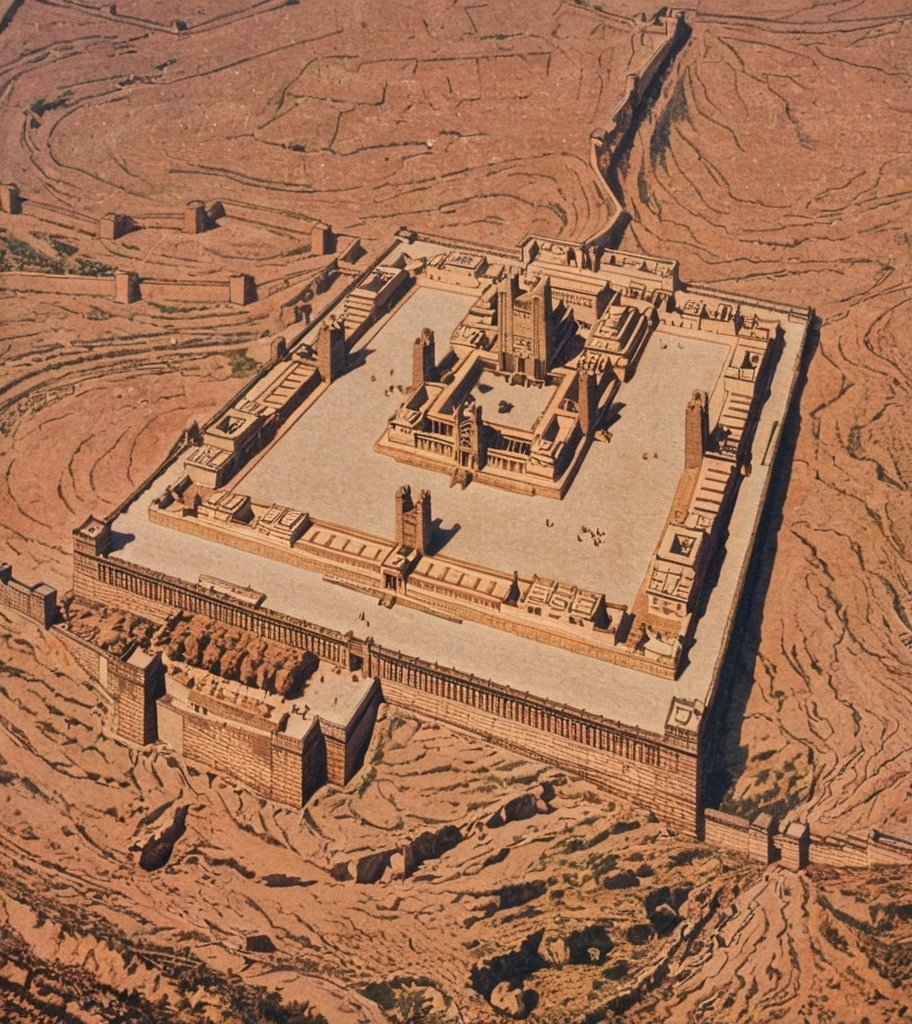
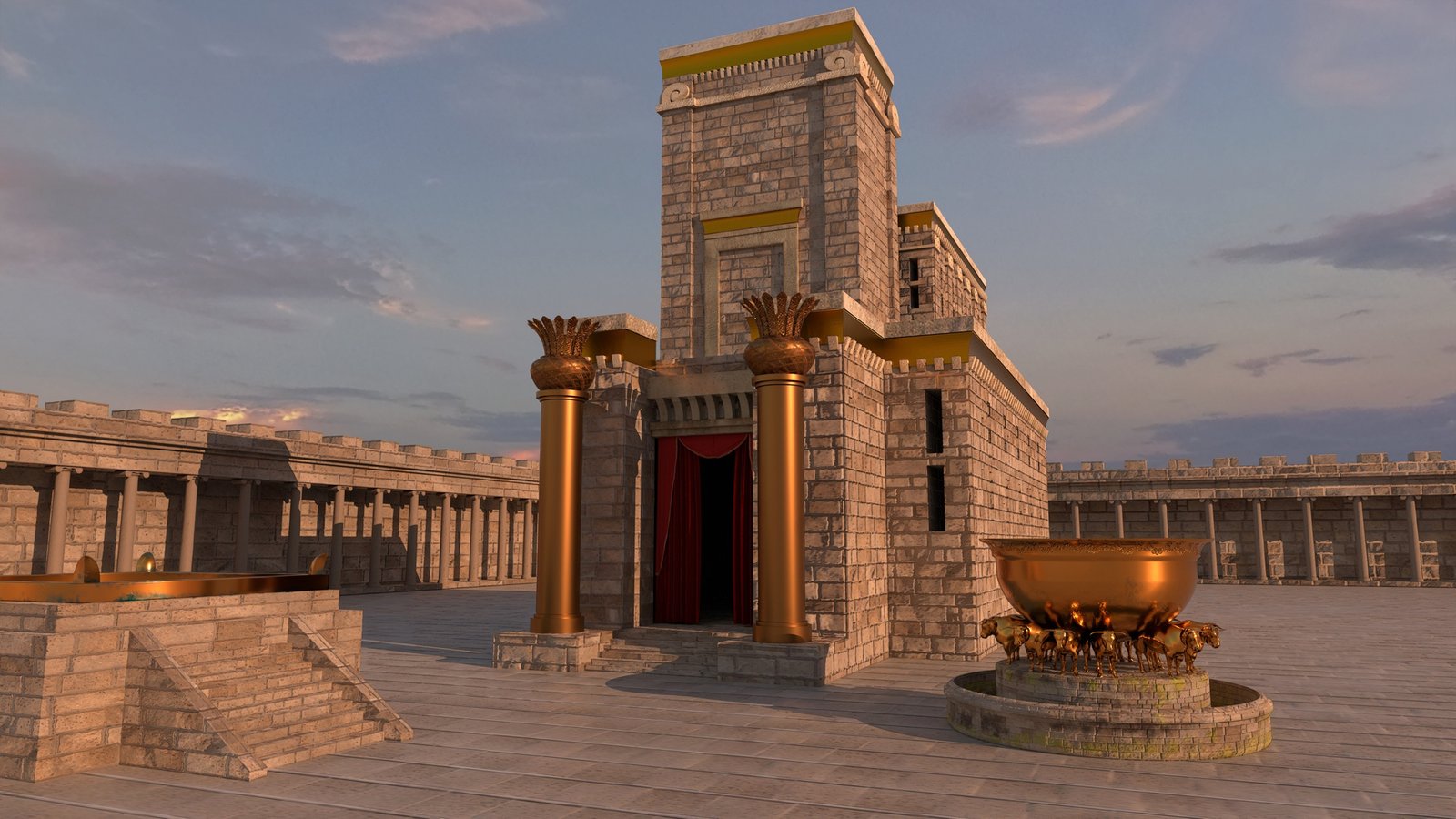
Yahweh’s first temple in Jerusalem, Kingdom of Judah.
Ancient Israel and Judah in the Iron II B Period (from c. -800 to -700) remained as they had been in the Bronze Age, predominantly rural societies and economies, with a few urban cities featuring monumental architecture and a small but impressive regional administrative center. (Source: Beyond The Texts: An Archaeological Portrait of Ancient Israel and Judah by William G. Dever, 2017.)
During this period of consolidation as a state, the kingdoms of Judah and Israel had a pantheon of various gods and goddesses, including El, Yahweh (whose name appears on personal seals from -900 to -600), Asherah, Baal, and the hosts of heaven. At the same time that public cult buildings became more common with the growth of urbanism, household shrines flourished as the rural population grew.
Why was the public state cult promoted by the kings?
To legitimize their power, the kings created the myth that the King served as a servant or representative of the deities, enforcing their justice and serving them. Their power was then based on the claim that they were intermediaries and servants of the pantheon’s deities. It was used to unify and control the people of Israel and Judea.
It was also used to help the people of Israel and Judea with mental support (defense mechanisms) and give them hope to return after the destruction of their states.
Most effective cults bring a message of hope (the happy message), define evil/revenge, and require some form of sacrifice.
Divine kingship
The ambitions of the kingdoms of Israel and Judah were typical of the other rival states and principalities at the time. Their goal was to control as much territory as possible, ensure defensible borders, exercise political power to maximize resources for imperial projects, and shape the creation of a national identity that would enhance an ideology of divine kingship.
Divine kingship fundamentally relies on the construction of a mythology to support it.
What myths and their rituals were used to build divine kingship?
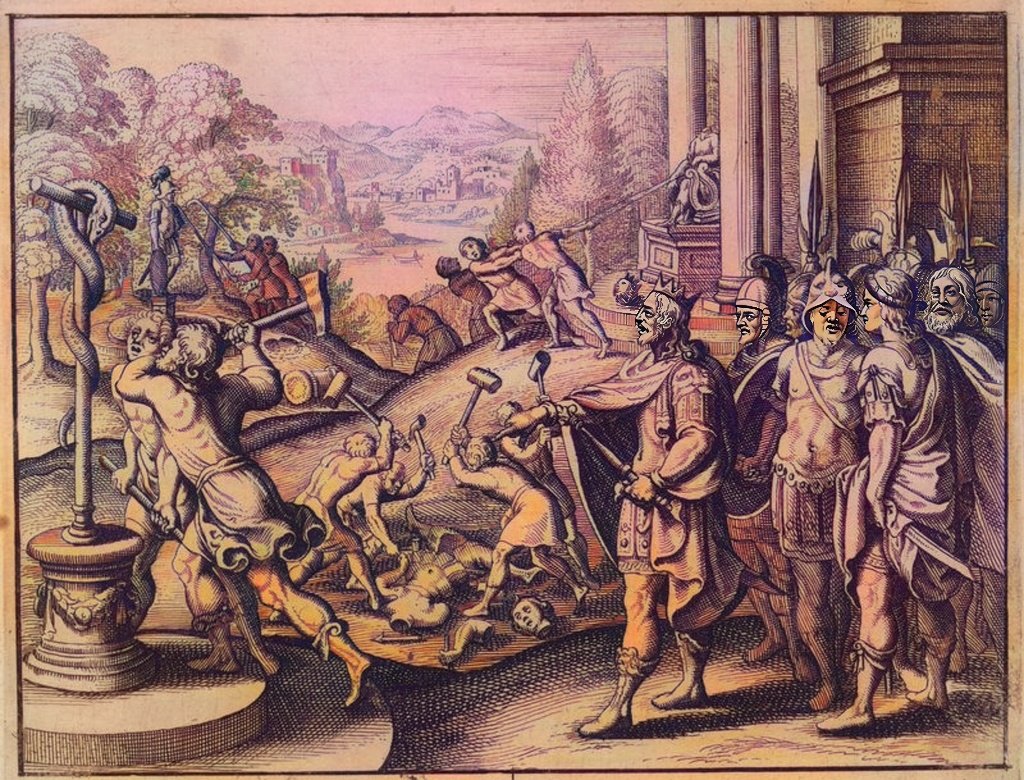
Building the mythology: Hezekiah, King of Judah, Restoring the Temple of Jerusalem and Destroying the Idols.
- The myth of divine ancestry, such as that of Romulus, one of the mythical founders of Rome, in many places served to legitimatize the claims of the king. Unusual natural phenomena, such as an especially bright star, are sometimes connected with the birth or death of a divine king. In Israel, we see that the divine kings of Israel and Judah, primarily David and his lineage, were considered anointed representatives of Yahweh.
- The myth of kings based on their faithfulness to Yahweh, with Judah having more “good” kings (e.g., Hezekiah, Josiah) compared to the idolatrous kings of Israel.
- The myth of the king is the executive agent of a deity (requires a pantheon). The myth of the king had a mediating position between the pantheon and the people.
- The myth of the responsibility for the maintenance of cosmic as well as social order and the giver of justice. Because the king preserves the myth-given world order, the task of being just has been viewed as one of his fundamental functions.
- The myth of the divine plan for the kingdoms of Israel and Judea.
- The king as a priest and the centre of ruler cults.
The king, as head of the priestly class, controlled the mythological stories and the worship surrounding them, including holy people, objects, books, altars, shrines, and temples.
When the ruler cult was introduced to Rome, the first emperor, Augustus (who reigned from -27 to 14), encouraged the worship of the goddess Roma in the eastern regions and the newly acquired western provinces. The adaptation of honouring the divine Caesar (or emperor of Rome) soon, however, became an important expression of the empire’s unity. The Hellenistic and Roman ruler cults never generated a strong religious movement. - Ritual roles prescribed for kings in public or state functions
In Mesopotamia, festivals rooted in cultic drama held great importance, especially the Babylonian New Year’s festival. The events of the epic Enūma Eliš, which recounts the sun god Marduk’s victory over the powers of chaos and the resulting creation of the universe, were reenacted in the cultic drama of the New Year’s festival, in which the king represented Marduk, the victor and creator.
Who wrote the bible, part 1?

These scribes, appointed by the house of the kings ruling over the houses of Israel and Judah, compiled these stories by rewriting and merging existing myths and documents. Specifically, they incorporated the Genesis-Flood tales from Sumer and Babylon, which are filled with magic and supernatural powers. It was all written by Homo sapiens. No other species or powers were involved.
The sources of the Genesis mythology: the creation of the world and beyond, the creation of man/nature, prehistoric (stone age) and Antediluvian (before the flood) life, the flood, and the end of this myth with the covenant between the righteous (obedient) and the main supernatural power, mostly came from:
- Mesopotamia, beginning with the creative scribes of Sumer, around -4,500.
- The Israelite/Judean cult stories started with the coming of the divine kings/chiefdoms since c. -1,000. The Israelite and Judaean court chronicles record their political actions, religious practices, and military achievements. These served as sources for biblical histories written in Hebrew script on leather or parchment scrolls, which were kept in the royal chanceries of the houses of Israel and Judah.
- When Israel/Judea was invaded by foreign empires, the cult’s mythology was transformed and rewritten to unite the people of Israel/Judea while their state was invaded and gone, and to give them hope of return. It also needed to explain why this happened (sin) and the myth of the divinely-ordained punishment for the failure of Israel’s kings to worship Yahweh to the exclusion of all other deities.
- The Judeans adopted the Babylonian idea of elevating their local deity to supremacy in their public cult mythology by replacing many deities with just one. Instead of using Marduk, they replaced the deities with Yahweh.
- Its essential function would be to explain what had happened from the beginning of time and to demonstrate explicitly that the entire historical process, from the inception of the world, had been the unfolding of a divine plan.