
- Mental defense mechanisms are unconscious psychological strategies used to protect the person from anxiety, stress, or unacceptable thoughts, often by distorting reality. Key examples include denial (ignoring reality), projection (attributing one’s faults to others), displacement (transferring negative emotions to others), repression (pushing down memories), and sublimation (channeling impulses into constructive activities).
- Metal defenses are automatic reactions to stress. The concept of metal defenses refers to psychological defense mechanisms, or simply defenses.
- Freud and Breuer first introduced the notion of defense in their work, “Studies on Hysteria” (1893-1895), where they described it as the process of repressing certain thoughts from entering consciousness. They employed the German term “Abwehr,” which translates to “repel.”

Common Mental Defense Mechanisms

Any action can be used as a defense. The following are common defenses that repel thoughts or feelings that are too painful or morally unacceptable, and are pushed into the unconscious.
Repression (Unconscious Forgetting)
- The simplest form of repression is the blocking of painful or frightening memories from conscious awareness. The single greatest obstacle to identifying the roots of one’s emotions is repression.

- The essence of repression lies simply in turning an unacceptable emotion or urge away from your awareness, and keeping it away. The repression might be a perception about reality you would rather not acknowledge.
- Of the various factors that can cause a man to feel alienated from his own emotions, repression is the most formidable and devastating.
- Example 1: A driver completely forgets a horrific car accident they had at age ten.
- Example 2: An adult regularly forgets their annual dentist appointment due to childhood dental trauma.
- Example 3: An employee entirely blocks out the memory of being publicly fired from their very first job.
Denial (Refusing to Accept Reality)
- Denial is refusing to accept reality, such as ignoring a serious medical diagnosis or a heavy drinker denying they are addicted and have a problem.
- Denial is one of the primary defense mechanisms in its own right, but it also depends on the operation of repression. When people refuses to accept reality or facts, despite being presented with hard evidence, they are in denial.


- Example 1: A person continues to max out credit cards despite knowing they are drowning in debt.
- Example 2: A heavy smoker claims cigarettes won’t harm them because their grandfather smoked until age ninety.
- Example 3: A homeowner ignores a giant crack in the basement foundation, pretending it is just a superficial scratch.
Rationalization (Making Excuses for Failures)
- Creating false justifications for behavior, such as claiming “I didn’t want the promotion anyway” after not getting it.


A woman who is burning with unnoticed anger and disappointment because she has not been invited to join a certain club may tell herself that the subject is completely indifferent to her.
- Example 1: A driver gets a speeding ticket and claims, “The cop just needed to meet his monthly quota.”
- Example 2: A job applicant gets rejected and says, “That company culture seemed toxic anyway, so I lucked out.”
- Example 3: A person breaks their strict diet at a bakery by saying, “I walked an extra mile today, so I earned this cake.”
Displacement (Shifting Feelings to a Safe Target)
- Transferring negative emotions from the intended target to a less threatening one, like yelling at family after a stressful day at work.



The person who rejects any form of criticism by always blaming others or by never listening and constantly talking.
- Example 1: A retail worker gets yelled at by a rude customer and later snaps at the drive-thru cashier.
- Example 2: A student fails a difficult college exam and goes home to slam doors and scream at their younger sibling.
- Example 3: A sports fan’s favorite football team loses the Super Bowl, prompting them to punch a hole through the living room drywall.
Regression (Reverting to Child-like Behaviors)
- Reverting to child-like behaviors to cope with stress, such as pouting or throwing a tantrum.

- Example 1: A grown professional pouts, stomps their feet, and refuses to talk when a business meeting goes poorly.
- Example 2: An adult child crawls into bed with a childhood stuffed animal when they catch a mild flu.
- Example 3: A married adult throws a literal crying tantrum on the kitchen floor when their flight get cancelled.
Sublimation (Channeling Urges into Productive Actions)
- Channeling negative impulses into socially acceptable or constructive actions, like channeling aggression into sports, constructing art.

- Example 1: A person with intense, aggressive impulses becomes a highly successful professional heavyweight boxer.
- Example 2: An individual harboring dark, macabre fantasies channels them into writing bestselling horror novels.
- Example 3: A stubborn, argumentative person channels their relentless urge to fight into becoming a brilliant courtroom defense attorney.
Intellectualization (Focusing on Facts to Avoid Sensation)
- Focusing on the cold, clinical facts of a situation to avoid feeling pain, such as focusing on funeral logistics instead of grieving.
- Example 1: A person diagnosed with a serious illness spends weeks charting medical data instead of processing fear.
- Example 2: A laid-off tech worker creates a complex spreadsheet analyzing market trends instead of letting themselves feel rejected.
- Example 3: An executor of an estate focuses entirely on complex tax laws after a parent dies to avoid crying.
Compensation (Overachieving to Hide a Weakness)
- Overachieving in one area to make up for failures in another, like focusing heavily on work to hide insecurities about appearance.
- Example 1: A student who struggles terribly with academics focuses all energy on becoming the high school star quarterback.
- Example 2: A professional who feels socially awkward and unpopular works eighty hours a week to become top salesperson.
- Example 3: A person insecure about their natural physical appearance spends hours bodybuilding to achieve a flawless physique.
Projection (Attributing Your Faults to Others)
- Unconsciously attributing your own unacceptable anger, faults, or impulses to another person.
- Example 1: A highly judgmental neighbor constantly complains that “everyone in this town is incredibly nosy.”
- Example 2: An unfaithful partner constantly accuses their innocent spouse of checking out other people at dinner.
- Example 3: A lazy employee claims their hardworking coworkers are trying to slack off during the shift.
Projective Identification (Forcing Your Pain into Others)
- Behaving in loops that force your exact unwanted pain or anger into someone else’s experience.
- Example 1: A deeply insecure cook intentionally serves a cold meal to their friend to make the friend feel unvalued.
- Example 2: A nervous passenger repeatedly screams about plane crashes until the entire row becomes visibly panicked.
- Example 3: A rejected person acts incredibly cold to a new acquaintance until the acquaintance finally snaps at them.
Reaction-Formation (Behaving the Exact Opposite of Your True Feelings)
- Transforming a forbidden, hostile feeling into its exact, exaggerated opposite (e.g., hyper-niceness covering raw rage).
- Example 1: A worker who despises their overbearing supervisor becomes excessively bubbly and complimentary whenever they meet.
- Example 2: A person struggling with internal moral doubts becomes a loud, aggressive advocate for extreme internet censorship laws.
- Example 3: A parent who secretly regrets having children overcompensates by becoming aggressively overprotective of their toddler.
Splitting (Black-and-White Thinking)
- Seeing human beings completely as black-or-white, classifying targets as purely loving or purely demonic.
- Example 1: A voter believes their political party is completely flawless and the opposing party is entirely evil.
- Example 2: A patient loves their doctor on Monday but calls them a medical fraud on Tuesday after a long wait.
- Example 3: A teenager treats their best friend like royalty until a minor text disagreement occurs, then blocks them forever.
Isolation of Affect (Stripping Sensation from a Memory)
- Keeping a detailed intellectual memory completely intact while stripping away the actual emotional sensation.
- Example 1: A soldier describes a terrifying active combat situation with a completely flat, robotic voice.
- Example 2: A paramedic calmly details a horrific highway pileup over dinner without experiencing a single wave of nausea.
- Example 3: A victim of an armed robbery recounts the event to police as if reading a boring grocery list.
Turning on the Self (Redirecting Anger Inward)
- Redirecting internal murderous fury or sharp criticism away from others and inflicting it directly onto yourself.
- Example 1: A child blamed by a bully starts pulling out their own hair in the bathroom out of frustration.
- Example 2: An employee passed over for a promotion convinces themselves that they are fundamentally stupid and worthless.
- Example 3: A person angry at a family member goes to the garage and violently punches a concrete wall.
Can we avoid this from happening?

It’s not a deliberate decision but something you can notice before it is automatically pushed out of our awareness.
Our mental defenses are the invisible ways we use to keep unacceptable thoughts and feelings out of our consciousness. Defenses block an emotion or mental process from becoming conscious. Something you don’t want to feel or think about. In doing so, they distort your perception of reality–both in your relationships and in your emotional realm.
These defenses arise when we face overwhelming feelings of need, hate that is too frightening to admit, toxic envy or jealousy, paralyzing shame, and other emotions so intense that people cannot handle them.



We will demonstrate how certain defenses often prevent us from getting what we need and want for ourselves and in our relationships.
What mental defense mechanisms do we use?
It is the primary psychological struggles in life and our personal reaction that largely determine which psychological defenses we use.
Everyone develops their own constellation of habitual defenses to deal with emotions. People all over the world struggle with the same fundamental challenges inherent in human life.

Different individuals perceive certain issues as more challenging; even when two people face the same emotional struggle, their responses can differ greatly. For all of us, the defense mechanisms we adopt influence our personality and how we relate to others.
Every person responds in a unique way to the same emotional challenges by developing a constellation of mental defenses.
This constellation of mental defenses describes a person’s unique, habitual, and subconscious set of mental defenses used to handle anxiety, protect self-esteem, and manage internal conflict or external stressors. These defenses are not isolated but function as an integrated system that determines how a person interprets reality, processes emotions, and behaves.
Why do we use these mental defense mechanisms?
The brain uses mental defenses to ward off an attack on self-worth or to prevent a mental breakdown when the brain is overwhelmed by painful problems. These defenses distort the perception of reality and the proper functioning of our brain functions.

Defense mechanisms can be actions that are not irrational in themselves; what is irrational is the reason for their choice. For example, productive work is a rational action; but escaping into work to avoid conflicts or weaknesses is not. It is used to avoid them rather than to resolve them.
A defense is often motivated by anxiety.

How can this lead to missed opportunities?
We might overlook opportunities because of fears rooted in past experiences that are no longer relevant to our current circumstances.


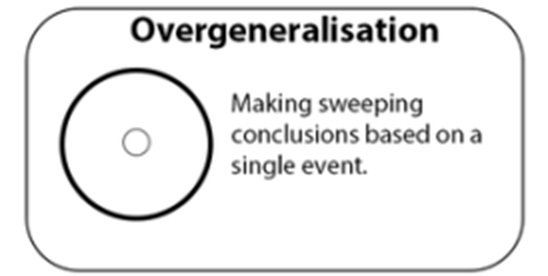
The illusion goes deeper than just our senses. Our self-image of who we think we are is also part of this constructed reality. We build interpretations about ourselves that can, for instance, be based on the cognitive distortion of overgeneralization. Someone might think: ‘Once a failure, always a failure.’ But just because you’ve failed doesn’t mean you’ll fail again. Remember, success often comes from learning and growing after setbacks.


🧩 System Dynamics: Flying in Formation
Defenses rarely operate alone; instead, they integrate into automatic constellations. Over time, these chronic defense systems crystallize into your baseline personality structure—a phenomenon psychoanalysts call character armor.
- The Clinical Catch: While defenses solve a short-term crisis, their ongoing use shapes rigid traits.
- Compromise Formation: Behaviors simultaneously give a masked voice to a forbidden urge while executing its defense.
- Rigid Distortions: Entrenched systems distort interpersonal reality, leading to cognitive errors like overgeneralization (e.g., “Once a failure, always a failure”).
- The Long-Term Cost: Defenses ignore tomorrow; they buy comfort now by locking you in repetitive, self-defeating loops.
Relationship Dynamics Combinations
The following patterns are extremes and are used to illustrate them.
1. The Jealous Gatekeeper
- The Combination: Projection + Denial + Isolation of Affect
- The Dynamic: A spouse projects their own desires to stray onto their partner, tracking their location constantly. They completely deny the reality of this suffocating behavior when confronted. During arguments, they isolate their affect, coldly claiming they are just running a logical safety check for the household.
2. The Silent Scorekeeper
- The Combination: Repression + Reaction-Formation + Splitting
- The Dynamic: A partner represses early relationship grievances to keep the peace. They use reaction-formation to act sweet and doting every single day. Eventually, the pressure builds, causing them to split; they suddenly see their partner as a monster and pack their bags over a misplaced shoe.
3. The Helpless Consultant
- The Combination: Regression + Intellectualization + Rationalization
- The Dynamic: When relationship stress peaks, a partner undergoes regression, whining and acting incapable of making basic family choices. When asked to step up, they intellectualize the situation, citing marriage therapy data. They rationalize their passivity by claiming, “Giving you total control is actually healthiest for your personal growth.”
4. The Overachieving Distracter
- The Combination: Compensation + Avoidance + Displacement
- The Dynamic: To hide deep insecurities about intimacy, a spouse uses compensation, working late to buy lavish family vacations. They use this busy schedule for total avoidance of tough relationship talks. When their lonely partner finally demands closeness, the spouse experiences displacement, screaming at the kids for leaving toys on the stairs.
5. The Perfect Host Box
- The Combination: Reaction-Formation + Compartmentalization + Denial
- The Dynamic: A couple experiencing a severe domestic crisis throws an elaborate, high-energy neighborhood dinner party. They use reaction-formation to act like lovebirds in front of guests. They use compartmentalization to lock their marriage misery in a box, completely denying the reality of their pending divorce until the last guest leaves.
6. The Puppet Master
- The Combination: Projective Identification + Turning on the Self + Rationalization
- The Dynamic: An insecure partner intentionally drops cold hints until their spouse loses their temper (projective identification). Once the spouse yells, the instigator turns the anger inward, weeping and saying they are a worthless partner. They rationalize this toxic loop by telling friends, “I just have a highly sensitive emotional radar.”
7. The Clinical Wall
- The Combination: Intellectualization + Splitting + Reticence
- The Dynamic: During a heated emotional debate, one partner splits, labeling the other as “completely irrational and hysterical.” They intellectualize the fight, diagnosing their partner with pop-psychology terms. When the partner cries for real warmth, they deploy reticence, sitting in total, ice-cold silence on the couch.
8. The Bitter Rebel
- The Combination: Projective Blaming + Grandiosity + Hostile Aggression
- The Dynamic: A partner loses the family savings on a bad investment plot. They use projective blaming, accusing their spouse of “nagging so much it caused bad financial stress.” They pivot to grandiosity, claiming they are a visionary genius, using hostile aggression and slammed doors to shut down any financial questions.
9. The Martyr’s Shield
- The Combination: Sublimation + Compensation + Devaluation
- The Dynamic: A spouse channels all their marital loneliness into running a local charity kitchen (sublimation). They use this saintly work as compensation to build a massive public reputation. At home, they use devaluation, sneering at their partner’s corporate job and calling them “self-absorbed and spiritually empty.”
10. The Tantrum Loop
- The Combination: Ego Regression + Denial + Rationalization
- The Dynamic: When a partner requests basic relationship boundaries, the other experiences ego regression, screaming and throwing household items. The next morning, they use denial, pretending the explosive fight never happened. If pressed, they rationalize: “Any normal person would explode if they were pushed as hard as you push me.”
🏛️ Individual Defenses in Mainstream Religious Cults
Massive, mainstream religious cults operate as powerful psychological ecosystems that capture and redirect human defense mechanisms on a global scale. When a child or adult experiences the raw misery of existence—the terrifying fear of death, the pain of rejection, or the chaos of a random universe—their mind automatically trips its internal circuit breakers (mental defenses) to block out the distress.
Mainstream religious systems provide a beautifully engineered, pre-packaged architecture that absorbs these defense mechanisms. By institutionalizing these defenses through sacred rituals, ancient texts, and grand social structures, these institutions transform an individual’s private, overwhelming anxieties into deep spiritual devotion, unwavering loyalty, and community bonds.
Vivid Examples of Individual Defenses in Mainstream Religious Cults
1. Denial (The Eternal Shield)
- How it works: Completely refusing to acknowledge a glaring, agonizing reality because it is too heavy to bear.
- The Example: A devout follower suffers a devastating, tragic loss when their young child passes away. To shield their mind from the shattering reality of permanent absence, they use absolute denial, declaring with a smile through their tears that their child is not actually gone, but is physically running and playing on golden streets in a paradise above.
2. Projection (The Outward Finger)
- How it works: Taking your own deeply buried, unacceptable impulses and loudly accusing others of committing them.
- The Example: A religious adherent struggles with intense, secret, subconscious greed and a desire for material luxury that violates their faith’s vows of simplicity. To keep their own conscious mind feeling pure, they project this greed outward, constantly pointing at secular society and screaming that outsiders are materialistic, soul-corrupted hedonists obsessed only with money.
3. Displacement (The Holy Vent)
- How it works: Taking explosive anger or frustration meant for a terrifying, powerful target (like God or an abusive religious authority) and venting it onto a completely safe, lower-ranking target.
- The Example: A believer feels deeply betrayed and furious at God after their business goes bankrupt despite years of faithful tithing. Terrified that anger at the Almighty will bring divine lightning, they displace that volcanic rage onto their teenage son, screaming at him and punishing him severely for a tiny, minor infraction like leaving a dish in the sink.
4. Splitting (The Cosmic Divide)
- How it works: Slicing the messy, complex human race into absolute, cartoonish extremes—purely holy or purely demonic.
- The Example: An orthodox follower views the world through a rigid binary lens: everyone who sits in their specific pews or temples is a “child of absolute light and truth,” while every single person outside their faith tradition—no matter how kind, charitable, or loving they are—is classified as a “blind agent of darkness” walking a path of deception.
5. Intellectualization (The Fortress of Text)
- How it works: Obsessing over dense, sterile rules, translation errors, and historical data to avoid feeling the raw, terrifying sensation of a spiritual crisis.
- The Example: A theology student begins to experience deeply unsettling doubts about the morality of historical religious wars. Instead of letting themselves feel the gut-wrenching anxiety of a crumbling faith, they dive into ancient languages, spending eighteen hours a day writing complex, hyper-technical academic papers on verbs to bury their emotional panic under a mountain of data.
6. Rationalization (The Divine Design)
- How it works: Inventing a comforting, noble explanation to justify an unfair, horrific, or deeply painful event.
- The Example: A family loses their home in a catastrophic natural disaster. To stave off the terrifying realization that nature is indifferent and random, they immediately tell themselves and their neighbors, “God shattered our life on purpose because He has an incredibly beautiful, mysterious plan to rebuild us stronger.”
7. Regression (The Cosmic Infant)
- How it works: Retreating to a helpless, child-like state of total submission so an all-powerful figure carries all the weight and blame.
- The Example: Faced with a terrifying, complex financial crisis, an adult completely stops trying to problem-solve, curl up in a ball, and repeats simple child-like mantras over and over: “The Heavenly Father will feed the birds, so He will put food on my plate, I don’t need to think, I just need to trust.”
8. Reaction-Formation (The Saintly Mask)
- How it works: Unconsciously transforming a boiling, forbidden ocean of hatred or resentment into its exact, exaggerated opposite.
- The Example: A volunteer secretly loathes the grueling, exhausting work of scrubbing the temple floors and cooking for church socials every weekend, but admitting this would make them feel like a selfish sinner. Their subconscious flips the switch: they become the most hyper-cheerful, suffocatingly sweet “servant leader” in the community, smiling intensely while their eyes remain dead and strained.
9. Sublimation (The Sacred Conduit)
- How it works: Channeling chaotic, aggressive, or forbidden raw impulses into highly praised, socially constructive religious works.
- The Example: An individual with a fierce, naturally combative personality and a relentless urge to argue channels that aggressive energy into becoming a brilliant, aggressive religious apologist, spending their life traveling the world to fiercely debate and crush philosophical opponents on stage to thunderous applause.
10. Turning on the Self (The Inward Lash)
- How it works: Redirecting anger or frustration away from life’s unfairness and inflicting it directly onto your own mind and body to feel in control.
- The Example: A devoted follower fasts, prays, and begs for relief from chronic illness, but gets worse. Unable to blame their faith system or their Deity, they turn the anger inward, concluding, “The system is perfect; I am just fundamentally filthy, weak, and lacking in true faith,” and begin punishing themselves with severe sleep deprivation and extreme fasting as penance.
🧩 Institutional Defense Combinations in Everyday Faith Dynamics
When these circuit breakers operate together, they create massive psychological webs that shape the baseline culture of large religious cult institutions:
1. The Prosperity Preacher’s Mirror
- The Combination: Grandiosity + Projective Blaming + Denial
- The Dynamic: A massive mega-church community embraces extreme financial grandiosity, teaching that material wealth is a direct sign of divine favor. When a faithful member goes broke, the community uses denial to ignore their poverty. They shift into projective blaming, telling the broke individual, “You must be harboring secret, unconfessed sin, or your lack of faith blocked the miracle.”
2. The Traditionalist Wall
- The Combination: Reaction-Formation + Isolation of Affect + Splitting
- The Dynamic: When a modern social shift threatens an ancient religious structure, the institution’s defenders split the world into “holy tradition” versus “demonic modernism.” They use reaction-formation to double down on hyper-rigid, beautiful rituals, while using isolation of affect to coldly excommunicate lifelong community members who ask questions, showing zero human grief or emotion while doing so.
3. The Family Tree Trap
- The Combination: Repression + Denial + Compensation
- The Dynamic: A prominent religious family hides a history of severe internal abuse. Because facing it would destroy their standing, they use repression to bury the memories and denial to pretend everything is perfect. They use compensation, working eighty hours a week to lead youth groups and organize massive charity drives, using public sainthood to outrun private trauma.
4. The Scholar’s Labyrinth
- The Combination: Intellectualization + Compartmentalization + Avoidance
- The Dynamic: An academic in a strict faith tradition encounters glaring historical contradictions in their sacred texts. They use compartmentalization to keep their clinical, logical research brain completely separate from their Sunday morning devotion. They use intellectualization to write massive, dense defenses of the text, utilizing this heavy academic fog for total avoidance of their own growing spiritual panic.
5. The Scapegoat Crucible
- The Combination: Projection + Projective Identification + Displacement
- The Dynamic: A religious community harbors deep, repressed anxieties about their own changing moral standards. They project this internal rot onto a specific minority group outside their walls. They relentlessly attack and harass this group (projective identification) until members of that group angrily lash back. The religious community then uses displacement, unleashing all their pent-up, aggressive rage onto them, shouting, “See? Their anger proves they are the enemies of God!”
6. The Martyr Complex
- The Combination: Dramatization + Idealization + Turning on the Self
- The Dynamic: A member of a strict religious minority feels invisible in secular society. They use compensation by idealizing their faith as the only truth on earth. When coworkers politely disagree with them at lunch, they use heavy dramatization, weeping later at home and telling their children they are being “viciously persecuted and crucified just like the ancient saints,” turning the social awkwardness into an inward badge of suffering.
7. The Cloistered Safe-Haven
- The Combination: Avoidance + Fantasy + Rationalization
- The Dynamic: A believer finds the modern, fast-paced world terrifying and chaotic. They use avoidance, cutting off all secular news, music, and friendships. They retreat into a deep spiritual fantasy life, focusing entirely on a coming apocalyptic event where they will be rescued. They rationalize this total social isolation by telling their family, “We are called to be separate from the world to keep our garments unspotted from filth.”
8. The Absolute Monarch Loop
- The Combination: Ego Regression + Identification with the Aggressor + Undoing
- The Dynamic: A young follower is publicly and harshly rebuked by a high-ranking cleric. The follower immediately suffers an ego regression, sobbing like an abandoned child. To survive the terror of rejection, they use identification with the aggressor, adopting the cleric’s harsh tone and agreeing that they are garbage. They then engage in frantic undoing, buying expensive gifts for the temple and serving double volunteer shifts to magically wipe away their shame.
9. The Silent Exiled Ghost
- The Combination: Reticence + Distancing + Minimization
- The Dynamic: When a member decides to leave a close-knit religious community, their lifelong friends instantly split. They deploy absolute reticence, refusing to answer the person’s texts or phone calls. They physically turn away in public (distancing), and use minimization to comfort themselves, saying, “They were never truly one of us anyway, so their departure doesn’t matter.”
10. The Golden Child Illusion
- The Combination: Idealization + Splitting + Denial
- The Dynamic: Parents in a highly conservative faith community split their children, labeling the eldest as the “holy, perfect spiritual leader of the next generation” (idealization). When this child shows clear signs of severe depression, substance abuse, or a desire to leave the faith, the parents use absolute denial, sweeping the red flags under the rug to fiercely preserve the illusion of a flawless, divinely blessed home.
Academic Source References
- Why Do I Do That?: Psychological Defense Mechanisms and the Hidden Ways They Shape Our Lives – 2012 by Joseph Burgo Ph.D.
- The Psychology of Self-Esteem. A Revolutionary Approach to Self-Understanding by Nathaly Branden 1966-2001.
- 101 DEFENSES, How the Mind Shields Itself, Jerome S.Blackman, M.D., F.A.P.A., BRUNNER-ROUTLEDGE New York and Hove, 2004.