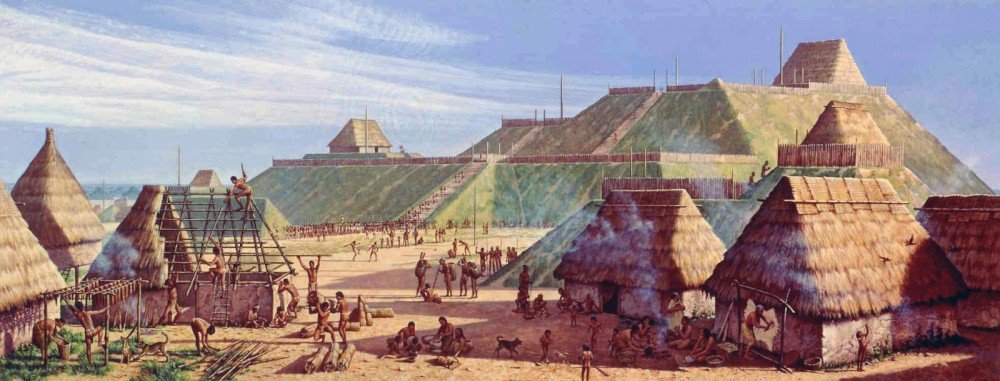
The Cahokia Mounds State Historic Site in Illinois—a UNESCO World Heritage Site since 1982—stands as the most politically centralized and architecturally massive pre-Columbian polity north of Mexico. During its cultural golden age, known as the Stirling phase (1100–1200 CE), Cahokia operated as a complex, highly stratified paramount chiefdom.
Rather than relying purely on military muscle, the Cahokian elite masterfully operationalized a combination of religious persuasion and political coercion—a strategy known as hegemony—to control its vast rural hinterlands and engineer public compliance.
1.📑 The Five Social Classes of Cahokia
The Great Sun
(Supreme Chieftain & Divine Ruler atop Monks Mound)
The Priestly Class
(Managed Temple Cults, Sacra Objects & Ideological Power)
The Elite Suns
(District Lineage Governors & High-Rank Corporate Master Craftspeople)
The Military Elite
(Warrior Aristocracy, Weapon Keepers & Palisade Defenders)
The Common People
(Rural Production Agents: Independent Farmers, Hunters & Earthwork Laborers)
The Slaves
(Bonded Labors: Targeted Prisoners of War & Unresolved Debtors)
1. The Ruler and the Priestly Class
At the pinnacle of corporate society sat the supreme leader, known historically as the Great Sun. The ruling elite claimed a “supernatural mandate” by establishing themselves as direct mediators between commoners and the cosmos. They achieved this by replicating the divine hierarchy of their mythology directly into the physical layout of the city.
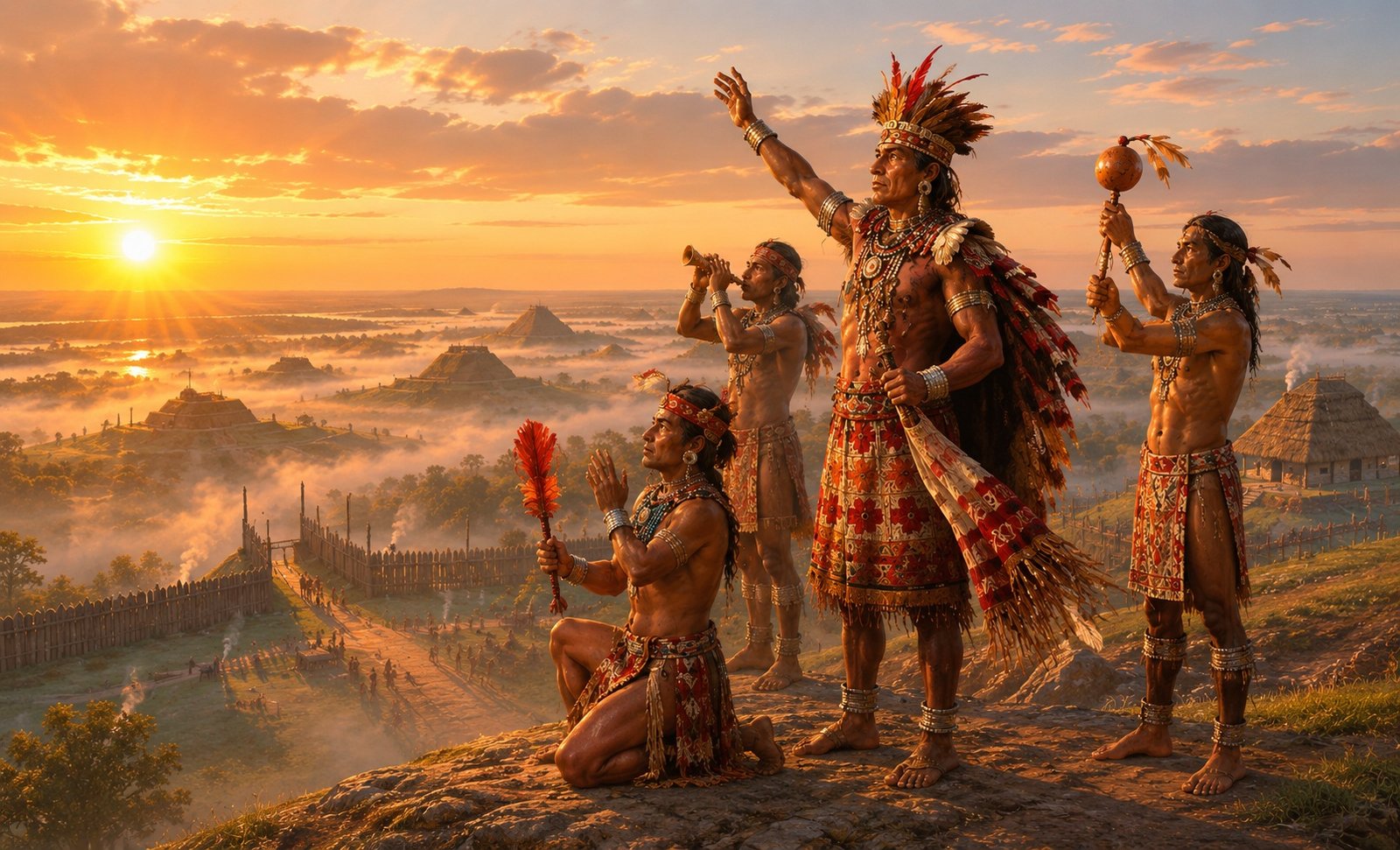
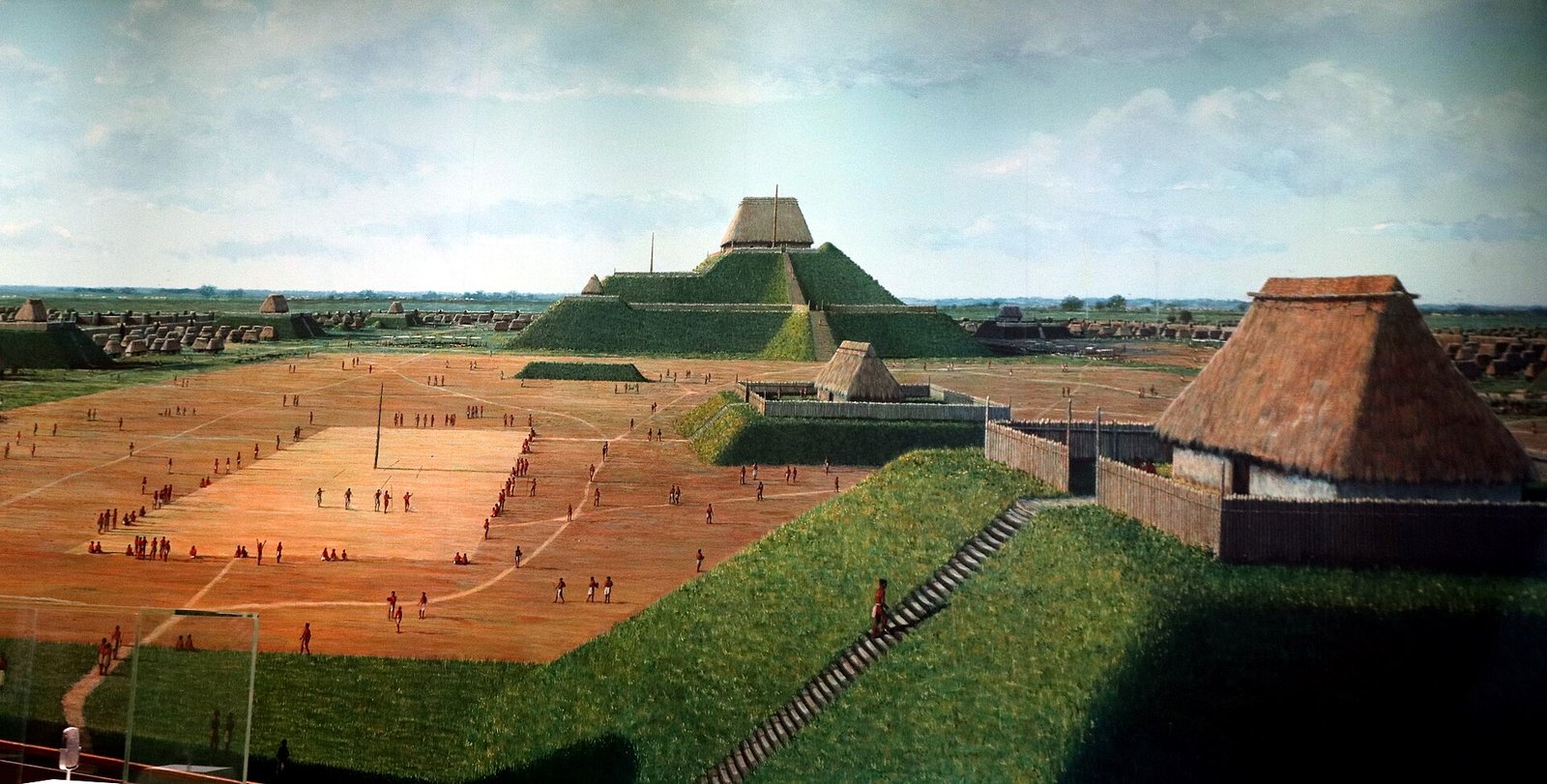
The Great Sun lived atop the massive Monks Mound, executing absolute political and religious cult control. However, this power was volatile; low-ranking regional elite “suns” frequently thwarted the central ruler’s authority, pulling peripheral villages away into rival political.
Why do the many allow the few to rule?
The consolidation of centralized authority is a human, negotiated process centered on hegemony—the simultaneous maintenance of systemic power through physical coercion and intellectual, moral persuasion, and the power of an indoctrinated cult system we see all over the world.
2. Smaller Rulers and Secondary Elites
This secondary aristocratic tier comprised administrative lineage leaders, district governors, and elite temple managers. Intriguingly, high-status master artisans who mass-produced corporate prestige items—such as symbolic ceramics, sacred stone pipes, and intricate jewelry—were ranked highly in this class. They controlled key resources and oversaw the grueling, communal labor required to construct the city’s earthworks.
3. The Military
Cahokia maintained a distinct warrior elite class to handle internal security and defense. The reality of Iron Age warfare is proven archaeologically by massive, defensive wooden palisade walls that were completely rebuilt multiple times, complete with defensive bastions and narrow gateways. Excavations have also revealed massive caches of highly lethal arrowpoints and sacrificed, bound captives buried in elite mortuary zones.
4. The Common People
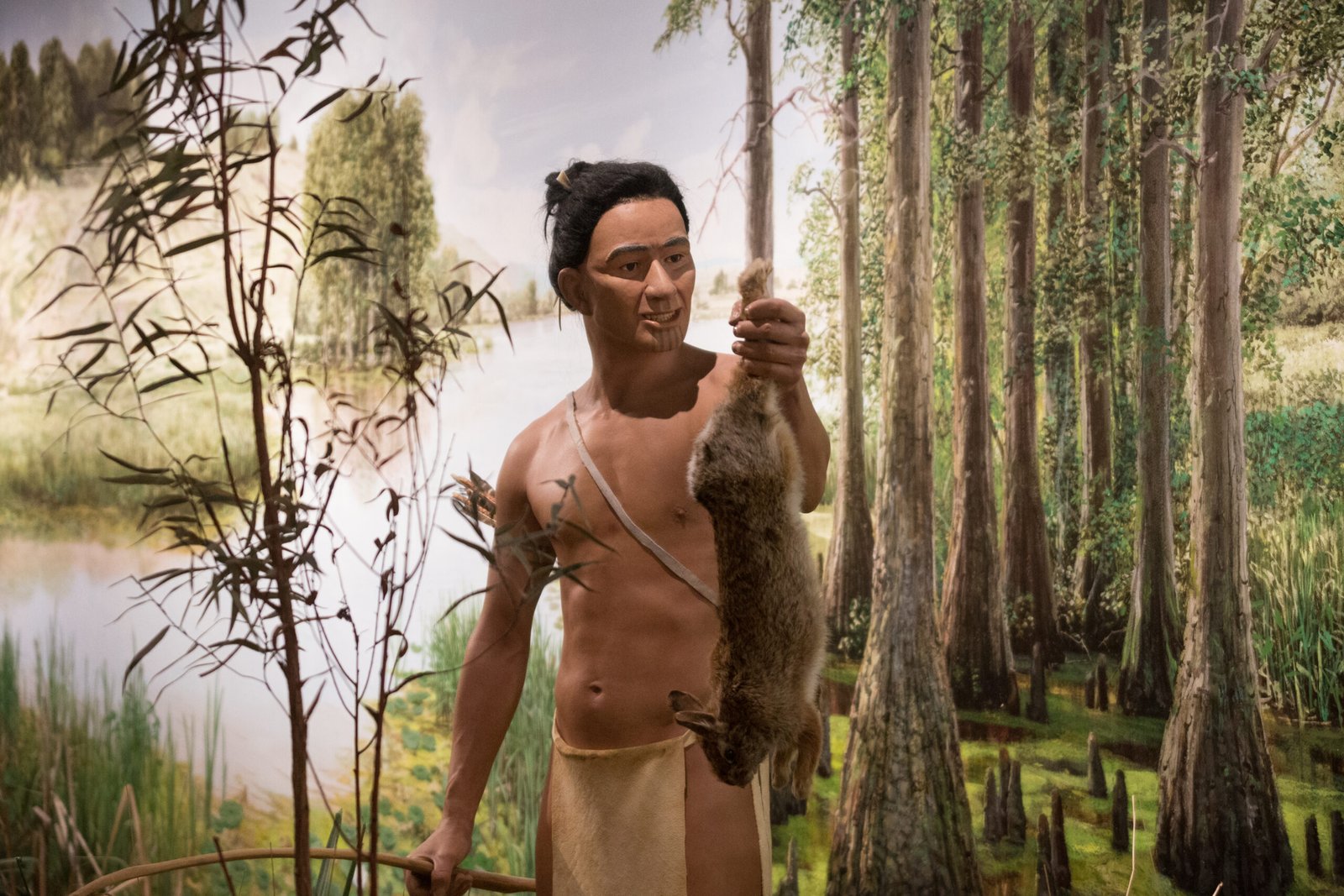
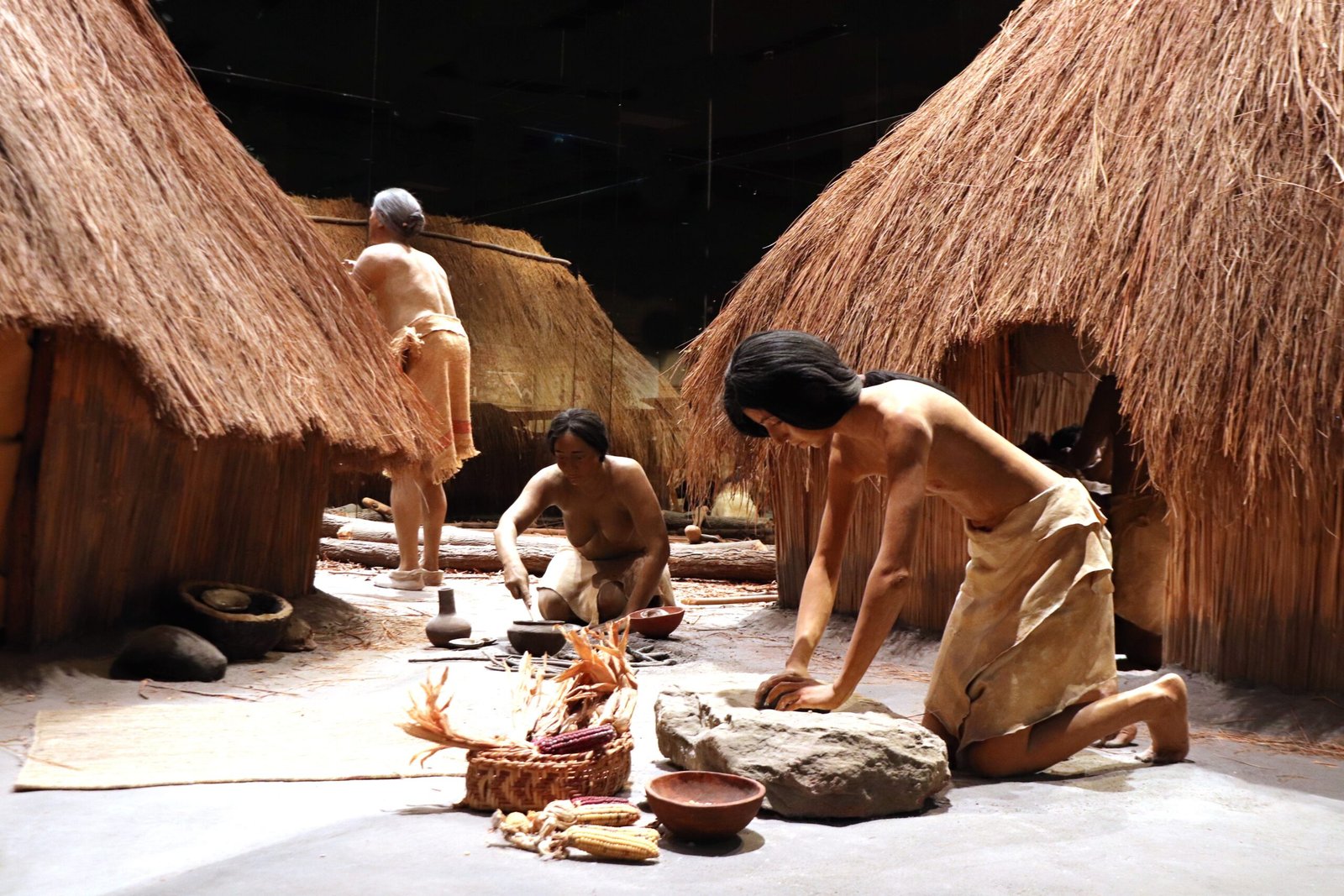
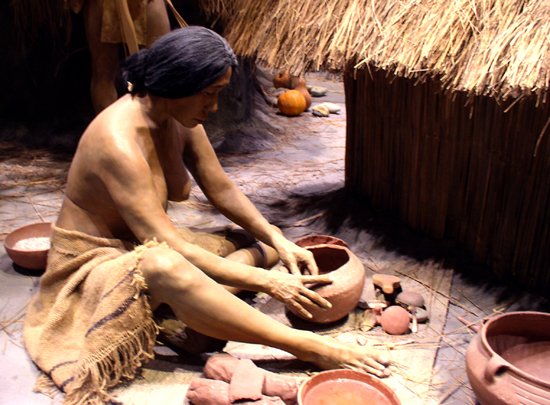
The working engine of the chiefdom consisted of independent commoners who lived in dispersed rural farmsteads and villages surrounding the urban core. They utilized highly sophisticated agricultural practices to cultivate deep river-valley soils. Commoners successfully managed a massive surplus of the “Three Sisters” crops (maize, beans, and squash), which was mobilized by elite functionaries to feed the urban center and fund massive public.
5. The Slaves
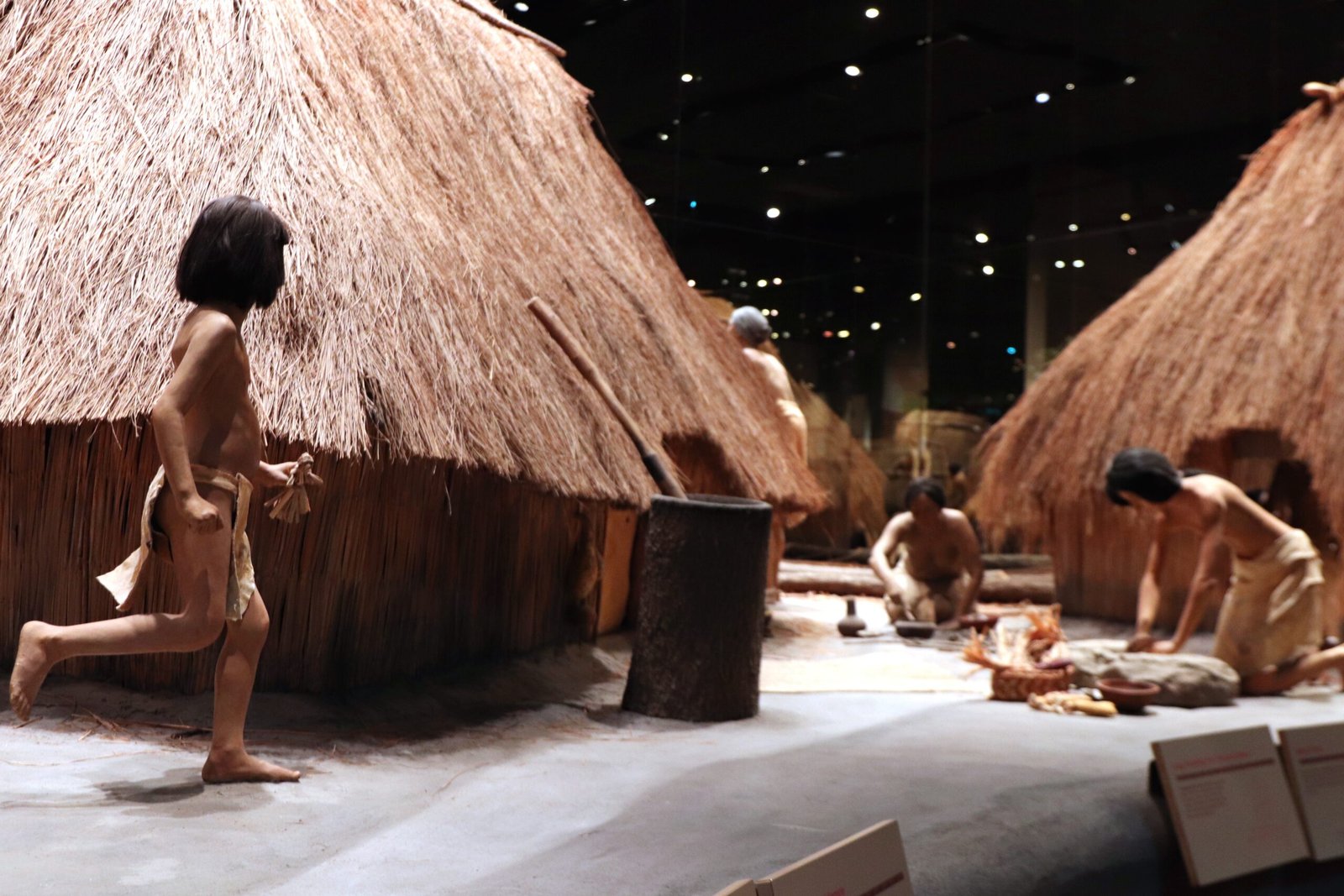
Slavery was widely systematically practiced across pre-Columbian North and Mesoamerica, accelerating rapidly following the adoption of intensive surplus agriculture. The lowest tier of society possessed no legal standing. Slaves were primarily composed of targeted prisoners captured during inter-regional warfare or desperate citizens who entered forced bondage to settle severe economic debts.
🌾 The Mechanics of Enslaved Labor in Intensive Surplus Agriculture
Once a society graduates to intensive, surplus-driven agriculture, slavery was introduced. Whenever a tribe, chiefdom, or state transitioned to large-scale monoculture farming (like Mesopotamian grain, Roman vineyards, or Cahokian maize), the staggering demand for cheap, disposable, and organized manual labor invariably triggered systemic raiding, warfare, and the institutionalization of a slave class.
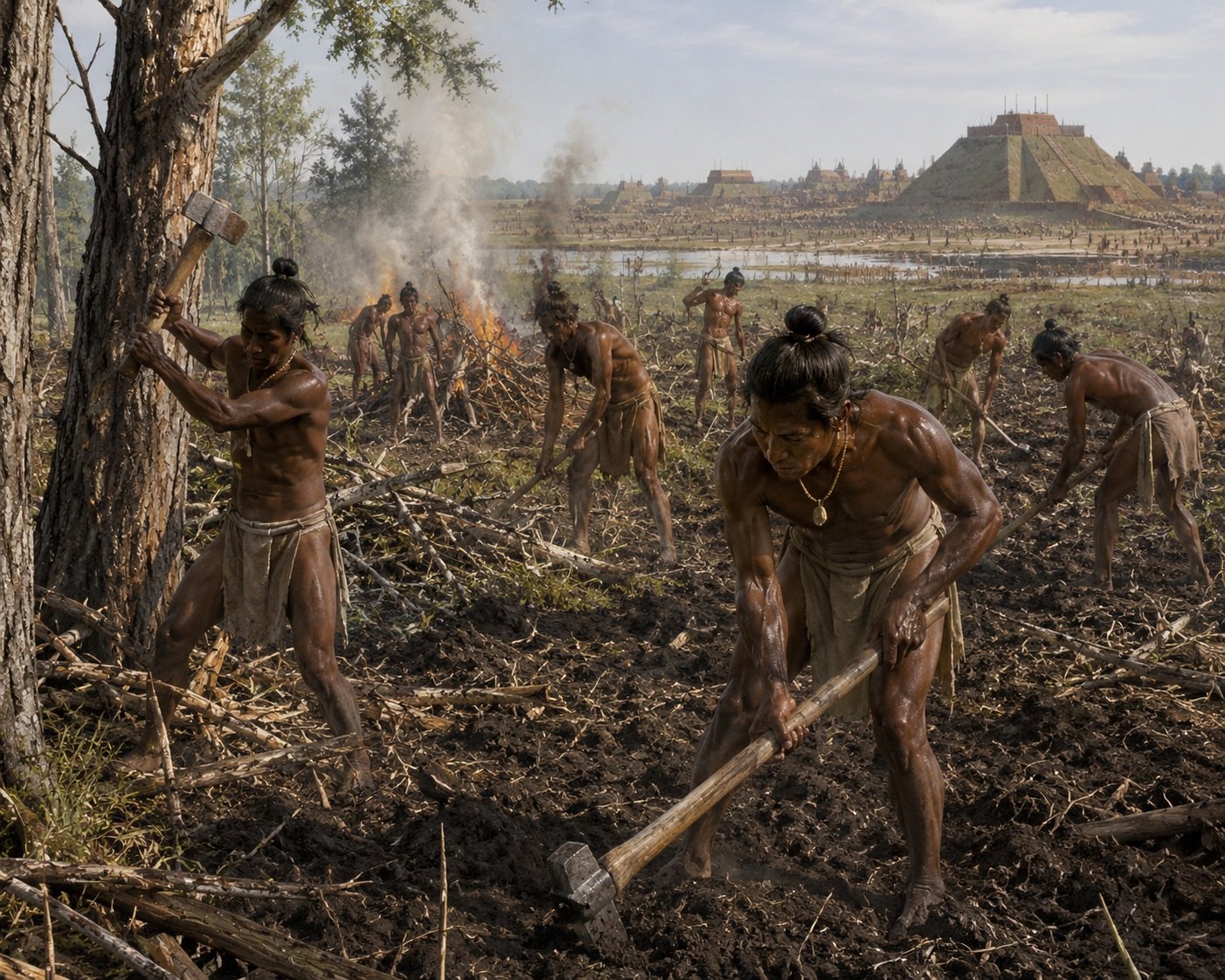
In complex chiefdoms like Cahokia and the Iron Age Celtic polities, enslaved labor was systematically integrated into the agricultural cycle to generate the massive grain surpluses required to feed urban cores, support specialized artisans, and fund elite-sponsored public feasts.
While commoners worked their own ancestral plots, enslaved laborers—predominantly prisoners of war, foreign captives, or individuals stripped of legal identity due to extreme unresolved debts—were deployed as an unfree, concentrated workforce under the supervision of elite overseers or regional lineage governors.
2.🌙 Manifestations of Ideological and Cosmological Cult Power
Thomas Emerson emphasizes that the consolidation of centralized authority at Cahokia was not merely a matter of economic control or military enforcement, but a profound masterclass in the deployment of an “architecture of ideological power“. The Mississippian elite recognized that physical compliance is temporary, but spiritual conditioning is absolute. By aligning their political hierarchy with the eternal rhythms of the cosmos, the rulers built a sacred landscape that effectively transformed political mandates into divine cosmic laws, granting themselves an unquestionable supernatural mandate to rule.
The Emerald Cult Shrine Center and the Mechanics of Pilgrimage
Nestled in the rolling uplands outside the urban core, the Emerald Acropolis functioned as a vital, high-density religious laboratory explicitly engineered to assimilate disparate populations into the Cahokian state cult. Excavations reveal that this specialized complex featured distinct T- and L-shaped structures, large public sweatlodges used for intense purification ceremonies, and elevated temple mounds. The entire infrastructure was dedicated to honoring the powerful celestial spirits of the moon, water, femininity, and earth renewal.
Rather than subduing regional communities through warfare, the elite weaponized these cosmological systems to launch a highly successful religious diaspora. By analyzing the chemical signatures of early immigrant ceramics found at the site, archaeologists have proven that the Emerald Cult Shrine acted as a massive regional mecca. It pulled thousands of foreign newcomers and pilgrims out of their ancestral lands and swept them directly into Cahokia’s expanding cultural orbit.
The Grand Plaza: The Stage of Spatial Engineering
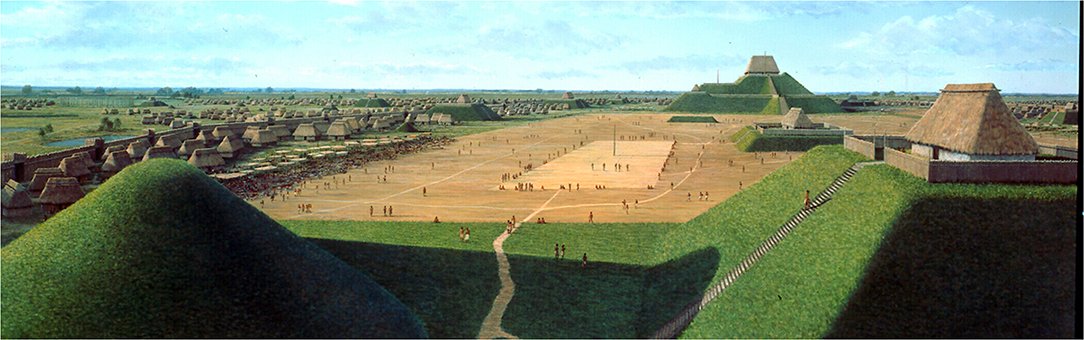
At the geographical and political center of the metropolis lay the Grand Plaza, a breathtakingly vast, deliberately leveled open-air stadium covering nearly 50 acres. The construction of this immense plaza required commoners to manually shift millions of baskets of earth, a monumental public project that fostered shared tribal identity through collective labor. Once completed, the plaza functioned as a multi-purpose urban theater. It acted as a global marketplace where exotic, spiritually charged status items from the Gulf of Mexico (such as lightning whelk marine shells) and the Great Lakes (native copper sheets) were redistributed.
More importantly, it served as an emotional arena where the elite orchestrated mass public spectacles. From these flat-topped ceremonial platforms, thousands of citizens looked upward to watch high-status priests perform carefully staged rituals using tobacco, red cedar smoke, and sacred flint-clay figurines. These theatrical displays systematically naturalized the vast social inequality of the chiefdom. The common people were conditioned to believe that the prosperity of their crops depended entirely on the continued wealth and spiritual health of the ruling class.
Astronomical Landscapes: Woodhenge and Lunar Geometries
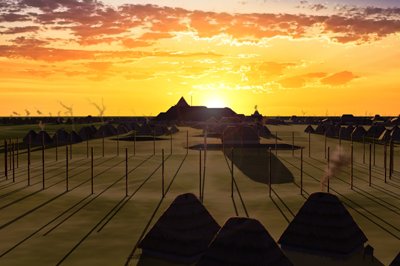
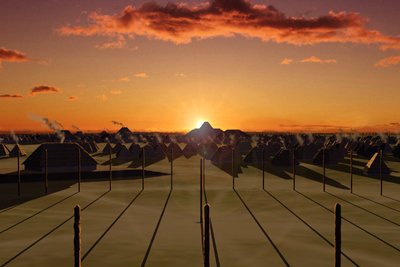
The elite further legitimized their divine lineages by embedding architectural networks directly into the movement of the stars. Within the primary mound complex stood Woodhenge, an architectural marvel consisting of massive red cedar posts raised in a precise circular layout. This timber calendar allowed Cahokian astronomers to track equinoxes and solstices with flawless mathematical precision, calculating exactly when to plant and harvest to feed their booming population.
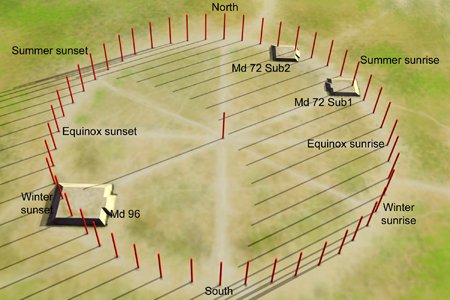
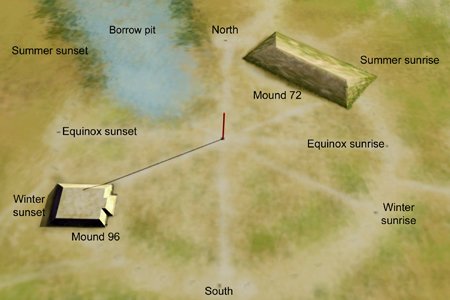
Remarkably, this spatial engineering extended far beyond tracking the path of the sun. Modern geometric mappings prove that the primary earthen mounds were precisely oriented to calculate major lunar events across their complex 18.6-year celestial cycle. By correctly predicting shifting patterns of solar dawns and lunar maximums from atop their flat-topped monuments, the paramount chiefdom broadcast a terrifying optical message: the rulers of Cahokia did not just observe the universe—they actively controlled it.
The Shock Value of Ritual Human Sacrifice
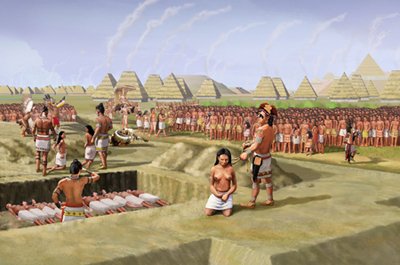
When peaceful persuasion proved insufficient to maintain hegemony, the elite unleashed calculated acts of state-sanctioned violence to demonstrate their ultimate control over life and death. The most clear archaeological proof of this is found within Mound 72, a specialized ridgetop mortuary monument used to bury high-ranking nobles. At the core of the mound lay an elite man, now famously referred to as the “Birdman,” buried atop a massive platform of 20,000 marine shell beads meticulously arranged in the shape of a Peregrine Falcon—the ultimate Mississippian icon of the sky world, warfare, and celestial ancestors.
To cement this chieftain’s terrifying entry into the afterlife, the elite carried out an industrial-scale mass human sacrifice directly inside the open burial pit. Executioners systematically strangled 53 innocent young women (aged 15 to 25), carefully laying their bodies out in dense, neat rows alongside a separate pit containing the decapitated and mutilated remains of captured foreign warriors. These shocking, highly charged public executions sent an unmistakable warning throughout the midcontinent: any defiance of the Great Sun’s authority would result in total physical and spiritual destruction.
Bibliographic Sources
- Thomas E. Emerson: Cahokia and the Archaeology of Power, University of Alabama Press, 1997.
- Susan M. Alt: CAHOKIA IN CONTEXT Hegemony and Diaspora, chapter 2, The Implications of the Religious Foundations at Cahokia.