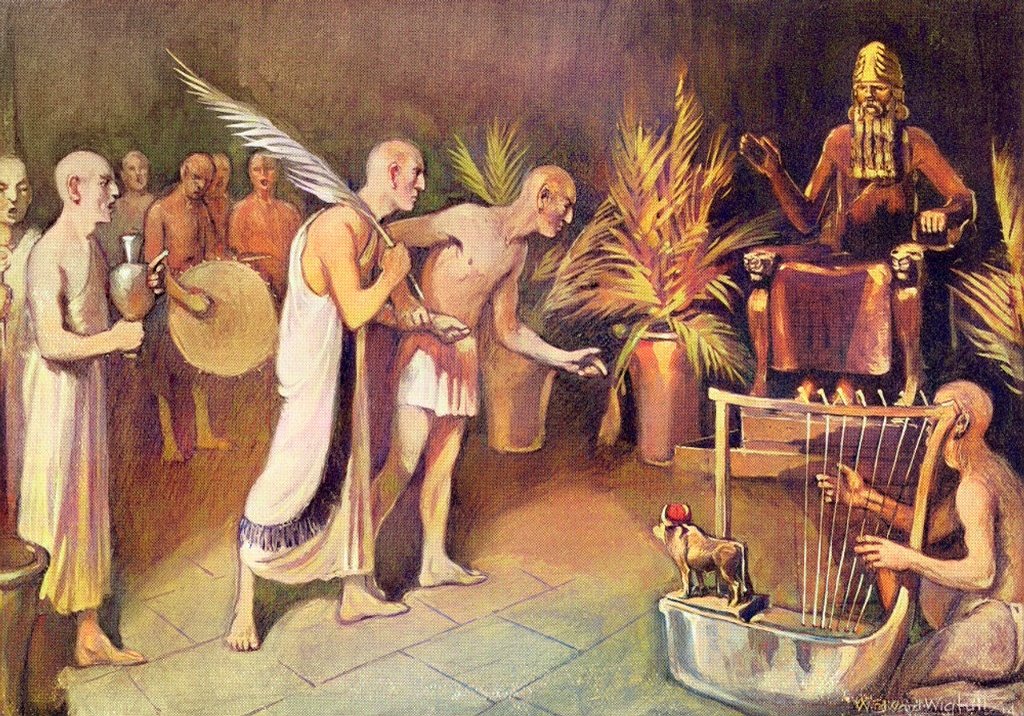
1. The Mythology of Sumer
The religions of the ancient world in the Near East and Mediterranean regions developed out of their daily life and historical events of warfare, colonization, social classes and so on, over a period of some three thousand years. It was written by the upper ruling class to legitimize their power, the social order and the daily life of families.
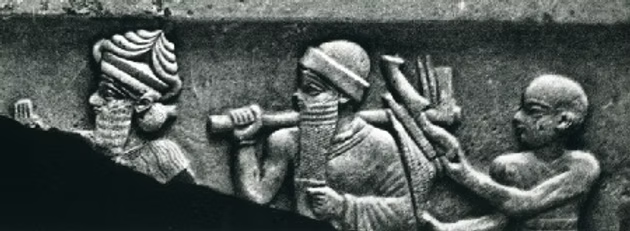
The mythology of Sumer had a number of primal properties:
- It was a legitimation of the “divine” king and the whole social order in Sumer.
- The story depicted the gods the same as the homo sapiens character in the newly erected civilisation in the Sumer city-states. The story of the gods had the same social hierarchy as in Sumer. The gods where just humans with supernatural powers.
- The stories depict social situations that happens in Sumer’s families and the state as a whole and Sumer and beyond with a declaration (and instruction) of the causes of evens in Sumer and beyond (the gods). It depicts sad events like child birth death, mortality, pre Sumer first civilisation.
2. The ziggurat
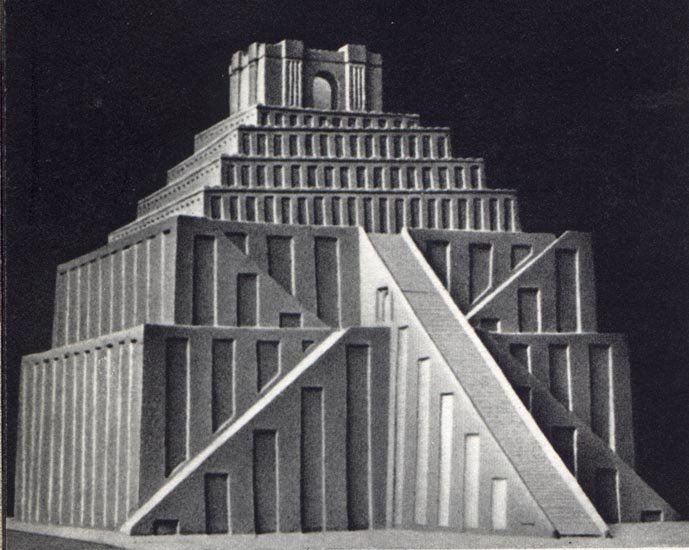
The ziggurat itself is the base on which the White Temple is set. Its purpose is to get the temple closer to the heavens, and provide access from the ground to it via steps. The Mesopotamians where told and therefore believed that these pyramid temples connected heaven and earth. It was sacred ground, off limits to any but the hierarchy of priests.
3. The Myths
The Mythology “explained” the social order in Sumer led by the priestly class, the world of nature, and the gods. Mesopotamia societies were rising and falling and succeed one another over the ages while the life of nature – the annual birth and death of vegetation, the sun, the rains, the life of unpredictable rivers – continued unchanged. The myth led them to believe that their order was from a heavenly order imaged in the cycles of stars and planets and commanded by the gods, but the gods also depended on the contributions of humans in obedient service to the powers that supposedly controlled them.
4. Building the Mythology: The Stele of Ur-nammu, Mesopotamia, Ur ca. -2097 until -2080.
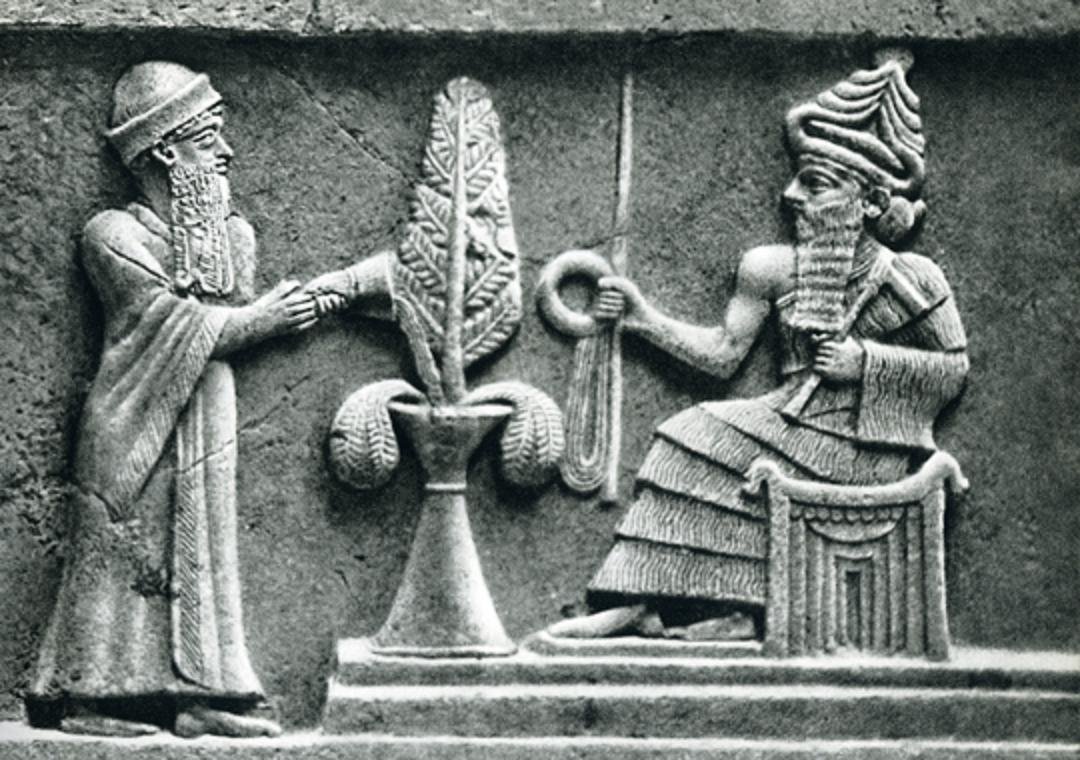
Stela of Ur-Nammu: In this scene, Ur-Nammu on the left pours alibation to the Moon god on the right. The god holds the power symbols the rod, line and adze and orders him to build the tower.
In many art works from Mesopotamia, we see rulers interacting with an important deity to make people believe that what their ruler demanded from them had to be done and accepted for he supposedly communicated with the gods and received guidance and approval from them.
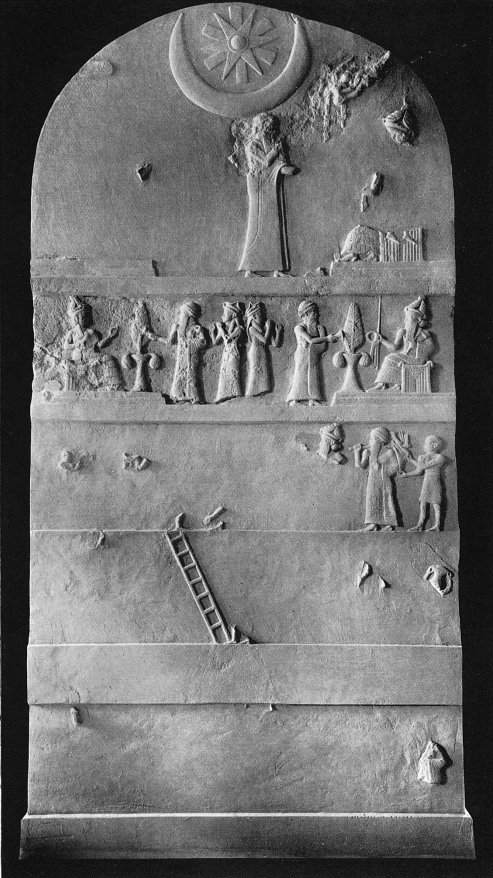
Restoration of the whole stone. The stone is five feet across. About B.C. 2300.
5. The oldest known code of laws in the world
The Ur-nammu stele shows the reign of King Ur-nammu, the founder of the Third Sumerian Dynasty. Throughout his life, Ur-nammu designed and developed the Code of Ur–nammu, which stands as the oldest known code of laws. The Code of Hammurabi resemblances this code, written about three centuries later.
These legal codes were essential for the king to enforce justice across his kingdom, outlining specific rules for his subjects to follow and the penalties for violations. Typically, transgressions resulted in the offender having to compensate the affected party, while more serious crimes often faced the ultimate punishment of death.
The laws reflected the social order defined in mythological stories. However, the authority of the king fluctuated based on his political and military strength, which these myths then echoed.
To suppress any rebellion, the king solidified his reign by integrating several key elements:
- The might of the military
- Assertions of divine authority, presenting himself as the conduit between the controlling deities of the fabricated realm he crafted through these mythological stories, which served to establish and validate the societal hierarchy.
- Providing justice through his kingdom by a law code.
6. The prologue of the Stele of Ur-nammu
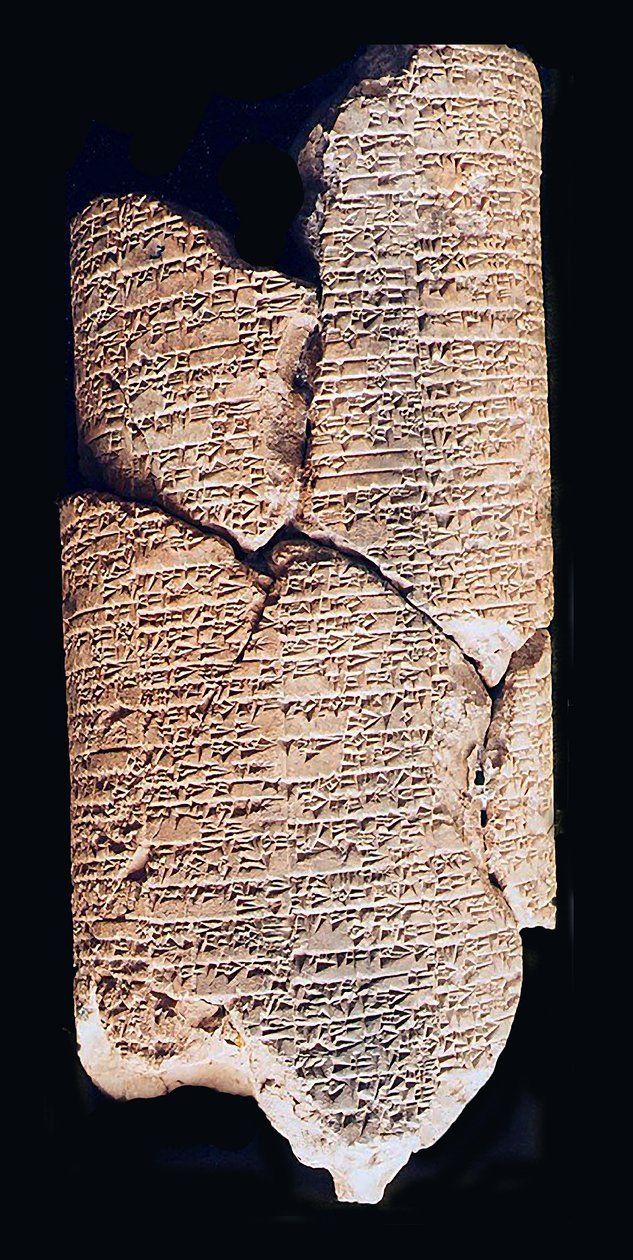
The stele of Ur-nammu features a prologue that shows the king’s connection with the deities Nanna and Utu, shedding light on Ur-nammu’s reign after his conquest of Sumer and Northern Mesopotamia. An, the former supreme deity, and Enlil, the creator god residing in his temple E-kur, known as the ‘Mountain House’ in Nippur.
Ur-nammu was originating from Ur, with it’s city-master Nanna, the Moon God and master of destiny. The most important shrine dedicated to Nanna was the temple Ekisnugal (E-kis-nu-gal), which Ur-nammu undertook to expand extensively.
7. The prologue:
… After An and Enlil had turned over the Kingship of Ur to Nanna, at that time did Ur-Nammu, son born of Ninsun, for his beloved mother who bore him, in accordance with his principles of equity and truth.
…
Then did Ur-Nammu the mighty warrior, king of Ur, king of Sumer and Akkad, by the might of Nanna, lord of the city, and in accordance with the true word of Utu, establish equity in the land.
He banished malediction, violence and strife, and set the monthly Temple expenses at 90 gur of barley, 30 sheep, and 30 sila of butter.
He fashioned the bronze sila-measure, standardized the one-mina weight, and standardized the stone weight of a shekel of silver in relation to one mina
…
The orphan was not delivered up to the rich man;
The widow was not delivered up to the mighty man;
The man of one shekel was not delivered up to the man of one mina.
One mina was 60 shekels.
8. Creating a make-believe world
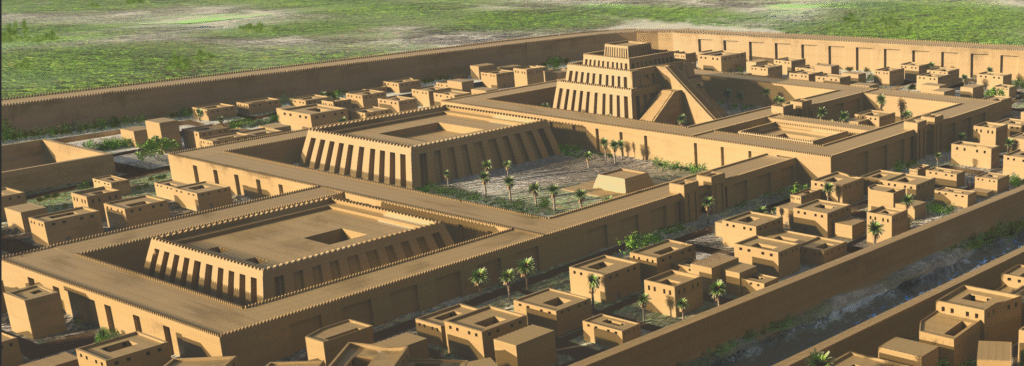
Ziggurat at Ur
Ziggurats were staged towers, surmounted by shrines, with access by a series of staircases.
The kings of Ur III dynasty invested a great deal of effort and labor in building ziggurats and temples.
9. The Social Order
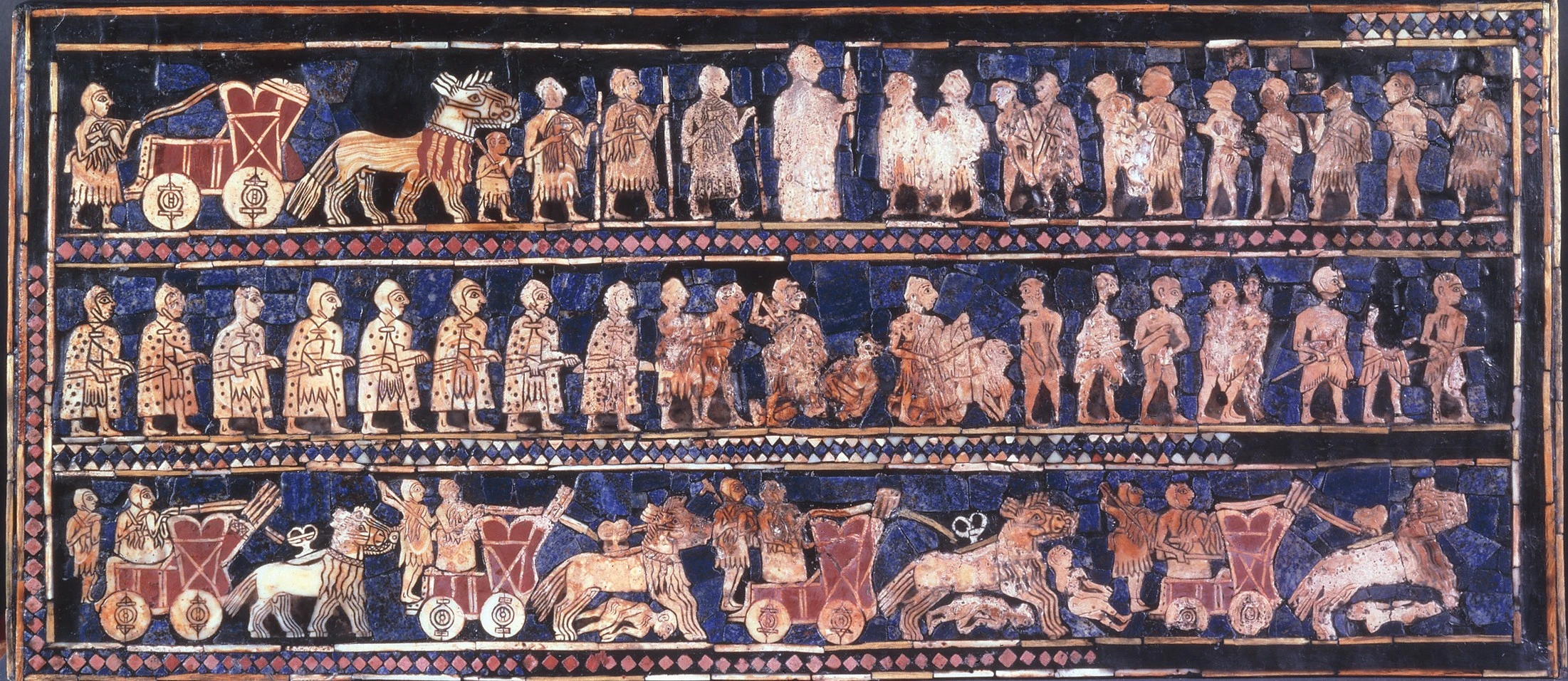
The King
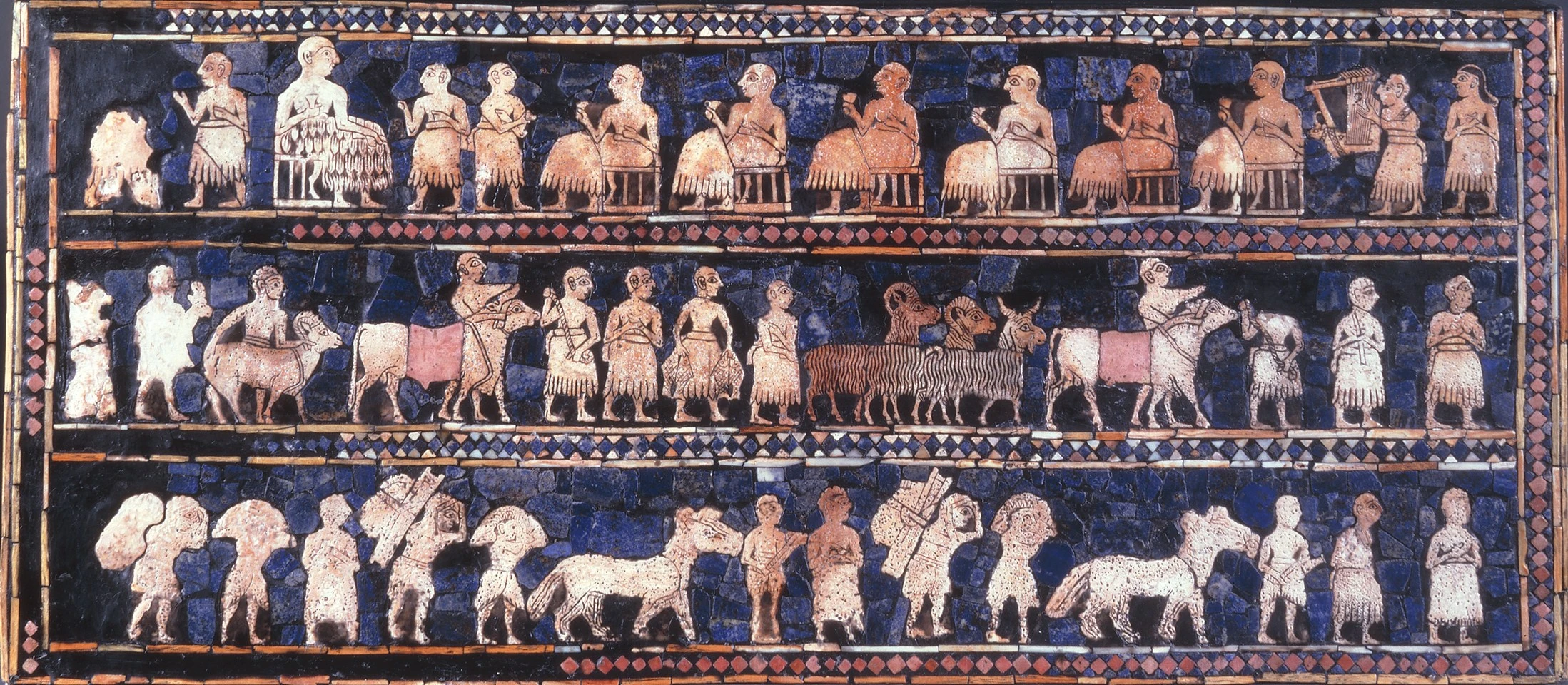
Kings were “divinely ordained” humans, and the pinnacle of social order. The word of the king was law, and they were the head of the army. The king was also the head of the priestly order.
The Priests
The priestly class, lead by the divine king, was the upper-class of the society. They claimed their relationships with the gods, and the importance of religion in every day life. They ran the schools.
The Scribes
The scribes were the educated class, and could read and write. To become a scribe one had to undergo training and complete a specific program. They were men and worked for the palace, the government, the army, or set up their own businesses.
The Merchants and Artisans
They used cuneiform to document trade deals. They traded throughout the Tigris and Euphrates Rivers, and produced the wealth that made civilization possible. They traded barley to Asia minor, and return with timber and metal. They worked materials into tools, weapons, and jewellery. To keep track of the trade, they used a calendar based on the phases of the moon (12 months with leap years).
The Commoners
The lower-class of the civilization, about 85%, were farmers. The tradesmen were payed uniform wages. They had very close family ties and the son’s were usually taught their father’s trade and the daughter’s were taught to take care of the household.
The Slaves
They were identified by their specific hair cut and had only limited rights. Some were prisoners of war, and other were people who couldn’t pay their debts.
In the course of their histories, the ancient Sumerians and their successors in the Tigris-Euphrates valley, the Egyptians, the Canaanites, Phoenicians, and Israelites, the Persians, and the Greeks and Romans created mythology out of their history and social order that legitimized their social order lead by the divine kings who waged war for supremacy.