1. The Copper Age in Mesopotamia
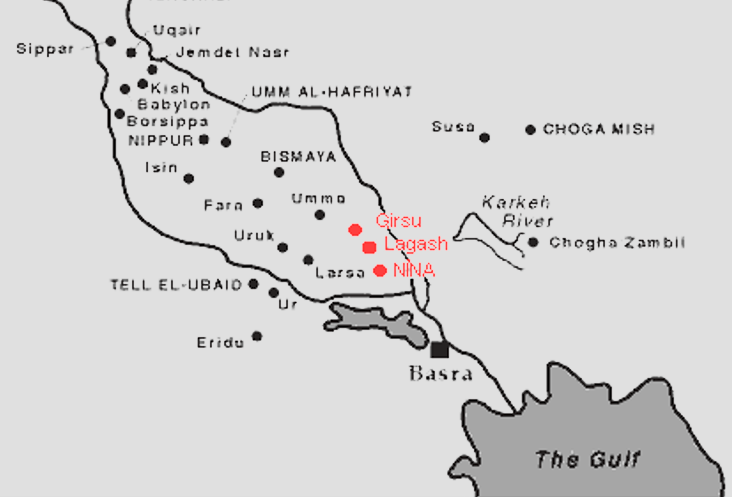
The Copper Age (Chalcolithic) was marked by the rise of towns and rapid specialization, as seen in the Ubaid period in Mesopotamia, where the industrial nature of pottery production is shown by the huge quantities of potsherds found on larger sites.
The crafts-workers resided not far from the elite, who were gathered near the temple. Even further away were the homes of the farmers, the ones growing the crops essential for everyone’s sustenance.
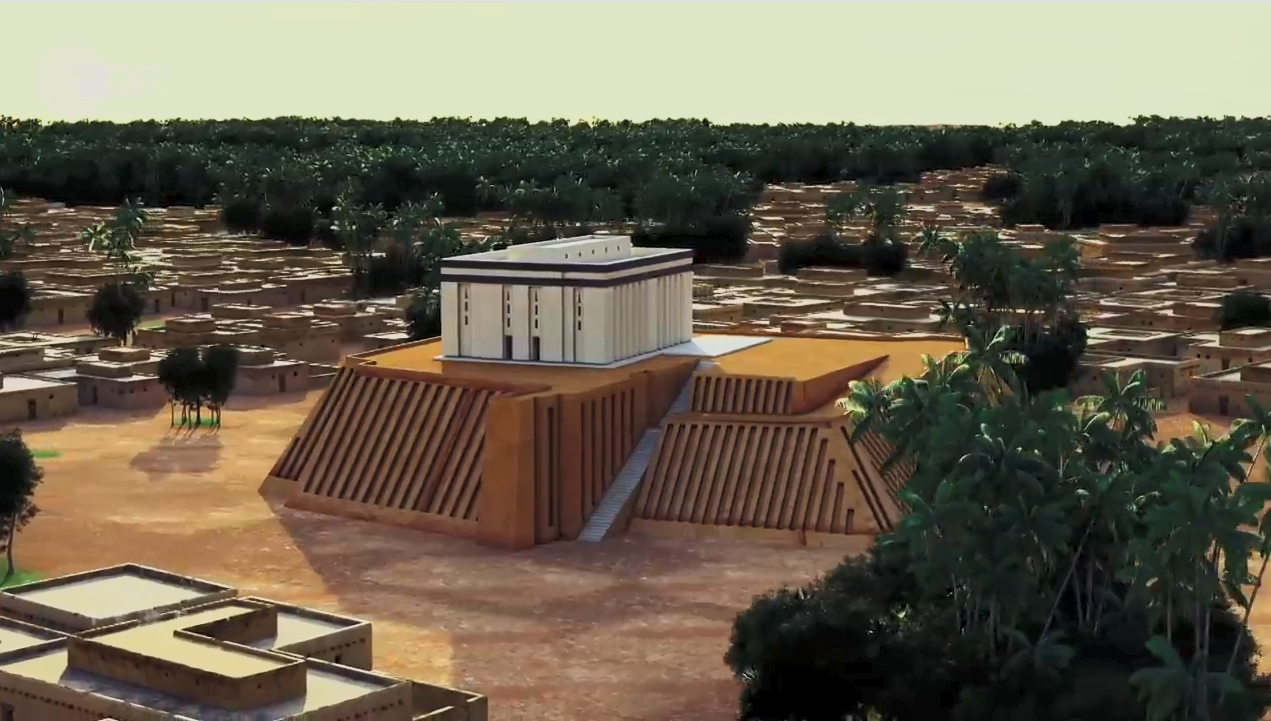
By around -4,500, the Eridu temple had expanded significantly, featuring altars, offering areas, and a central chamber flanked by smaller compartments. At this time, the population of Eridu was approximately 5,000.
The site AI Ubaid gives us an idea of the widespread Sumerian culture that immediately preceded the rise of the great cities. The farming people lived in reed-and-clay constructions. The date palm and fish were important additions to the cereals, goats, and sheep; apparently, cattle holdings were centralized as palace-temple property. Technological advances during the formative period led to a significant increase in full-time craft specialization.
The chiefdom is always theocratic, and this was clearly the case in Sumer. Even at such an early stage as the Ubaid around -3,500, the temple was the most imposing set of structures and served not only as a house of worship but also as a sanctuary, a palace, and a storage and redistributive center. The construction and, above all, the frequent reconstruction of temples, which might be of substantial size, show that the Ubaid people had already established the characteristic form of early civilization in Mesopotamia: the sacred city whose economic, social, and religious cult life centered on the temple and its priests. (Origins of the State and Civilization by Elman R. Service, 1975.)
2. Uruk
The expansion of irrigation farmers in the southern alluvium led to rapid advancements in the Sumerian city of Uruk (Warka), one of the best-known archaeological sites.
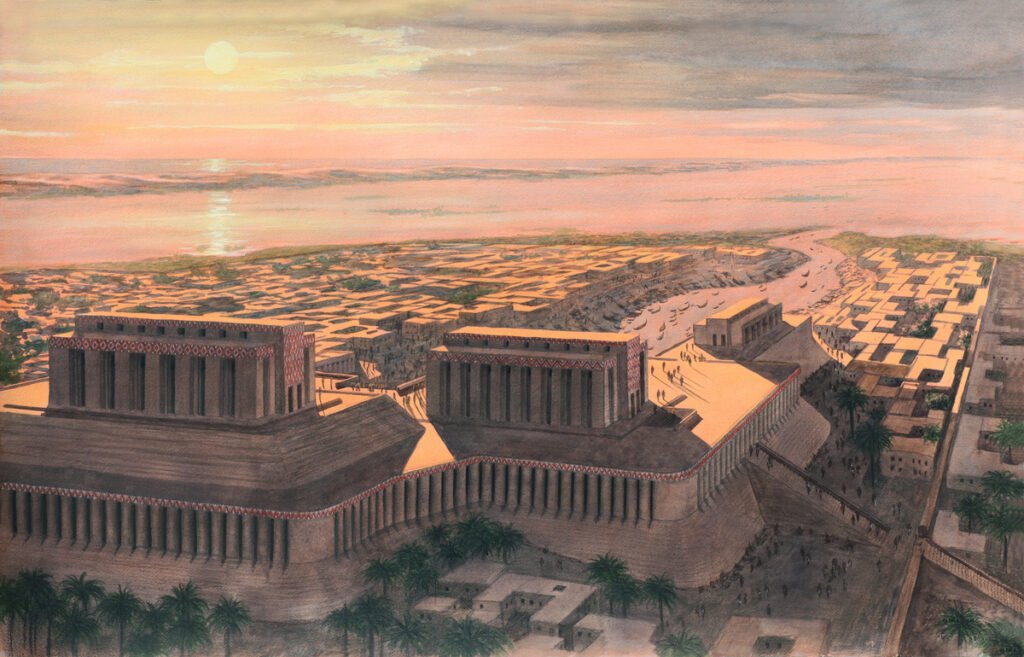
A distinctive feature of this civilization was the ziggurat, a stepped platform that supported a temple tower. The temple and the surrounding city, along with the land, were under the control of a specific patron god. Anu was the deity of Uruk.
The Anu Temple ziggurat at Uruk.
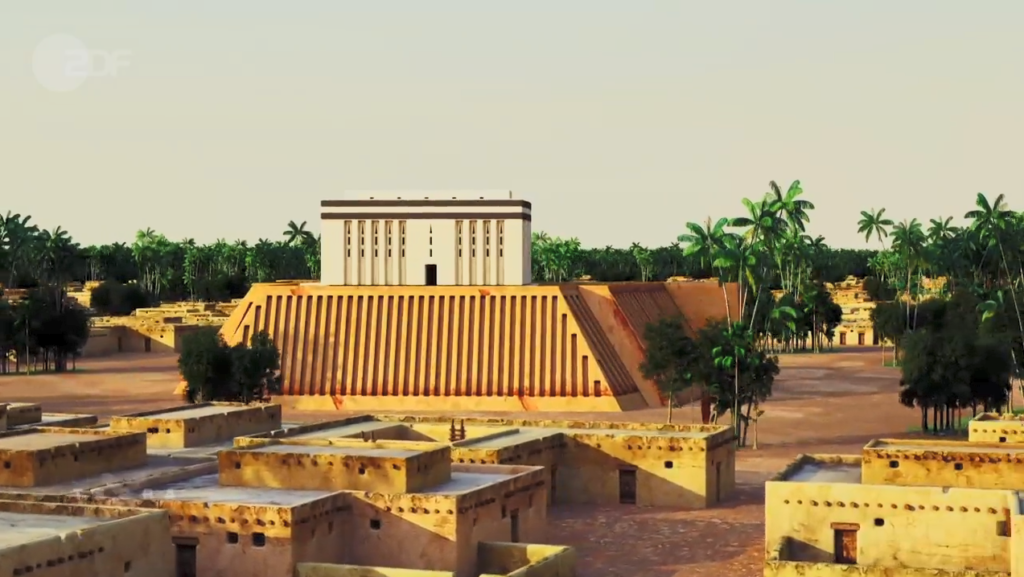
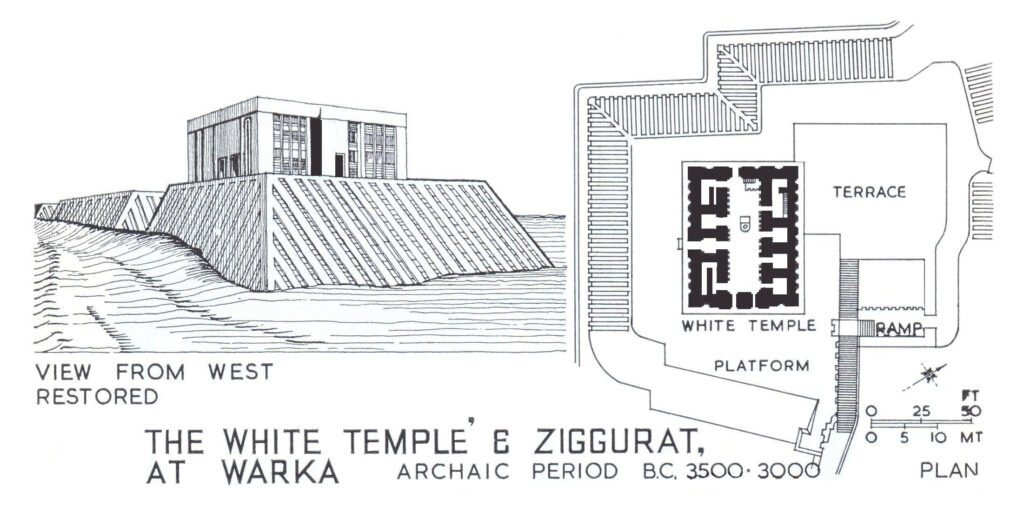
Nearby, the living quarters were enclosed by a protective wall. As the theocratic chiefdom grew, the separation of powers increased, with the influence of priests expanding while simultaneously widening the distance from the general population and from mundane military and economic affairs, while keeping ultimate decision-making power. The temple complexes were finished with a mud plaster that covered the sun-dried brickwork, and were further decorated with thousands of fire-baked clay cones, meticulously arranged to create intricate decorative patterns.
The temple remained central to the community’s religious, economic, and political dynamics.
As cities expanded, so did craftsmanship in areas such as pottery, carpentry, and metallurgy. The availability of wood and metals from distant sources highlights the temple administrators’ growing capacity to manage resources. They collected and distributed food, traded with outsiders, and efficiently transported and stored both raw materials and finished products. This complex function of the theocratic chiefdom was of tremendous political significance.
Source: Origins of the State and Civilization by Elman R. Service 1975.
3. Sumer
The Sumerians were a non-Semitic people with a language other than that of their neighbors. They called themselves the black-headed people. Sumer, a flat, marshy region, had early settlements in huts on mud. Floods threatened and could be devastating, but silt made the land fertile.
However, over millennia, the Sumerians were able to turn the swamp into fertile land by inventing irrigation.
Invent writing and other inventions
The Sumerians were the first people to invent writing. By the Proto-literate period, many key technological and economic advancements were firmly established. Writing emerged as simple pictographs, which quickly standardized among scribes and record-keepers, paving the way for further evolution alongside numerical notation.
They were a highly creative people. By the time they developed cuneiform writing, approximately two centuries before the Egyptians developed their hieroglyphics, they had already built multi-storied temple-towers (the ziggurats) out of bricks and were using sailboats, wheeled vehicles, animal-drawn plows, and potter’s wheels.
These innovations, such as the improved plow, wheeled carts, sailing rafts and boats, and the introduction of bronze for tools and weapons, laid the technological foundation essential to the development of later (Mesopotamian) civilization.
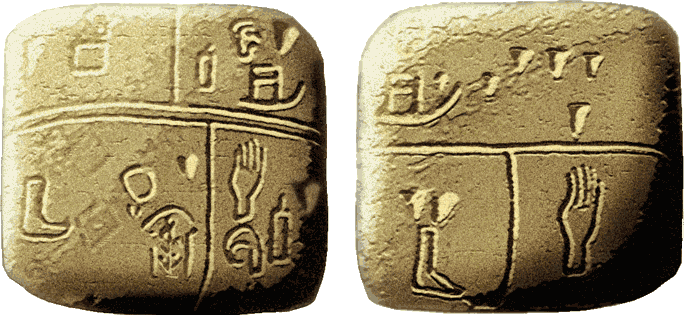
This limestone tablet, inscribed with pictographic writing, comes from the Mesopotamian city of Kish (Iraq) and is dated to around -3,500. This earliest known evidence of writing features pictographs of heads, feet, hands, numbers, and threshing boards. Department of Antiquities, Ashmolean Museum, Oxford, UK.
Building the mythology: The Intermediary
Sumer consisted of a dozen small cities, each belonging to the divine chieftain/king who claimed to be the intermediary between the people and their god and centered upon his temple complex. These included Eridu (by the myths, considered the earliest and dating to about 4000 BCE), Ur, Nippur, and Uruk. The myth told the people that the Kings served as representatives of the gods, enforcing their justice, enriching themselves, and legitimizing this by saying they were at the service of the god(s).
Public Cult revolution
A new set of social and economic values centring around the house, the dead buried in and around the house, and the production and storage of staples.
New values and deities only became dominant since the Copper Age. Even after that, through to today, magic and spirituality—such as astrology and cult Pantheons—continue to play a significant role in religion and popular belief. Additionally, there remains an underlying idea of folk and cult doctrines, which have been revived in modern times under the guise of conspiracies and environmentalism.
Source: THE ARCHAEOLOGY OF POLITICS AND POWER Where, When and Why the First States Formed by Charles Maisels, 2010.